Author Archive

From the 6th Century BCE

Many things come to mind when thinking of Rajasthan – it cannot enter the conversation without evoking exquisite architecture, grand palaces and bright spices wafting through open air markets.

However, when considering the identity of India’s heartland, textiles come first. The country is built around a millennia of fabric excellence – many modern, world-renowned techniques originated within its borders. In Rajasthan, the home to techniques such as bandhani and jaipuri, Injiri quietly produces a collection of beautiful contemporary garments – each reinterpreting centuries of tradition for the modern wearer.

Fabric, and its many paths to creation, are so central to the character of India, that the term “India” itself was, at one time, the shorthand for “cotton” in Ancient Greece and Babylon. Splendor, spirituality and daily routine were all captured, expressed and defined by the textiles woven by each community. In this way, textiles became a visual narrative of the peoples who created them – the individual methods reflective of the plant life, natural terrain and cultural values of their genesis.

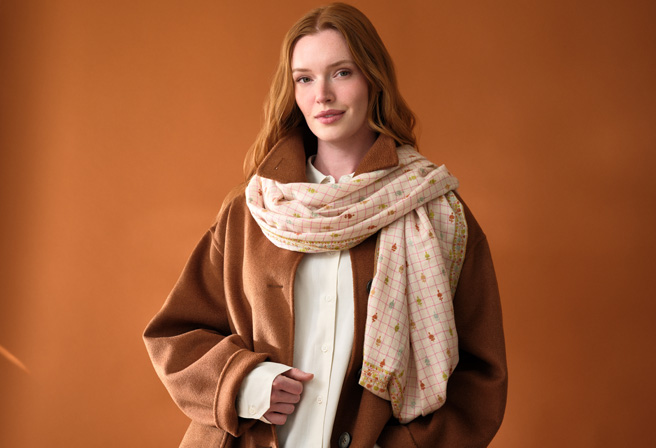
Jamandi, a practice that originated some 2000 years ago, is a favorite within Injiri’s collection. It is defined by a supple, hand-loomed cotton muslin. This technique is oft described as “woven air” for how light the final textile can be. The geometric and floral motifs woven atop the fabric appear to float. There is a deeply practical nature to the way this fabric is crafted – an intensely hot region of the world, Indian textiles need to be breezy and breathable in addition to being beautiful.

Rather than simply mimic the aesthetics of India and its many different regions, Injiri is deeply rooted within its culture and practices. Each piece reflects the communities that created and inspired it. The result of this careful work is a state of transcended being. By going to the source, Injiri accesses a new way to wear contemporary fashion. These are not just garments, but the culmination of thousands of years of history and tradition.
Presence…

To most, being present is the utmost challenge. In addition to requiring constant practice, it takes an incredible amount of attention, patience and time.

However, it is one of the most important skills for a full and beautiful life. In the realm of high craft, presence is non-negotiable. It is the gap between complacency and excellence, mistakes and successes, machines and human beings. With her quiet mastery of this skill, Denise Betesh rises above the rest.

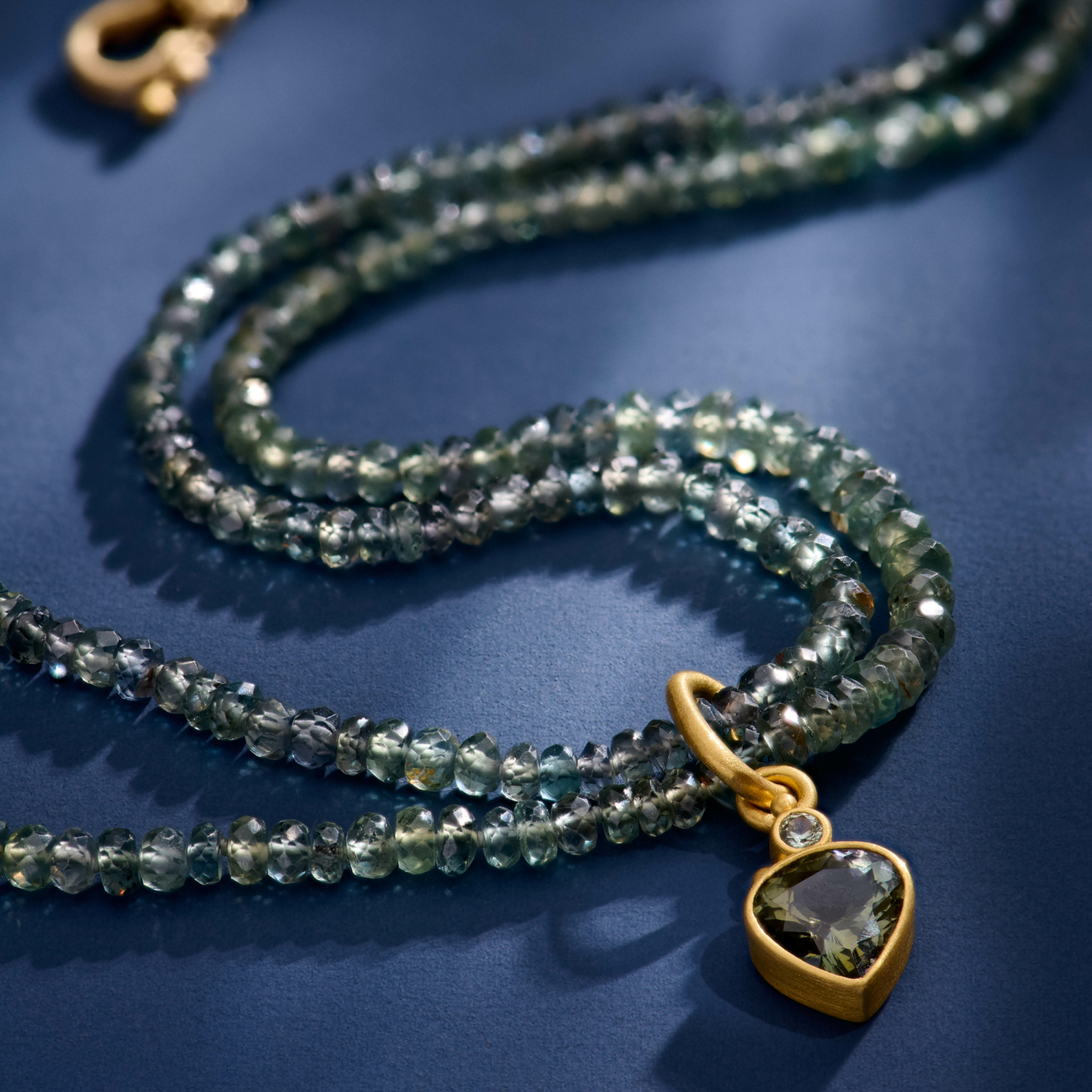
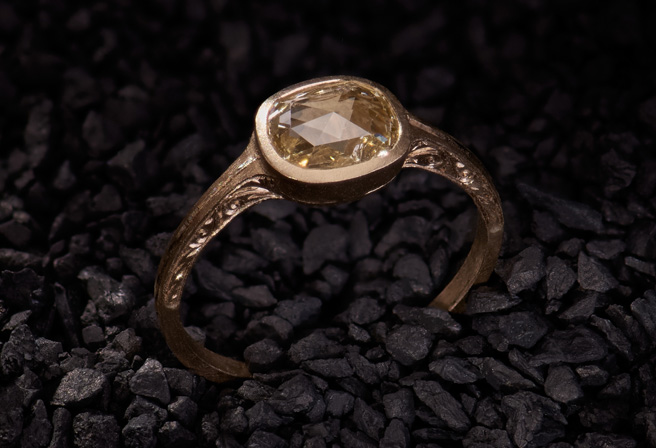
Denise works primarily in 22K gold – a precious metal chosen for its deep, buttery color. A delicate balance is struck between the gold and each hand-picked stone to highlight the inherent beauty of both.

An intensely detailed person, Denise considers every angle and facet when creating her pieces. The liquidity of a sapphire strand is just as important as how each stone is carved – no individual elements exist without considering the full composition.

Presence within craft is different from presence with a loved one or a colleague. In jewelry-making, it can be taking the time to shape the perfect curve on the loop of a pendant or the hook of an earring.

Other times, it is carefully hand-forging each and every centimeter-long link in a delicate chain bracelet. Occasionally, it is granulating dozens of tiny gold beads or slowly stringing a hundred champagne diamonds onto silk thread.

Denise’s dedication to craft — and the patience it requires — sublimates into a collection of classics at home in the conscious, contemporary jewelry box. Because at the end of it all, the jeweler’s presence is what makes the difference between something ordinary and something incredible.

A Gaze into Wilderness

The heartbeat of North Africa thumps from within Uma Wang’s latest collection.

The brush of oat grass in the thready pile of a jacket, the spill of sand dunes in overlapping silk panels or the dappled shade of a Lebanon Pine in the subtle color of a coffee dye. The delivery is deeply Uma, and simultaneously not — the layers of texture, fabric and moody color are a delightful evolution of her already elegant sensibilities. Inspired, as so many others, by restriction-free travel, Uma Wang sensitively captures the desire for wild beauty.

Titled A Gaze into Wilderness, Uma’s pieces are part safari, part high fashion. She combines androgynous, straight-line jackets with flowing palazzo pants and cross-tied tops. Far from fussy, her supple, liquid fabrics are structured, unstructured and restructured by a well placed tuck or button — each piece intended to be worn, layered and enjoyed in a multitude of ways.

In her notes on the collection, Uma mused about the concept of existing beyond boundaries, and the humility one feels when faced with nature. She equates wilderness with freedom and strength — all things she upholds and celebrates through her designs. Within each piece, she presents the opportunity to embody the coveted qualities of the earth — the versatility of shifting sands, the steadiness of a baobab or the lightness of a cloud gently floating by.

Earth & Sky

The Mosaic Motifs of Jaipur

Mieko Mintz uses the traditional craft of kantha quilting to stitch two cultures together.

Her southern Japanese heritage pairs with the famous Indian textile practice to create singular pieces using fine vintage saris to create kimono-style kantha jackets.

The practice of kantha quilting dates back thousands of years and is thought to have originated in the West Bengal region. Passed down from mother to daughter across rural classes, kantha quilting is known for its running stitch — a simple yet striking method of embroidery. For Mintz, the famous stitch unites the stories of vintage textiles and her sartorial training.

Made by women in a small cooperative in West Bengal, each piece requires up to 5 months to complete. The jackets are reversible and both sides exhibit volume, rich colors and textures. Japanese and Indian cultures meld in Mintz’s contemporary designs.

Up Close & Personal

Artistic freedom defines Ümit Ünal and his meticulous creations.

Unbothered by trends, his work lasts longer than a fashion cycle. His designs reference a childhood spent in the family’s Istanbul atelier – working with global textiles, ancient mending practices, contemporary thought and timeless silhouettes.

Ünal pursues excellence in the unending way of the artist. Patches of sashiko stitching, loose handknits and hanging threads, accents of wrapped feather pendants and rich overdyeing speak to the intellectual pursuits of a deconstructionist.

Ümit Ünal provokes questions of propriety and beauty. His work reflects the creative spirit of an artistic movement in constant and thoughtful redefinition.

Nature & Nurture

To say that Daniela Gregis’s work is dreamy is an understatement.

Just like the gardens designed by Piet Oudolf, her collections are poetry for the senses – harnessing all the wild, tame, bright, monochrome, soft and structured elements nature has to offer. Rendered in organic cottons, linens and silks, her silhouettes are easy to slip on, while still being sophisticated enough to draw attention in all the best ways.

Donning one of her tops, her dresses or even a pair of her simple, banded sandals is the best way to immerse yourself in this dreamland – one rich with tufted grasses, buzzing bees and cottonwood seeds, floating lazily on the wind.

In Piet Oudolf’s landscapes, structure is just as vital as color.
The dream continues with a handmade hat from Horisaki Design & Handel in Sweden.
Painterly and dynamic, Piet designs his gardens to feel like a lush meadow.
The addition of a hand-loomed Christopher Duncan scarf completes the look.
Piet’s work is carefully planned and wildly influential – harnessing both nature and nurture, he re-envisions public and private spaces.

For the Weekend Bag: Layers

A Quiet Counterculture

Georgia O’Keeffe changed visual art by painting the desert landscape she loved.

Marsèll’s collection of fine leather goods innovate with the same spirit. Minding the leathercraft traditions that made them, in hues of desert rain, wet earth, nightfall and daybreak, Marsèll – like O’Keeffe – excels in organic forms and finishes.

Working from their studio outside of Venice, Italy, Marsèll shoes and handbags speak to a quiet kind of counterculture: one that knows how to tastefully break the rules. Starting with the finest raw material, Marsèll balances the elements of color, texture, and shape into finished pieces that draw the eye.

New classics emerge from each of Marsèll’s collections. Contrasting shades, raw cuts, and organic lines push the boundaries of tradition while maintaining the highest quality of construction. Like O’Keeffe’s desert at dusk, Marsèll pieces invite an admiring eye.
Uma Wang 2023 Spring/Summer Collection

Hand-Carved Ethiopian Vessels

The Borana people craft vessels using acacia wood for use in all aspects of their lives, from carrying water to welcoming guests into the home. 

A semi-nomadic herding people, the Borana move across southern Ethiopia in search of fertile grazing grounds for their livestock. The containers display a closeness to the land from which they come.

The vintage and uniquely shaped wooden carriers were both critical to their material culture and beautifully rendered. The lids served as drinking or serving cups while small notches and variations give character to each one.

Vessels were smoked to ensure water tightness and gave them smooth, dark finishes. Smaller pieces were kept at home to store milk, grains, and meats while larger lidded vessels transported water over long journeys. More decorative examples were used during special occasions to serve honored guests.

Whether for utility or beauty, each vessel contains a history of the Borana people and the land they traveled. From the shape of the lids to the color of the body, these vessels reflect their provenance through their detailed handiwork and the marks of well-established wear.

Samplers of Sincerity

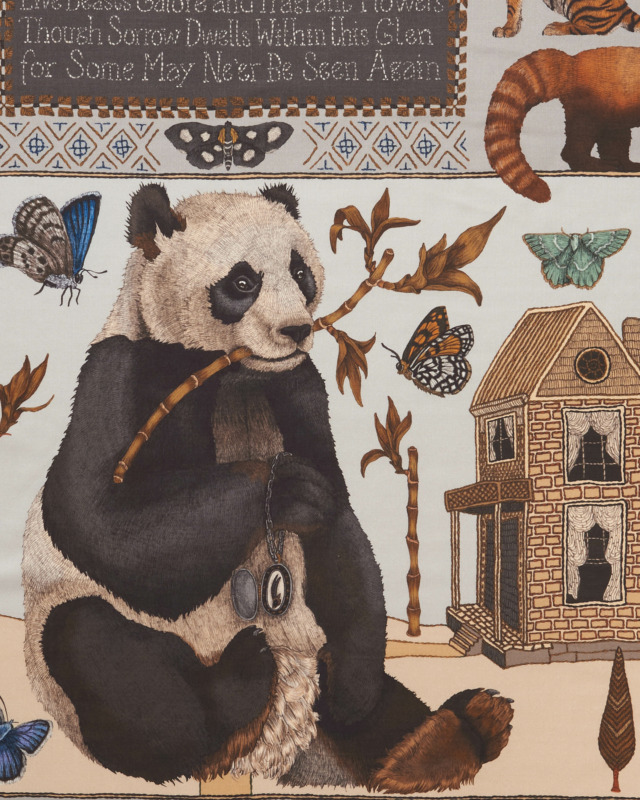
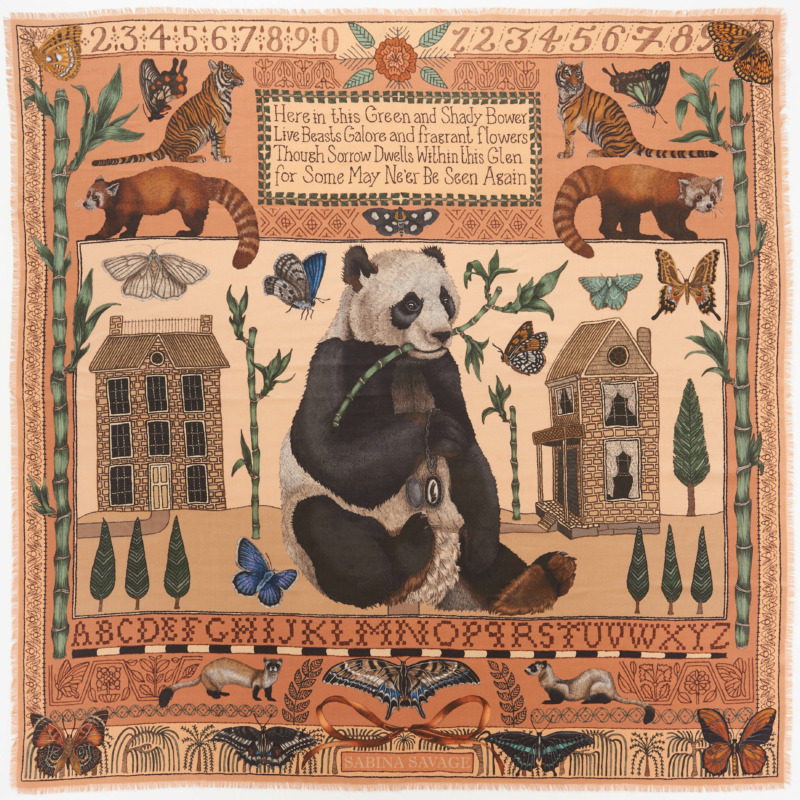
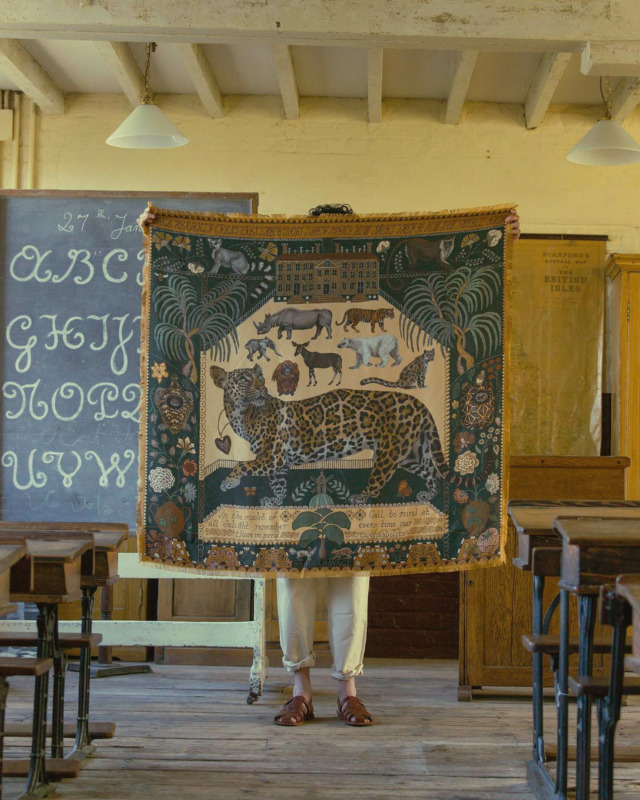
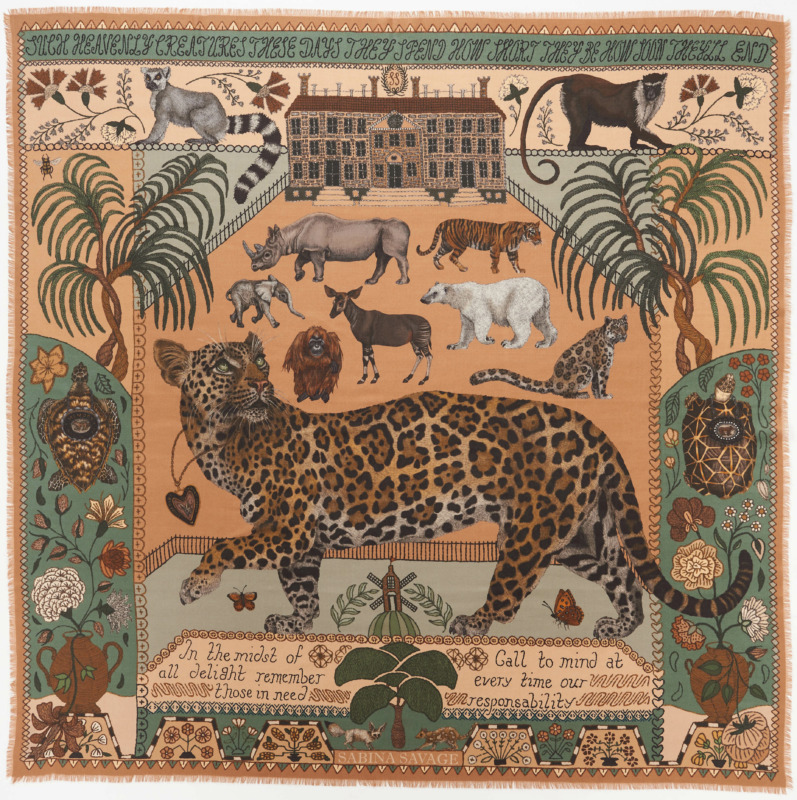
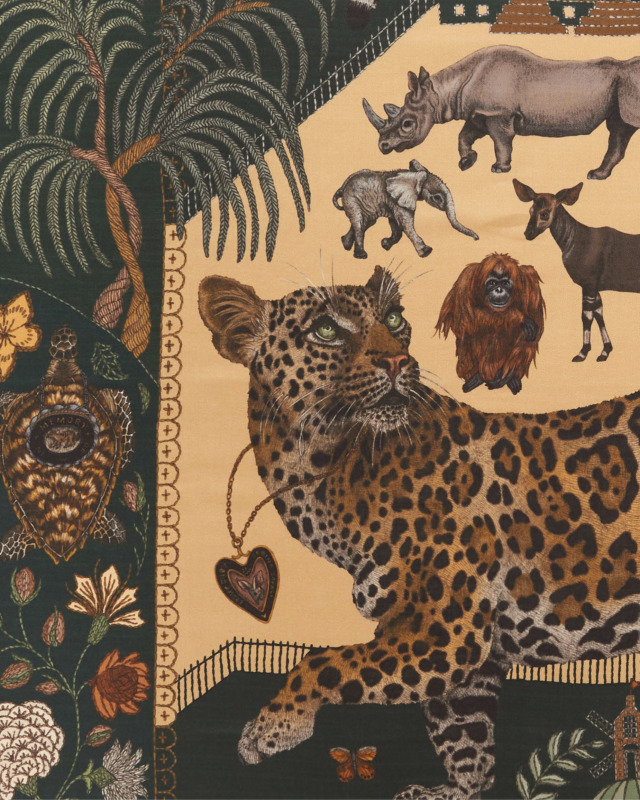
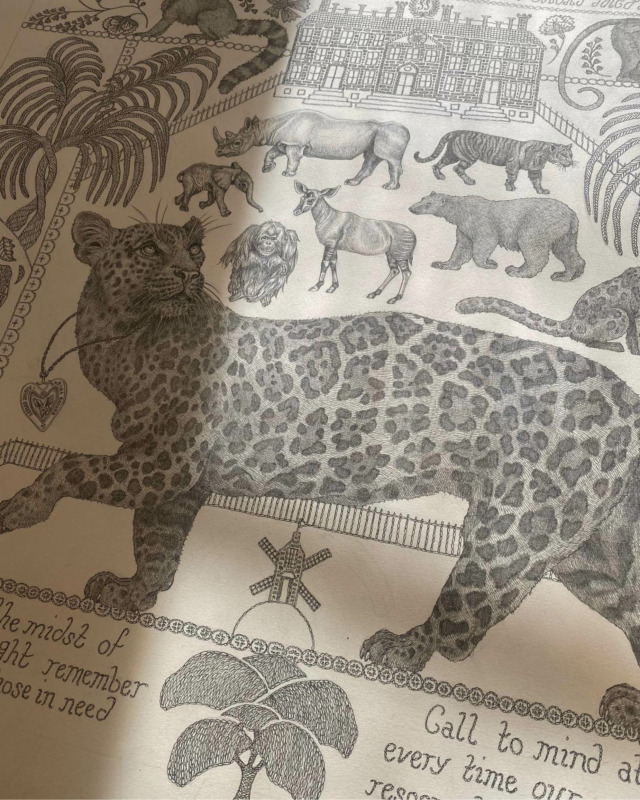
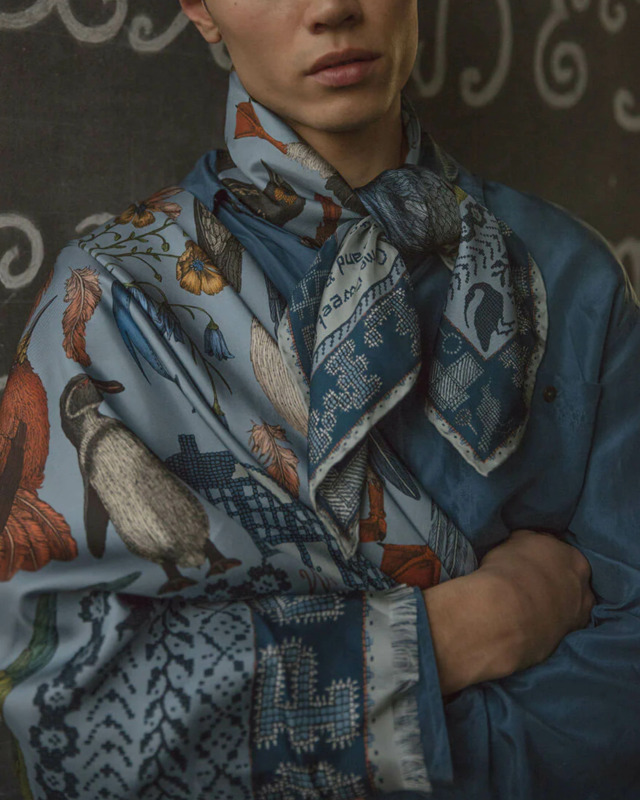
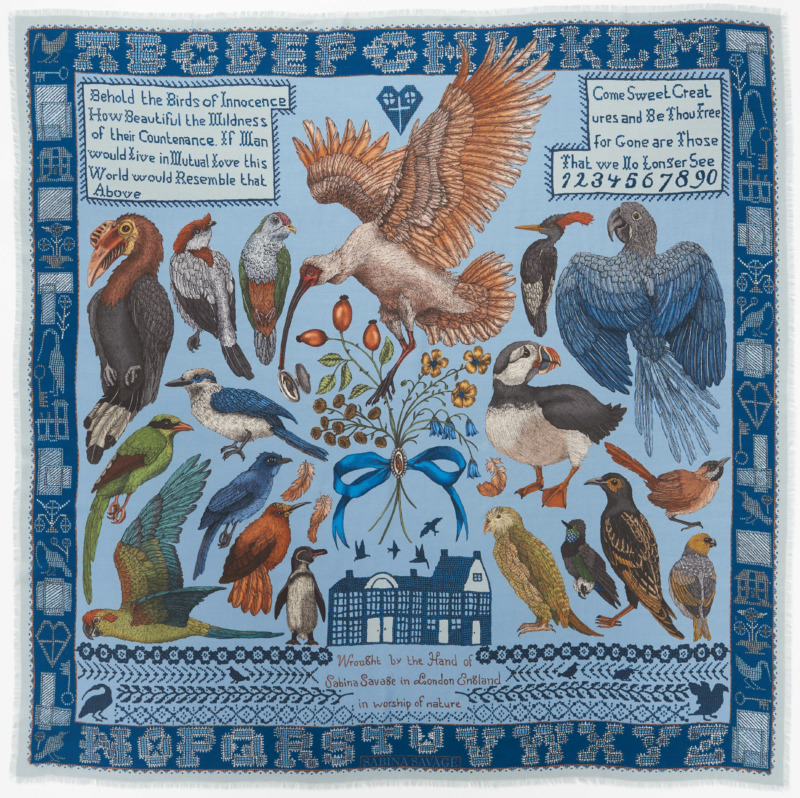
Wild creatures from forest, sahara and jungle rendered in Sabina Savage’s expert hand mark her Spring/Summer ‘23 collection.

© Sabina Savage

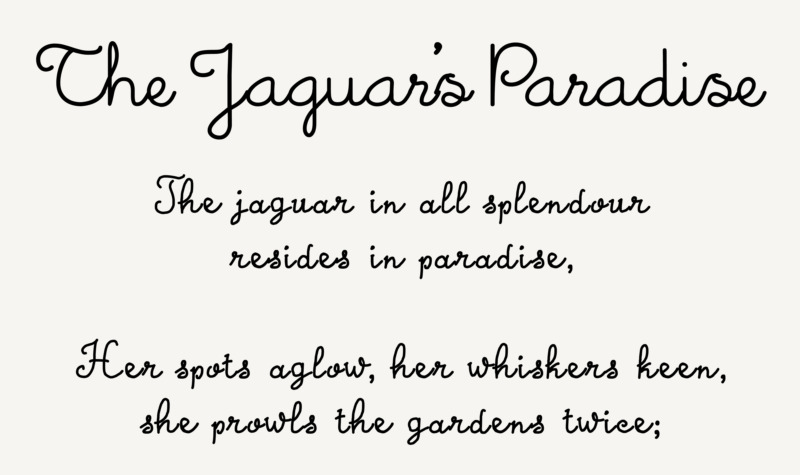
The new line of silk and cashmere scarves depict animals and insects near extinction: panda, bird, jaguar and butterfly. Despite these creatures’ dire status, Savage harkens back to a homespun time where needlework samplers reflected the social and educational teachings of the day. The lush and colorful prints suggest innocence and a deeper understanding; we will not stand to lose the beauty of our natural world and the life therein.

An Inspired Blue

A traveller at heart, Mieko Mintz infuses her unique pieces with the creativity of place.

Be it the silhouettes of Japanese kimonos, the kantha stitching of West Bengal, the punchy streetwear of New York City or the casual elegance of Paris, a global experience is what breathes life into her work. In her juxtaposed prints, find the inspiration of City Palace, a sprawling royal complex in the heart of Jaipur, Rajasthan. Constructed in 1732 with interiors both resplendent and vast, it is the former residence of the Maharajas and their families.

Within City Palace, the Chhavi Niwas, or “Blue Room” as it is commonly known, is a space defined by its deep cerulean hues and mesmerizing repeating design. Paintings of sprawling white flora and vines tumble from the ceiling in an interlocking pattern that calls to mind both fleur de lis motifs and celtic knot symbolism. As Mieko’s works incorporate vintage and antique Sari fabrics from this region, the palace’s intricate decoration perhaps inspired the original clothmaker.

Basketry from the Hills of Arta

In northeast Mallorca lies Arta, a small village nestled between lush mountains and the Balearic Sea.

Centuries-old olive trees speckle this region – the perfect material for the traditional basketry practiced by its residents. Sharing the hillside with Es Racó d’Artà, a serene countryside retreat, Daniela Gregis pursues the art of basket weaving in her own way – with an approach as poetic and meditative as her surroundings.

The entirely hand-hewn process begins in late fall, when Daniela and her team harvest olive branches and palm leaves from nearby groves. The boughs are bent into the shape of the basket, referred to as the “rib cage”, while the materials are still green and pliable. Smaller reeds and sprigs are tightly woven through each rib to create the walls. The repetitive, contemplative motion takes patience and time to perfect – and ensures that no two baskets are quite the same.

Just a short way from the quiet grounds of Es Racó d’Artà are the winding streets and narrow alleys of Arta itself. A stroll through this charming, medieval town reveals a wealth of artisan knowledge – its citizens have been crafting ceramics, clothing and basketry by hand since the 13th century. Surrounded by this dedication to craft, is it any wonder Daniela chooses to make her pieces the same way?

The beauty of these baskets is only matched by their utility. Not just intended for decoration, each can handily carry fresh produce from the farmer’s market, foraged berries or even a picnic lunch. The presence of the handmade makes using these baskets precious, inviting Daniela’s meditative inspiration into the everyday.

A Casual Californian Aesthetic

Biomimicry is the practice of finding inspiration within the modes of nature. The earth, after all, is not only our most precious resource for material, but for beauty itself.

Photography by Joe Fletcher for Dezeen

Good design draws directly from this unending well; great design improves upon it. A prime example of the latter lies in the biomimetic philosophy embodied by Feldman Architecture’s Surf House — a breezy, coastal home nestled along the sandy shores of Santa Cruz, California.

Photography by Joe Fletcher for Dezeen

The structure of the Surf House itself is unassuming and nondescript. Rendered in salvaged wood, the exterior reads beachy without pretension. The emphasis on subtlety is deliberate — the home mimics the nuances of its environment to blend in. The approach is clean and humble — the designers foster zen within the space without a terrible amount of fuss. Inside, long beams of coastal cedar lead the eye to floor to ceiling views of the Pacific out the back of the home.

Photography by Joe Fletcher for Dezeen

In assembling our summer wardrobe, we seek pieces that too reflect nature. In this pursuit, texture, tone and organic presence reign supreme. Our favorites are crafted from well-woven, natural fabrics that enhance the experience of dressing rather than distract from it. Gentle slate colors imitate the grey patina of weathered cedar beams. Sand and surf spill from both the tight weave of a creamy, linen jacket and the frayed edges of a silky, raw edge top. In wearing these pieces, we feel encouraged to slow down and breathe a moment.

Photography by Joe Fletcher for Dezeen

Be it an earthly vista or a domain manmade, our state of being is undoubtedly influenced by what we surround ourselves with. To ring your life with beauty, simplicity and things made well is to commit to a state of peace.

Photography by Joe Fletcher for Dezeen

“There is no better designer than nature.”

Alexander McQueen

Arancione & Rosso

Within Daniela Gregis’s summer collection, her intuitive designs remind us of the joy of dressing.

In this first taste, orange and rose abound – a precursor to the full spectrum of color to come. With a palette as lively as the joie de vivre that inspires it, an ease and pleasure of wear become the highlight of her work. Find within this delivery a selection of lightweight pants, breezy liberty print tunics and as always, Daniela’s signature soft, crumpled cotton shirting.

One-of-a-Kind Labradorite

Monies one-of-a-kind collection comes in the colors of ocean and sky: smokey gray agate, luminous clear quartz, dark freshwater pearls and glimmers of blue-green labradorite.

These semiprecious stones lay in hand-knotted strands and suggest the treasures found in tidepools and the power of the ocean crashing on shore.

Husband-wife duo Nikolai and Gerda Monies have innovated in jewelry since 1973 using uncommon materials and larger-than-life designs. Both classically trained goldsmiths, they branched into a range of surprising materials far wider than gold.

Based in Copenhagen and working with an international following, their sculptural pieces delight the senses. While the stones are precious, the designs offer a sense of play. Each piece–in its form, material, and scale–conveys a sense of wonder.

Art and nature meet in the most recent Monies one-of-a-kind collection. The bracelet, necklace, and earrings play with light and color and recall the natural elements that worked over time to create the stones themselves.

The Longevity of Style

Since 1985, Massimo Palomba has been making leather bags that prove every detail counts.

The studio prizes fine craft for a simple reason: beauty creates joy. From the use of natural vegetable dyes, hand-woven leathers, and custom casted hardware, a timeless style shines through every seam and handle. Each piece becomes a part of the life of its wearer, adding beauty and, most importantly, joy.

Massimo Palomba’s textures take time. Each woven bag can require up to 35 hours of artisan handiwork. The result is masterful. Rich dyes allow for a subtle expression of the high quality leather, so that it moves gently and weathers the test of time. Handmade handles and toggle clasps echo the leathercraft and complement each piece with a subtle accent.

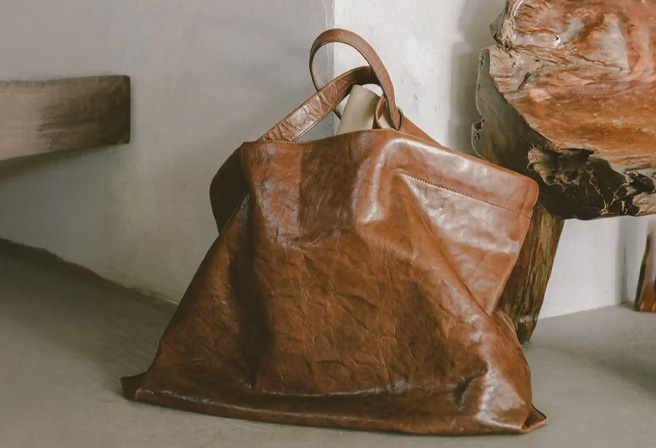
Massimo Palomba continues their play with natural textures with a limited series of cowhide totes. With solid and simple construction and a playful sense of presence, the hair-on hide tote offers a luxurious and beautiful take on the every-day bag. Massimo Palomba executes their ideal and delivers beautiful pieces that bring joy.

Textural Imagination

In all the hustle and bustle of seasonal change, after hot magenta, alluring chartreuse and neon orange have all but sucked us dry, we find ourselves craving the classics.

Simple gold in its most buttery presentation, set against a string of faceted diamonds or milky pearls – a breath of fresh air. In these simple combinations, Greig Porter highlights his penchant for imaginative texture.

The push and pull of organic lines and geometric cuts allows Greig to create striking jewelry that still feels timeless. The tension between curvature and angle is enticing, drawing our attention just a bit closer to each piece.

Greig’s signature may well be his use of alternating delicate gold beads and bars between triplets of glimmering stones. Subtle hints of the jewelry traditions of South Asia are found in his mingling of elements.

Special attention is paid to the way his pieces wear – how a necklace falls is just as textural as the hard cuts of its stones. In Greig’s work, the pieces are fluid and gentle. They rest against the skin – an effortlessness so needed when simplicity calls your name.

In Viaggio

In Viaggio (traveling) we discover everything.

We ignite our curiosities and our dreams — experiences and wonders abound — troubles and discomfort also raise their heads. But more than anything we become acquainted with ourselves. We become advocates for simplicity, comfort, timelessness, truth… a gentle helping hand. These are also the words that best describe the core values, aesthetics and fabrics of Album di Famiglia.

Summer Denim

Sustainability. Transparency. Green. Buzzwords that speak to the caretaking of our planet crop up everywhere, and for good reason.

It’s true what they say: actions speak louder than words. Closed brings these ideals to life in their sourcing, production, and distribution practices. They share how their earth-conscious choices make a difference during every step of the process — from their hands to yours.

Their specialty line, A Better Blue, takes sustainable style to its apex. Started in 2018, this line of denim uses half the water of conventional cotton, a quarter less energy than conventional production, and produces each pair in the “greenest weaving mill” in Europe.

Craftsmanship and environmental consciousness go hand-in-hand with every pair of Closed jeans, which minimize waste while maximizing sartorial impact. Between organic cotton, low-impact washing techniques and gentle dyeing practices, each piece lives up to its sustainable ideals.

Trippen’s Philosophy: Handle with Care

Trippen reminds us each day — with the shoes on our feet — that the Earth should be handled with care.

And so, it was only natural that designers Claudia and Michael would develop the Spring Collection exploring the architecture and meaning of a greenhouse. There is no irony as Earth Day approaches…

The symbolism of a greenhouse was tied masterfully into other elements of the collection. A myriad of slides was introduced for those slipping into something easy for a walk to the potting shed or out into the garden.

Trellis-like designs revealed themselves in the Emerge Wooden Wedge and the Knotty Sandal. Rectangular window pane-like shapes influenced many silhouettes from Rescue in red, shown below, to the dramatic heel structure of Stand — just as we collectively work to take a stand for the environment. Even their new color choices for the season coincide with fashion’s trend to Go Green, both literally and figuratively!

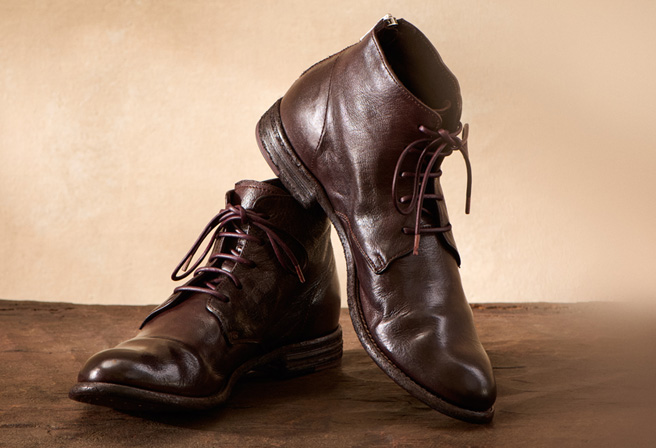
Producing with the Earth in mind is central to Trippen’s philosophy and design process. Each pair is made with environmentally-friendly vegetable dyes and can be resoled multiple times during its long lifespan. Claudia and Michael continue to develop vegan and biodegradable styles. They use solar power and adhere to the “buy less and buy better” mantra. Most of all, they encourage all of us to Handle the Earth with Care.

Vintage Baskets of the Borana People

The Borana people belong to the Oromo group in Ethiopia.

They are semi-nomadic herders who transport their belongings on camels and donkeys as they seek pasture for their animals. Borana is pronounced with the final vowel silent. It refers to both the people and their language and also means “friend” or “kind person.”

Borana Tribe Traditional Huts in Olaraba, Ethiopia © Eric Lafforgue

These Cho Cho baskets are crafted from finely woven reed and an indigenous tree bark. It is a highly intricate style of weaving requiring much skill.

There are rings of aluminum and brass threads woven in bands around the entire basket. Woven lids serve as a drinking or serving cup.

Borana Tribe Women in Front of a Traditional Hut in Yabelo, Ethiopia © Eric Lafforgue

Smaller baskets would be kept at home to store milk while larger lidded baskets were used to transport water; the latter smoked to make them watertight. The more decorative baskets are used during special occasions to serve guests or as wall decoration.

The Language of Art

Painted in 1945, “My Backyard” is part of an iconic series of works that depict the red and yellow cliffs near O’Keeffe’s home in Abiquiú, near Ghost Ranch, in New Mexico.

Here she rendered the spectacular environment of her home with a softness and sensuality that causes it to slip between landscape and dreamlike abstraction. We found this same softness at the core of the Spring Collection from Marsèll.

In My Backyard, O’Keeffe translates this landscape into the language of art…“Always her desert poetry is embodied in robust physical language, speaking to her senses.”

Suffused with a crystalline quality of light, O’Keeffe’s depiction of her backyard cliffs perfectly captures the rugged architectural forms and brilliant colors she found there. Marsèll too found a different voice this season. Despite their strong willed, boundary-breaking ethos, the warm, earthy tones and luxe textures speak of sensorial lightness and fluid memories — the sun’s rays through the clouds.

Source: Georgia O’Keeffe Retrospective Exhibition, New York, 1970, p. 22.

Precious, Playful & Otherworldly

Sequins are both precious and playful. Light dances off of their faceted surface.

Colors sway and spin blurring the lines between tones and hues. Like fireflies at night, their spark flashes only to go dark and mysteriously reappear.

In this one-of-a-kind piece, a vintage silk border sings of a bygone era of glamour and exoticism. A dense forest of sequins in rust, red, olive and gold shimmer in collective harmony while making room for each individual disc to flash with a solo. The result is a modern day camoflauge of the night.

Rianna, who hand picks each fabric in her travels, selected an antique woven European silk jacquard in a latticework of rust brown lines for the interior. It is cool and smooth to the touch. Exquisite.

Art and fashion are inextricably linked. The work of nature photographer and environmental science professor Kei Nomiyama captures the light of fireflies on Japan’s Shikoku Island. In 30-minute long exposures he documents the tiny lights of fireflies in their short two week breadth of life. Mystery, beauty and otherworldliness are captured in his lens, just like the energy and vitality captured in the discs of Rianna’s vintage sequin jacket.


The Regal Refinement of Zardozi Embroidery

© Video: Melinda Triana; Photo: Sahiba Chawdhary

With its royal heritage, zardozi or bullion embroidery brings a heightened preciousness to Fall 2023 collection by Maria Grazia Chiuri on.dior.com/fall-2023. Karishma Swali explains how, in the Chanakya ateliers in Mumbai, wound and braided metallic yarns are trimmed and couched to form meandering motifs and outline gem-like crystals. (Source)