Author Archive

Introducing: A Tentative Atelier

Since their debut, A Tentative Atelier have collaborated with boutiques in over 10 countries. In 2014 Pauline obtained an Italy Vogue Talent Award with a scholarship to complete a master’s program at Domus Academy in Italy. In 2015, Nam won the Perspective 40 Under 40 Design Award. Both awards have recognized their outstanding design sensibilities and the strides made in their fashion journey.


SS19: La Rencontre

Hong Kong in the 1900's
Photo of Hong Kong in the 1900’s via: vintag.es

Several years after graduating from the Hong Kong Design Institute and working at various fashion companies around Europe, designer duo Nam Tsang & Pauline Yuen founded A Tentative Atelier in 2012. Based in Hong Kong and The United Kingdom, A Tentative Atelier continuously attempts to explore the use of artistic handicraft elements. With innovative forms and silhouettes on garments that would usually be considered typical, there is something unique about their creations that makes them anything but. Having presented at Paris Fashion Week since 2013, Nam and Pauline use their brand as a platform to encourage and sustain the spirit and tradition of high-quality craftsmanship, and are known for being the last generation of Shanghai Artisans. A Tentative Atelier is supported by professional tailors and machinists with over 40 years of experience in the garment industry.

"That's love: Two lonely persons keep each other safe and touch each other and talk to each other." - Rainer Maria Rilke

With their work, A Tentative Atelier have maintained a contemporary sense of luxury while creating a timeless vintage look. This is in part due to their painterly inspirations. Many of their campaigns, such as Fall / Winter 2018, and posts on instagram create a comparison in tone between art and their work. The Spring / Summer 2019 collection is no different. Titled “La Rencontre” (the encounter), this season focuses on garments with patchwork elements, embroidered and patterned fabrics, as well as eclectic buttons. These details combined with the silhouettes and irregular hemlines that are in use, create a romantic aesthetic reminiscent of the Renaissance, that becomes deconstructed and made new again. The reinterpretation of victorian age costumes make A Tentative Atelier a brand with surprises hidden in every piece. None of this would be possible if not for the synthesis of their former influences in Hong Kong and Europe.

A Tentative Atelier Spring / Summer 2019
A Tentative Atelier Spring / Summer 2019 La Rencontre
Photos of Hong Kong in the 1900’s via: vintag.es

EXPLORE A TENTATIVE ATELIER


What Inspires Marni?

Amidst the research process for the Resort 2019 collection, Francesco Risso came across an astonishingly meticulous, antique book handmade in 1856 by an aristocratic English lady. The head designer at Marni, pictures this woman sitting in her luxurious living quarters and carefully collaging together a work of art that told a fragmented story of her family through her chosen images. This was far before this kind of craft was recognized as an art form, and Risso deems it “the best mood board ever.”

Francesco Risso on a Boat with his Father

From this antique and heartfelt compilation of memories, Risso assembled a collection that simultaneously incorporates and rebels against Victorian aesthetics, bourgeoisie dressing, sportswear elements, and an almost cartoonish experimentation with scale. The initial effect of the assemblage of styles exudes offbeat playfulness. Still, Risso manages to keep the collection sophisticated in the skillful color blocking and pattern mixing, and of course the use of high-quality materials.

Not unlike Dries Van Noten, Risso pulls from his past experiences, his subconscious even. His childhood is a unique one; he was born at sea on a sailing boat where he lived with his family for five years before they all returned to Genoa, Italy. His father often wore what he loved most, the color pink. At this time, Risso recalls his parents hosting large dinners bursting with delicious food and drink, along with eclectic people from around town.

Risso is perpetually inspired by spontaneity, with Kurt Cobain being one of his fashion icons. He has amassed an admirable image archive, allowing him to surf quickly from whim to whim. For him, it should be obvious how fashion is made, hence the visible stitching, disordered patchwork, and unfinished quality that some of the pieces have. That’s not to say the collections aren’t extremely polished and well executed.

The resort collection boasts bold, abstracted floral designs using saturated colors in a pop art fashion, reminiscent of Andy Warhol or Keith Haring. With this collection it seems Risso has reinvented obvious spring patterns and colors, masterfully mixing geometric designs and organic shapes for a fresh take. Soaking in the countless inspirations, we find that Marni’s new collection celebrates bold femininity, reminding us of what we loved when we were young, but with Marni’s imaginative twist.

These are among the many reasons we love Marni. Risso’s use of pattern in combination with the silhouettes he designs are artsy and intellectual, with a playfulness that is appropriate in many situations, particularly a casual place. There are some warm cottons and other sporty elements that speak to nature, and a connection to the world has always been one of our major inspirations as well as his. Growing up at sea, and later in Genoa,  it’s understandable that he would take pieces of his growth and translate them into his work. It is these qualities that we highlighted with our take on his collection, as we traveled back to his roots, crafting a story about a woman spending her days by the sea enchanted by the natural elements.

Marni Styled Shoot
Marni Styled Shoot
Marni Styled Shoot

Explore Marni


Daniela Gregis: Salt and Pepper

Daniela Gregis has long been inspired by her days spent at her studio in Bergamo, Italy, and the atmosphere in Piazza Veccia.  Her work often displays an artisanal country feel, as her designs are always textured and voluminous, encouraging others to live with the brightest of outlooks.

Daniela Gregis SS19

In her latest collection, Daniela has been particularly focused on the relationship between opposites. This is nothing new, as her work has always contained contrasting textural elements, but never has she stated it quite so obviously. From the way the metallic qualities of some fabrics contrast with the matte of others, to the way warm oranges and cool blues have always wormed their way into most of her collections, it is undeniable that Daniela has always held a fascination with this concept. 

Spring/Summer 2019 is simply titled, “Salt and Pepper”. It is not necessarily referencing the seasoning itself, but rather the idea of contrasts, and how they are also inherently complementary because of their differences. When combined properly, her work becomes a conversation between two garments, enhancing the best qualities of each while displaying their own strengths.

When looking at her work as a whole, it is easy to understand how the washed, textural qualities of a shirt can intensify the clean-cut aspect of her smooth pants. Vibrant blues, oranges and reds converse with neutral linens and houndstooth patterned fabrics to create the most delicious combinations.

Daniela Gregis SS19
Daniela Gregis SS19
"The ingredients of all time, linen and cotton, cut and cooked in color and warmth, topped with a spoon of buttons, buttonholes, necks…with salt and pepper every dish, every day is new, alive in every little detail.” - Daniela Gregis, Salt and Pepper

EXPLORE DANIELA GREGIS


Sabina Savage: The Noh Playbook

Sabina Savage The Noh Playbook Moodboard Spring Summer 2019
Images via Sabina Savage

A mountainside overlooking Kyoto glistens in the early morning dew. A gentle golden light drips itself over the outcrops of rock, pooling in the flat spaces, cutting through the gentle grey haze of dawn. Beside the crooked path, an ancient, wooden Not theater barely stands in the amber light. Built on the stone overlooking the city below, the residents would snake their way up the path for each moon, eager to watch their favorite plays and dances. However since the fall of the Tokugawa Shogunate, the theater has fallen into disrepair, the actors now forbidden to perform. To shade themselves from the mid-simmer sun and to screen themselves from the cold mountain winds at night, many animals on the mountainside have been using the abandoned stage as a shelter. It has become their home and refuge; a place to raise their young and protect their nests.

One day, the villagers decide that the crumbling theater is an eyesore and that they will demolish it. Owing to his large ears, the hare overhears their plans and hastily runs back up the mountain to relay the news to his friends. The animals are panicked and immediately begin quarreling over the unwelcome announcement. The wily fox, as wily foxes are prone to do, slopes away unnoticed behind a bamboo screen. A few minutes later, he reappears, dressed in a fine embroidered kimono, its golden threads shimmering in the morning sun. Having discovered the ancient playbook, he has used his sly wit to unlock the dusty costume chest and has dressed himself in his luxuriant findings. His cunning plan is to fool the villagers into believing that the theater is possessed by benevolent spirits (Yõkai), and therefore convince them that it would be a bad omen to demolish it. The other animals leap with gleam this masterful ploy and jump into the chest, rummaging to find costumes for their new characters. Inros and netsukes, armor and tassels, fans and ribbons, the box is a treasure trove of spectacular adornments.

As the villagers footsteps crunch towards the theater, the animals are prepared for and awaiting their arrival. With the deep hollow rhythm of the Tsuzumi drum beaten by the spoonbill, the grand performance begins. – Sabina Savage

This year Sabina’s collection references the costumes, masks and plays of ancient Japanese Noh theatre. Along with antique woodblock prints, kimono patterns and tales from folklore, she has handcrafted another adventurous story. The intricate hand-carved artwork found on inros (small wooden or ivory boxes used as an external ‘pocket’ tucked under an obi) and netsukes (the tiny wooden or ivory bead to stop the inro slipping through) also played a large part.


The Rooster's Dance, Sabina Savage, The Noh Playbook, SS19, Spring Summer 2019
Images via Sabina Savage

The Rooster’s Dance

Set on the white sands of Miho beach, the Onagdori Roosters perform Hagoromo (The Feather Mantle). As the mystical cloak of feathers swirls into the sea breeze, it transforms into a flock of elegant, richly colored birds; their tassels and precious netsukes trailing in their wake. 


Images via Sabina Savage

The Cunning Kitsune

The sly fox uses his obi braid to fasten his additional 8 tails, transforming himself into Genkuro, a mystical Kitsune. As their performance unfolds, the hare begins to feel uneasy and suspects the fox may be using the play to gain himself an early dinner.


Images via Sabina Savage

The Spoonbill and Jindo

With his flowing mane of silken tassels, the Jindo dog has cleverly disguised himself as a sacred, mythical guardian Komainu (Lion Dog). With the aid of the Roseate Spoonbill carrying his props, he plays the role of Yorimasa, a great samurai warrior, laying down his fan and signaling the end of the performance. 

Explore Sabina Savage


TAP by Todd Pownell

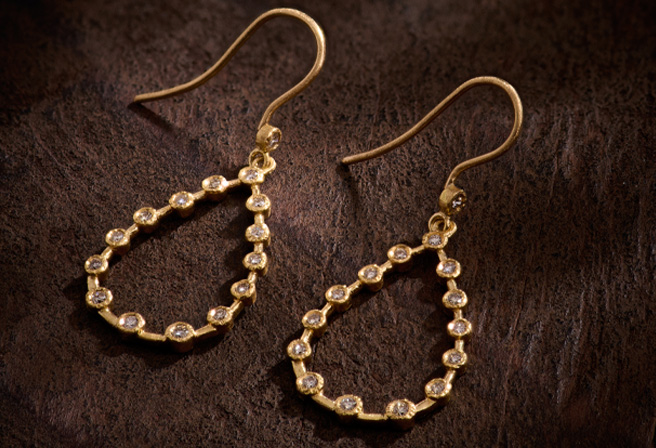
TAP by Todd Pownell is a result of the talents and experiences of Todd Pownell, Debra Rosen, and their small team working out of Cleveland, Ohio. Todd Pownell is a technically trained goldsmith and graduate gemologist, while Debra Rosen has experience rooted in European studio atelier practice and jewelry fine art traditions. Their complementary perceptions work together to create the romantic vision within Todd Pownell’s jewelry designs, that have been praised as the pique of craftsmanship and creativity.

"We hope to evoke mystery, and the fast changing yet eternal conditions of the natural world – of wind and storm, and sunlight as it spreads sharp and warm through the last minutes before night.” - todd pownell

Todd Pownell’s root aesthetic is in combination enchanted, sophisticated, and a celebration of the natural elements. Jewelry has been regarded through history as trophies and tributes, critical in the celebration of beauty in many cultures and events in history. As such, it is his belief that a simple adornment can showcase the clarity of light and how it mixes with the splendor of earth’s naturally created gemstones. Harmony, mystery, and the universe are other themes within each of his pieces.

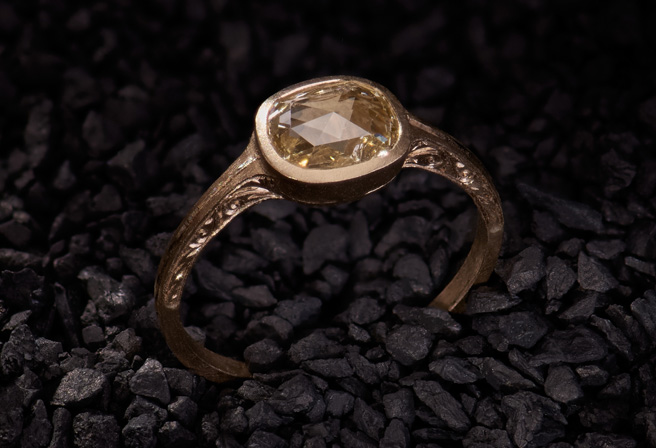
Todd’s signature design is the “upside-down,” or reverse set diamond. By setting the gemstones in an unconventional way, it reveals a new perspective on how diamonds can capture and reflect light at oblique angles. Light and dark are key concepts in his work, as he constantly experiments with the two, both in terms of the color of materials he uses the way light plays off of his creations. Rugged edges contrast with the refined, showcasing how juxtapositions can create an inherent balance within each piece.

Their elegant designs are only enhanced by their moral practices as ethical metalsmiths. Todd and Debra hold respect for the innate properties of noble metals and gemstones, as well as their social and environmental responsibilities. From promoting a healthy working environment for their employees, to working with ethically mined gemstones, metals and working with recycled source materials, it is clear that Todd and Debra care deeply about the impact on others and the world around them.

EXPLORE TAP BY TODD POWNELL


Pippa Small: Stone Stories

It’s no surprise that award-winning jewelry designer Pippa Small spent her childhood traveling with her family, as exploring the world still plays an essential role in her current work. Her love of stones, travel, and anthropology comes to an apex in her coveted jewelry designs. By working with communities in Burma, Romania, and Afghanistan, Pippa seeks to honor the stone’s origin and support talented artists in sometimes unstable environments.

Now based in Notting Hill, Pippa recognizes flaws within the industry and seeks to rectify them through transparency in her own process. Taking responsibility, she seeks out and works with Fair Trade mines. She earned a master’s degree in medical anthropology and has never been formally trained in jewelry making. However, her personal style and interest in historic and emotional symbols shine through in the asymmetrical shapes, handmade settings, and celebration of what might normally be perceived as imperfection.

Pippa places a lot of importance on the meaning of her stones and materials. With each piece, there is an accompanying story, and some believe that stones can even have an effect on our emotional state. Pippa embraces this idea with her Stone Stories. We want to share some of Pippa’s research behind our new arrivals:

Pippa Small
Pippa Small
Pippa Small
Pippa Small

EXPLORE PIPPA SMALL


Bertozzi: Family-owned since 1920

Family-owned since 1920, Bertozzi works closely with artisans who are skilled at block printing. Luigi Bertozzi is the grandfather of the current owner and the one who originally started this business. He was a cabinet maker for years, until he started carving wood motifs when he became inspired by rural landscapes and Italian architectural decorations. Since then the business has been passed down from Luigi to his son, Pier Paolo, and from Pier to Gianluigi.

Gianlugi is an architect and artist, who has proudly followed family tradition while implementing innovative ideas in design and materials. By doing so he has ensured them a place competing with both traditional and modern-style home goods.

Since the beginning of their creation, Bertozzi has been collecting their handcrafted stamps and compiling them into an archive. By doing so, they have access to over 500 motifs that can be used in combination for an endless expression of styles. Their stamps are not only used to print on cloth, but are also often used to stamp the surface of ceramics before baking.

From stamps to dye, every part of Bertozzi’s process is handmade, and their color recipes are one of their best-kept family secrets that are impossible to replicate. Although some may view the inconsistencies in their printed linen or ceramic glaze as “imperfections”, these variations in appearance are actually a mark of authenticity, showing that these are unique handmade items.

Bertozzi is also committed to using eco-friendly practices. Aside from using environmentally friendly dyes and 100% natural fiber that is made in Italy, they are also committed to a production model that follows a make-to-order system. By creating work as it comes in they are reducing any wastefulness that can occur with mass production. This also means that they work more closely with their clients, often creating items that are specially made for their customers.

EXPLORE BERTOZZI


Trippen: Soles for Every Style

Trippen Sole Styles
Image via Trippen

Trippen has a unique way of manufacturing their shoes. Each of their designs are dependent on the production process, which determines what they can create that will simultaneously counterpoint issues like irresponsible resource use. This is why the majority of their soles are created with rubber, as it allows for the shoe’s continued longevity and durability. Not only this, but the soles of their shoes are sewn into the upper, which means that glue is unnecessary and allows for worn soles to be removed and recycled later. Trippen offers over 2000 models available in 30 different materials and colors, and many of these can be customized to fit anyone’s aesthetic. Their website boasts an entire “Made For You” section, which houses Trippen’s entire style history. Any of these shoes can be customized to your liking, in every aspect from the color and treatment of the leather, to the color of the sole.

In addition to the iconic silhouettes on the upper portion of the shoe, Trippen soles are designed perfectly for every personality. Each sole is not only created to be a work of art, but to be functional as well. Here’s a look at the variety of Trippen soles and shoes we offer.

The Splitt Sole

Trippen Splitt Sole

Designed in 2012, the Splitt wedge sole is approximately 2.5” in height. The Splitt sole was conceived as a sporty, winter alternative to some of their previous collections. It is made entirely from rubber, as most of their soles are. The portion of the heel that rests on the ground is grained for optimal grip.

The Happy Sole

Trippen Happy Sole

Trippen’s Happy sole is a platform that’s around 2.75” in height, and was created in 2008. The internal construction is specially designed to stabilize the foot while it is perched on the platforms. This sole contains well-positioned air chambers that help reduce the weight, and absorb shock when walking.

The Katmandu Sole

Trippen Katmandu Sole

Trippen’s Katmandu sole is ideal for winter styles. As far as care goes, because this is a winter style it requires just a bit more attention. The edges of the sole and the upper of the shoes should be treated with suitable shoe polish on a weekly basis to prevent moisture from seeping in.


The Sport Sole

Trippen Sole

The Sport sole is a development of the original Box sole. These soles contain a raised base, allowing the shoe to be worn without worry of moisture seeping into the leather. A full grain leather insole stabilizes the shoe and offers an excellent fit, while the sole’s ridged base provides stable grip.


The Stick Sole

Trippen Stick Sole

The Stick sole is only available in specific styles. Because the sole itself is made up of multiple parallel bars, this is by far the most flexible sole Trippen offers. The shoe is free to bend as much as needed to provide a comfortable walking experience thanks to its construction.


The Penna Sole

Trippen Penna Sole

The Penna sole is nearly as flexible as the Stick sole. Trippen designed the Penna in 2003, with the goal of combining comfort and function in a way that allowed them to facilitate a simplified manufacturing process. The concave design allows shock absorption and is made entirely of rubber. 

Teixidors & Too Good: A Domestic Anthology of Fabric Textures

Too Good: Sheep on a Countryside
Images via Teixidors

Teixidors is one of those special brands with a message that parallels the beauty of its product. Before uprooting their lives and starting Teixidors in 1983, Juan Ruiz was working as a technical engineer in the textiles industry and Marta Ribas was a social worker specializing in psychology. They decided to embody their philosophies and moved to a workshop right outside of Barcelona. The couple then began from scratch–building the wooden looms themselves and self-learning the traditional weaving process. At its foundation, the brand seeks to employ and empower people with learning disabilities. They discovered that the traditional technique of weaving with a wooden loom is a therapeutic process, as it exercises the psychomotor coordination and activates mental concentration. Today Teixidors employs 30 people with learning disabilities along with a support staff. Each weaver is trained for five years and then awarded with a certificate as an artisan.

Juan and Marta show that sustainability is not just about having a positive environmental impact, but a social one as well. By creating a positive working and learning environment for their employees, Teixidors is more than just a workplace. It’s an opportunity that enables those who might not otherwise have it, with social integration and economic independence.

Teixidors
Images via Teixidors

As for the quality of their products, Teixidors surpasses expectations in their tasteful designs and coveted materials. The ecological collection exclusively uses Macomerinos Wool, a natural, handwoven material. It is luxuriously soft and has 100% traceability “from the birth of the sheep to the commercialization of the piece.” The throw’s color is due to the organic color of the wool. The ecological collection uses natural dyes for their statement appliqué cords, giving the pieces textural intrigue and unique composition.

Teixidors & Faye Toogood

Teixidors Faye Toogood
Images via Teixidors

Teixidors and Faye Toogood collaborated to design an ecological throw that is described as a “domestic anthology of fabric textures.”  The panels in the blanket are all of slightly different proportion and hue—achieved through the natural coloring of the 100% merino and yak wool and eco-friendly dyeing. This blanket is a thoughtfully crafted work of art, with its variety of discrete textures and eye-catching composition through proportion, density, and appliquéd elements.

Closed Denim: Finding Your Perfect Fit

Closed denim jeans
Closed denim jeans
images via Closed

Closed Denim’s philosophy essentially boils down to family, trust, and diversity. The brand began as Italy’s premiere denim label, and since 1978 it has upheld high standards of aesthetically innovative and quality products. They commit to “French imagination, Italian craftsmanship, and German tradition.” 

While their history is compelling, many denim brands exist today, and it can be overwhelmingly difficult to sift through the options. Finding the perfect pair of jeans is no easy task, and it’s not always the most uplifting. But there’s no better feeling than finally discovering your perfect fit, and we’re here to help. It’s our belief that Closed jeans have the diversity to fit many unique styles, lives, and body types.

A lot of us here at Santa Fe Dry Goods and Workshop proudly wear and love Closed as a wardrobe essential. They remain one of our favorite denim brands, and here’s why:


WHY DO YOU LOVE CLOSED?


Rachel (Customer Service Team) loves Closed for the colorful washes, essential for spring time. She finds the Baker Cropped Narrow Jeans to be supremely flattering and comfortable, with a healthy amount of stretch and the perfect tailoring. It is also important to her that Closed is actively striving for an eco-friendly approach in an industry that is characteristically wasteful.


Jessie (Director of Stores) prefers the high-waisted styles. She loves how these fits are a true high-waist, more so than others on the market. She also admires how each season Closed produces new specialty cuts and always offer a variety of washes, making them a dependable brand.


Tina (Sales Associate and Merchandising Manager) says the cut of styles such as the “Pedal Pusher” reminds her of a vintage aesthetic, bringing her back to when denim jeans were first created. They are comfortable and flattering, sitting perfectly on the hip and cropping right above the ankle. She believes there is truly a style for everyone, from the fashionista to the more conservative denim-wearer.


Rebekah (Web Sales Coordinator) normally doesn’t wear jeans because she finds them uncomfortable, however for Closed she makes an exception—especially for the classic Skinny High-Rise Jeans. Rebekah shops for her body, and believes this style suits her straighter silhouette and accentuates her long legs. She exclaims, “I think they have the right combo of stretch and stiffness so they don’t look like ‘jeggings’! Heaven forbid!” She also notes that their colors and textures are tastefully designed, and they hold their shape and wash.


Katie (Product Marketing) is a fan of Closed because they are not only flattering in color and cut, but they also run true to size—eliminating the frustrating guessing game that typically comes with trying on jeans. She loves the Worker ’85 High-Rise because they cinch and flatter the waist, and have a fashionable wide leg that is exciting to style.


Explore Closed


A Brief History of the Handloom in India

madhya pradhesh handloom

Image via Madhya Pradesh Tourism

Handlooming Today

Not only is handlooming important because of its cultural connotations, it also plays a vital role in the country’s economy, because it is the second largest economic activity after agriculture. As one of the most important industries in India, working with handlooms has provided employment to at least 4.3 million people (according to the 2009-2010 consensus). There are essentially production hubs scattered along the length of India, and each specializes in a particular type of textile production.

Ludhiana in Punjab, for example, is considered the center for manufacturing wool textiles, while Coimbatore creates those made of cotton. And although nobody in the country wears hosiery, Tiruppur in Tamil Nadu is the main producer, and creates the material primarily for export.

By giving direct and indirect employment to millions, and accounting for more than half of all hand woven material produced in the world, this tradition is more impactful than one would think. The production of fabrics by hand not only allows for the weaver’s ability to shine, but also ensures that the end result is clothing that was created sustainably.

In lieu of searching for cheaper production options, or sacrificing quality for quantity, there are a number of designers who are taking a similar ethical approach to their work by employing those who have the skill it takes to create works of art, all while keeping traditions alive.

handloom injiri

Images via Injiri

Injiri itself translates to “real India”. Established by textile designer Chinar Farooqui in 2009, the label expresses her appreciation for the traditional Indian textile techniques. By designing all of her items alongside weavers who who work with wooden handlooms, her textile design is the most significant feature in her products. By working from her studio in Jaipur, Farooqui has developed a network of handloom collectives that spread from Gujarat to West Bengal.

And although Lisa Corti is not entirely focused on handlooming, it is a brand that produces their work directly from India. By keeping the manufacturing process contained, they are preserving traditional methodologies and ensuring that their work is quality through every step. Trivandrum is the first stop on their journey, as this is the area that they manually weave their fabric on wooden looms. This is a process that has remained unchanged over time, and is so characteristic that there are large cooperatives of women who specialize in it. From there the garment travels to Jaipur, which is where they have perfected woodblock printing by hand. The blocks are engraved by chiseling craftsmen who produce the desired designs, and the number of blocks required for a print depends on the number of colors in the design, which means one of their pieces could require as many as six different blocks. After they are completed, the blocks are dipped in the dye, and pressed one by one, into the fabric until the design is complete.

ilovepero embroidering process

Image via Péro

Péro also creates their work from start to finish within India. Their garments move as they are handloomed, hand dyed, hand embroidered and finished off with details that require exquisite attention. As a whole, Aneeth Arora genuinely cares about craft and extending a sense of community or an authentic connection, to the people who wear Péro.

Neeru Kumar is just as invested in the meticulous care that their home goods go through. Designs that are handloomed take precedence, in addition to hand embroidered details. Classified as a textile genius, Neeru Kumar produces her work with indigenous materials and crafts, shining a spotlight on many forgotten techniques and fabrics, especially kantha, ikat and khadi. It’s easy to see why people take a liking to the work these brands produce, as they are authentic, and thoughtful in all of the right ways.

Roots of the Handloom

It is safe to say that humans have been weaving cloth for centuries, thanks to evidence indicating that it was practiced as early as the Paleolithic era. Handlooming however, has a complicated history and it is hard to place exactly when it came to be. Some state that weaving traveled to Ilkal near the 8th century A.D., around the time that the Chalukya Dynasty was in full swing. In the years since, it has become a traditional textile art within India, thanks to the production of saris, as each region of India contains their own design techniques that are characterized by specific motifs and colors. 

Chanderi Saris

violet and gold threaded sari

At a small town named Chanderi in Madhya Pradesh, these saris were established at the heart of the country. Madhya Pradesh is known for its historical significance, as well as being a world famous center for weaving in the 2nd century BC, rising to prominence in the 11th century when it became the most important trade route in India. This was due to its proximity to the routes leading to ancient ports of Gujarat, Malwa, Mewar, and Central India regions. Records show that those who used handlooms ultimately wove Chanderi saris for royalty between the 12th and 13th centuries.

There are statements by Maasir-i-Alamgir (1658-1707), ordering the use of a cloth embroidered with gold and silver for making khilat (a ceremonial robe or other gift given to someone by a superior as a mark of honor). The reason many found this fabric so attractive, was due to its softness, transparency, and the fringes embellished with heavy gold thread embroidery. Because of all these qualities, these saris were often called “woven air”. Most often, their motifs consisted of peacocks and other animals, lotuses, celestial figures, geometric patterns, and artistic lines intertwining one another. Chanderi fabric was also exported overseas.

At the time, “throw shuttle pit” looms were in use, and weaving with this was laborious, requiring two weavers work together on the same loom. In a throw shuttle loom, the shuttle is taken across the shed (or the warp threads) by hand. Typically now, only fly-shuttle looms are used and operated by a single weaver, as it is easier and nearly triples production. Before fly-shuttle looms, a person could only work on fabric as wide as their arm span would allow. 

Maheshwari Saris

maheshwari sari

Maheshwari Sari via Sulagna Chakrabarti

Maheshwari saris get their name from Maheshwar, a city in Madhya Pradesh, which became a center for handloom weaving around the 5th Century. Maheshwar was the capitol, enjoying an elevated status until January of 1818. It was thanks to the demand from the royal family as well, that the Maheswari sari came to be.

According to legend, Rani Ahilya Bai Holkar employed craftsmen from Surat and Malwa to design a sari that would be gifted to her visiting relatives and guests. The first sari was designed by her highness, and Maheswari saris soon became popular in the royal circle, and eventually with women of all ages and statuses.

Two types of handlooms are most often used in Maheshwar — pit looms which are heavy and fixated, and more recently, lightweight metal frame looms. Pit looms are positioned over concrete holes in the ground where the weaver sits so they are level with the loom, and the paddles are also located in the ground as well. This both conserves space because other looms can be quite large, and is said to help retain moisture and make the quality of the fabric better.

Once yarn is dyed and untangled, it is given to the weavers in bundles correlating to the warp and the weft, and separated by a spinning wheel into rolls. Aside from saris, Maheshwar fabric is often used for kurtas, shirts, stoles and dupattas.

The most decorative part of a Maheswari sari is often the pallu (the end portion of a sari), which is typically designed with bright colors like magenta, green, and violet. It is also distinct with multiple stripes which alternate. The borders are reversible, so it can be worn showing either side. In terms of motif, Maheswari saris typically feature checks, stripes and floral borders.

Pochampally Ikat Saris

ikat sari

Double Ikat via Wikipedia

Pochampally ikat saris are made with a form of silk that comes from Andhra Pradesh, in Bhoodan Pochampally. Often dubbed the “Silk City of India”, this town is known for producing a fabric that is difficult to rival. Additionally, Bhoodan Pochampally created history, becoming a silk mine in the 18th century. The process of weaving Pochampally ikat saris is said to have originated in a town called Chirala, where the art was often called chit-ku, and praised for its unique design.

These silk saris blend comfort with grandeur perfectly. Often a geometric pattern can be found spreading across the entire garment, and a characteristic of ikat saris are the “blurriness” to the designs, which is a result of the weaving difficulty and dyeing process. Ikats with little blurriness, multiple colors and complicated patterns are more complicated to create and therefore more expensive. However, this blurriness is so characteristic of an ikat, that it is prized by textile collectors.

Typically, ikats come in two forms: a single ikat where only the warp is dyed and interwoven with the weft, which is uncolored or is a basic shade, and double ikats where both warp and weft are dyed and positioned in a way that creates a design with bleed. Pochampally works with double ikat, boasting numerous intricate geometric designs.

A single Pochampally ikat sari takes a family of four people ten days to weave, and takes place not only in Pochampally but also Chowtuppala, Srirpuran, Chigottala and Galteppala as well as a few other villages.
Etro: New Pieces

Great news! We received some beautiful pieces from Etro! We will shoot them today in our studio and new pieces will be online on Monday.

Shop Etro 

Issey Miyake Pleats Please: New In

New pieces from Issey Miyake Pleats Please have arrived today with colors of brown, orange and yellow.

Maison de Vacances: Nestled in the Heart of Paris

Maison de Vacances began as a tiny, avant-garde shop nestled in the heart of Paris, the Palais Royal gardens. It was a vision ahead of its time, created by founder Michèle Fouks. Today Maison de Vacances has grown tremendously into a brand that puts its customers first, practices ethical responsibility, and has a timeless vision for the unique and modern home.

Maison de Vacances is now run as a collaboration between Michèle’s daughter Emmanuelle Fouks and her partner Nicolas Mauriac, with the motto to “dress your house as you like to dress.” Their high-quality products have a direct connection to personal style—not fleeting trends. Instead of being wrapped up in the cycle of fast production, Maison de Vacances prioritizes the use of the finest linens, cashmere and knits. They believe beauty is in the dialectical history of the object, and that its valued collector should have full access to that history.

Now in homes all over the world, it is undeniable that the quality and bohemian style of Maison de Vacances is widely and rightfully appreciated for their thoughtful craft. Their success is due to the brand’s authenticity, timelessness, coolness and duality. The balance of charm and luxury in their products and artful displays shows a love of simplicity in life through exuberant color and universally comforting textures.


EXPLORE MAISON DE VACANCES


Avant Toi Resort 2019: Endless Possibilities

Péro, Marni and Etro: Shades of Aspen Gold

Péro, Marni and Etro: Shades of Aspen Gold

Looking toward the Spring/Summer 2019 season, there’s a visible desire to enter the new year with empowering colors. Pantone’s reflection on last year’s New York Fashion week indicated a myriad of colors in the upcoming season that are guaranteed to enhance our spirit and confidence. The report featured 12 stand-out colors and modern takes on classic neutrals, all of which construct a playful expressionism, sure to have people utilizing each in creative combinations.

Among the deep blues and vibrant reds, was yellow in a shade they deemed “Aspen Gold”. Said to stimulate feelings of joy and brighten your day, this vibrant tone can already been found in a number of items sold in our stores. Unlike other trends that pertain to silhouettes or use of material, you don’t have to wait for the Spring/Summer collections to implement it in your wardrobe. This color has been around for awhile, so here are some of our favorite pieces from previous collections, as well as a number from Resort collections released on the cusp of 2019.

Péro’s Optimistic Perspective

Whether it’s used as an accent in pieces like the Lungi Scarf or painting the entire garment like their Long Ruffle Dress, Péro has taken to this vibrant shade with their newest release. Yellow is said to be the best color to generate enthusiasm and awaken confidence. Defining itself with vibrant color blocking and smaller coral elements, Péro has created a collection that coincides with two of the biggest trends, as Resort 2019 also features coral as a primary color. With both of these tones combined in many of their pieces, Péro’s recent collection is filled with overwhelmingly positive and optimistic feelings that are a perfect pick-me-up for any wardrobe.

Marni’s Quirky Sophistication

Marni has also implemented a golden hue in their collection for Resort 2019. They’ve dabbled with yellow-toned accents before, which can be seen in their Double Face Crepe Coat and Tie Dye Long Sleeve Dress. However their previous releases entirely in yellow were more on the orange side and less golden, making these pieces a fresh perspective on a variation of this primary color. Whether worn separately or together in a fully golden ensemble, these new releases are an excellent way to incorporate a quirky yet sophisticated example of this trendy color into your routine.

Etro’s Daring Print

Etro is no stranger to bold tones, and has experimented with just about every color you can imagine. They focus primarily on print, which are most often variations of paisley and floral, and how they connect with modern independent women. Although they have never held a specific focus on the integration of yellow, there are a number of pieces from their previous collections that use yellow as an element of their designs. For anyone who enjoys bold print and wants to stand out, Etro has the perfect patterned pieces for this popular color.

Issey Miyake & Trippen: Artistic Influences

At a moment in time where everything is mass-produced and people’s tastes often hinge on recommendations produced by algorithms, there are few designers focused on creating work that is truly unique. There are not many who have mastered the process of creating work that is essentially timeless, in the way Issey Miyake and Trippen have either. Trends are the least of their worries as they continue to craft silhouettes that go beyond predictions for the upcoming seasons. Whether it’s due to the unique processes they utilize or the way they consistently experiment with materials, there is something truly artistic about their perspectives, which is in part why both of these brands are so successful. 

Issey Miyake

Upper Left: Irving Penn and Issey Miyake, Lower Right: Issey Miyake Pleats Please 2018
Upper Left Image: Issey Miyake and Irving Penn

Issey Miyake has often been called an “architect of fashion”, ever since the brand’s initial experimentation with permanently pleating fabrics. Known for creating clothing with strong lines and dimensionality, items within his main line and Pleats Please continuously stray from the norm. His work has also been tied to many forms of art, through past collaboration with Artemide, or an ongoing collaboration with Ikko Tanaka that is in it’s fourth installment since 2016. Through these many influences, Issey’s work often overlaps with the world of art and architecture. It is no surprise that some of the most recent releases in Pleats Please feature prints that are artistically inspired by the Nebuta Festival, with a focus on color and the replication of a traditional dyeing technique called roketsu-zome

The draping of material in Pleats Please when worn, evokes the feeling of becoming a sculptural work of art. Wearing an item created by Issey means feeling like you belong in a museum, as though you’re suspended in time. The way each garment drapes over your body is different from any other fabric. And, as someone who is continuously pushing the boundaries with fabric technology, it’s evident that his collection for Spring 2019 would also feature new material.

Issey Miyake Spring Summer 2019 Collection, Hats
Images via Issey Miyake

Aptly called “Dough Dough,” this new fabric they debuted allows a new level of creativity at the hands of the wearer. Unlike his previous work which is permanently pleated, this fabric is malleable. Used in many of his garments for Spring 2019, this urethane mesh allows the wearer to mold it however they please. It’s easy to see how this can enable endless possibilities, giving people the ability to reimagine their wardrobe a thousand times over.

“My clothes become a part of someone, part of them physically. Maybe I make tools. People buy the clothes and they become tools for the wearer’s creativity.”

It is through this constant experimentation and a myriad of influences, that Issey Miyake has captured the attention of many. His focus on the way that clothing and sculpture relate to the body transcends the creation of designers who focus purely on the moment.

Trippen

Upper Left: Trippen's Original Exhibition in Berlin, Center Left: Trippen's Original Closed Collection, Right: Trippen Shoes
Upper Left and Center Images via Trippen

Angela Spieth and Michael Oehler designed their first pair of shoes after becoming inspired by wooden soles from the seventies. In 1992, they presented their first 60 pairs to an art gallery in Berlin with great success. Unique soles, unconventional pattern techniques, and iconic silhouettes have become hallmarks of Trippen since then. Designed to be avant-garde and virtually timeless, their footwear is entirely unheard of with eccentric and artistic details.

Trippen AW 18/19 inspired by Slow Speed
Upper Left Image via Trippen

Since their origin at a gallery in Berlin, Trippen have always been involved in art in some form. The creation of P100, their collaborative project space, was intended to provide a creative space for up and coming talent as well as established artists. Most recently, they have featured an exhibition titled, Slow Speed. Inspired by Trippen’s AW 18/19 collection, Slow Speed contains installations that are a reflection of today’s fast paced digital world, and the need for “slow realness.” When curated shopping supersedes the journey to self discovery, it appears we become a product of that very algorithm. Trippen wants to break away from that, by designing shoes that move beyond the projected trends for each season.

Adhering themselves to high ethical standards and ensuring that every employee is valued and paid fairly, they guarantee that their shoes are made to last, allowing them to grow with their wearer as they travel in life. By establishing their own rules in the creation of shoes, Trippen has made a name for themselves. And, should you find that none of their shoes fit your vision, you can order shoes customized to your liking — almost like you’re creating your own work of art.  

“Many people want to be different. We recognize that and offer difference and comfort -- that’s what makes us so successful.”

Trippen have always aspired to go the extra mile, surpassing common fashion “rules”. With over 2000 models permanently available in 30 different materials and colors, their footwear has something for everyone. If you can’t find what you’re looking for, you can create it. With the ability to play an essential role in the creation of your clothing, anything is possible.

Trippen: New In

Today we shot some exciting new pieces from Trippen including soles of happy, split, and stick. New pieces should be on the website next week. Look out!


Shop Trippen

Sophie Hong: Undeniable Reverence and Quiet Power

Sophie Hong
Image by Sophie Hong

Sophie Hong’s unique design sensibility comes from a desire to merge the organic lines of the East into the more tailored style of Western fashion. When encountering a HONG garment, one cannot ignore its undeniable reverence and quiet power. Sophie often finds herself looking to history to develop her own view and create contemporary, original collections. Her top priorities are ingraining nature deeply into her technical process while creating both artful and wearable garments

Sophie has developed her own visual language through incorporating subtle yet vital details: the signature piping that reinforces structural shape, and the decorative red thread that intentionally references a time when embroidered symbols were common on clothing items.

Using only organic materials like cotton, linen, and silk, and natural dyes, Sophie is devoted to upholding high environmental standards. She has invested herself into researching textiles and dyeing techniques since the brand’s beginning. Most notably, she uses the traditional “Mud Silk” technique and constantly experiments with environmental variables to achieve the unique quality that her textiles possess.

In 2012, Sophie debuted her Summer 2013 collection on the streets of Paris as models acting as pedestrians cheerfully paraded the streets to the tune of Bach. Sophie later turned the experience into a publication in which notable attendees recounted and gave their opinions on the mystical event. Here is an excerpt of what Vicky Sung, editorial and business consultant of Textile Asia, had to say in favor of the beloved Sophie Hong —

Sophie Hong Vicky Sung

EXPLORE SOPHIE HONG


Sacai Resort 2019

We received some statement pieces from Sacai’s Resort 2019 collection with the unstructured bomber/jean jacket and pleated tops. We shot them today in our studio and pieces will be online next week!

Shop Sacai


Marni Resort 2019

We received some beautiful, playful pieces from Marni’s Resort 2019 collection with fun patterns, mustard-colored pieces, and jeans. We shot them today in our studio and pieces will be online next week!


Shop Marni 

Etro Resort 2019

Great news! We received some beautiful pieces from Etro and we shot them today in our studio. New pieces will be online this week!

Shop Etro Collection

A Brief History of Paisley

Images by Etro

With every new season comes fresh colors and patterns reinvented from collections past. Pantone’s color report for this spring predicts bright yellows, oranges, variations of fuchsias, and deep royal blues. We are seeing these hues manifest in our new arrivals for spring, along with a few notable prints that we’re seeing persistently reappear.

One of these, with an enriched history that surpasses fashion itself, is paisley. It is not uncommon for designers to find inspiration from the rich heritage of ancient history. In this case, the paisley pattern traces all the way back to Mesopotamia in the third century BC. The motif of meticulous swirls and teardrops, with seemingly endless yet consistent variations, has evolved with meaningful symbolization throughout the years.

Left: Etro Paisley Print Shirt, Right: Sacai Bandana Print Wide Leg Pants

The world discovered and obsessed over paisley as it swept from the East to West, appearing in Indian prints and Celtic embroidery where it was a symbol of fertility and eternal life. In Europe, some believe the pattern had the power to ward off bad luck, and others saw it as a symbol of rebellion. The design later became deeply ingrained in the music world, worn by rock icons like David Bowie, Jimi Hendrix, and Mick Jagger, and American soul artists like Etta James and Leslie Uggams.

As we are beginning to set foot into spring, some honorable mentions like Sacai, Issey Miyake, and Mieko Mintz have beautifully folded the iconic motif into their new collections. However, the brand that remains paisley’s most loyal devotee is Etro. Traditionally, their collections are bursting with luxurious paisleys, and each time the designers revive it through constant experimentation with techniques, color palette, and varying intricate details. Their new collection is no exception, taking paisley to the Californian shore—Veronica Etro’s central inspiration for the current collection.


EXPLORE ETRO


Introducing: Neeru Kumar

Over the past two decades, Neeru Kumar has revolutionized Indian textiles by implementing traditional techniques using indigenous materials. Her adept sensibility in color and texture allows a continuous succession of new possibilities to populate her collections as she succeeds at what so many attempt to do: blend traditional craft and modern design. Through research and experimentation with weaving and stitching techniques, Neeru has created a unique visual vocabulary. Her innovation has gotten her international acclaim as her creations have been deemed “collectible antiques of the future.”