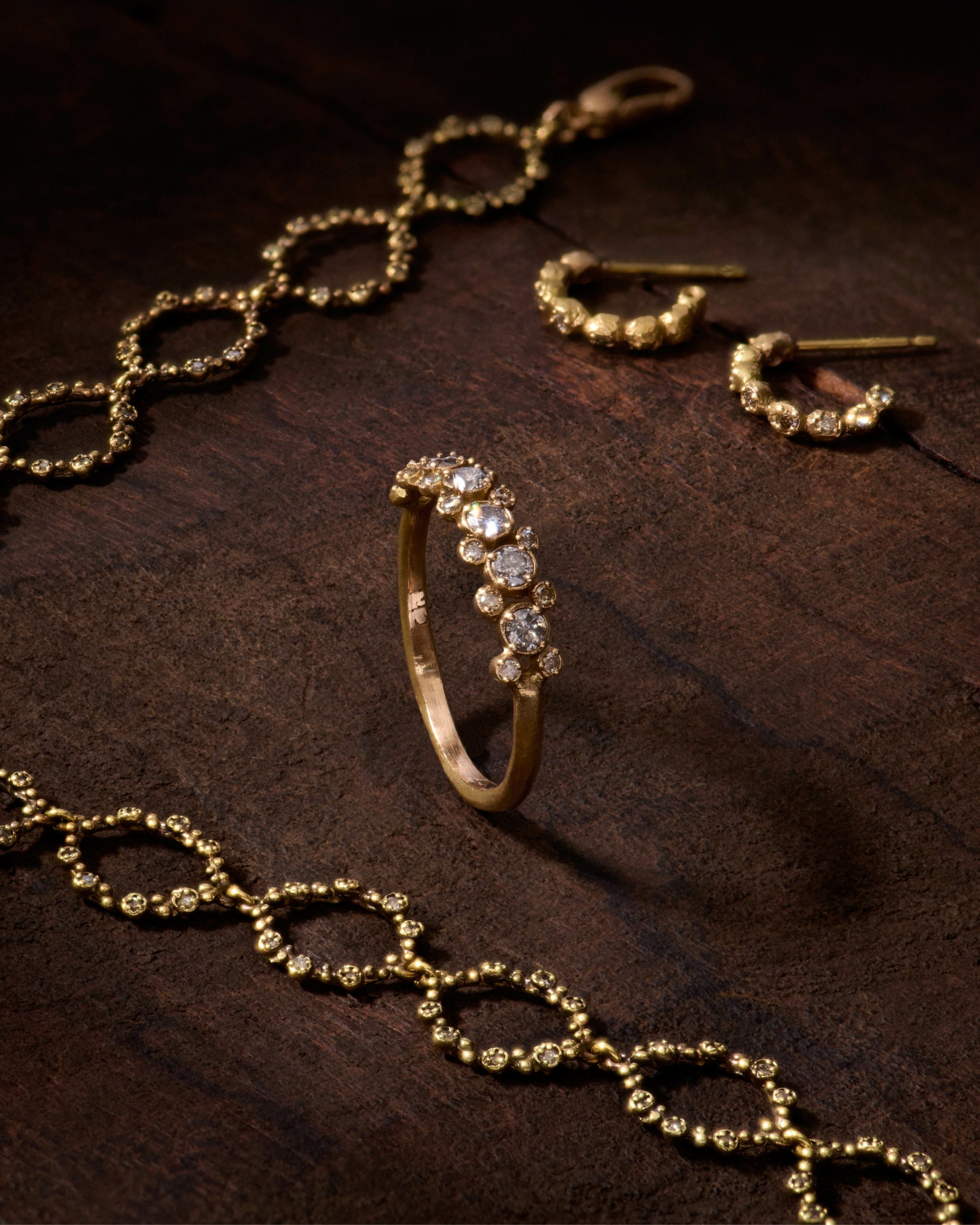
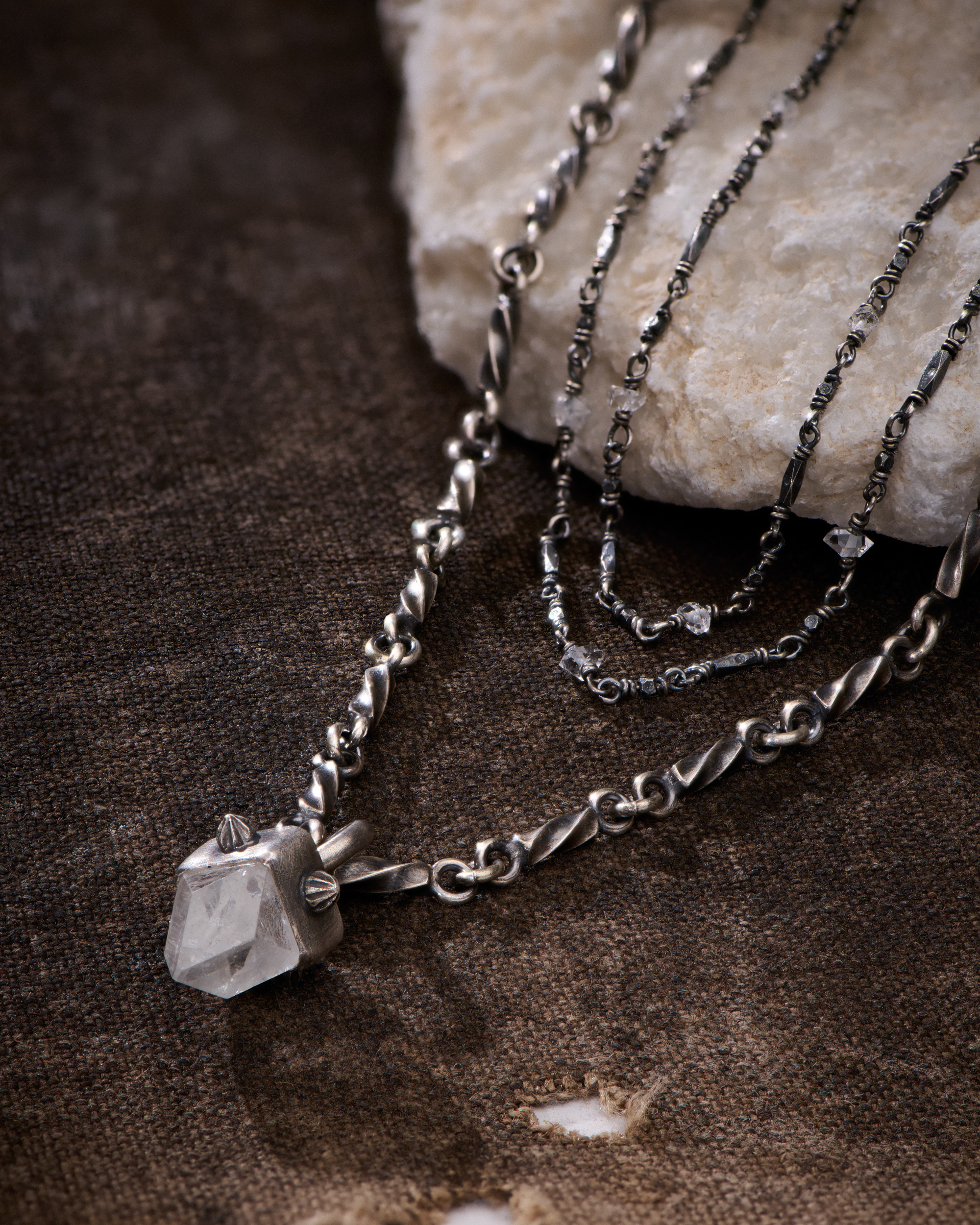
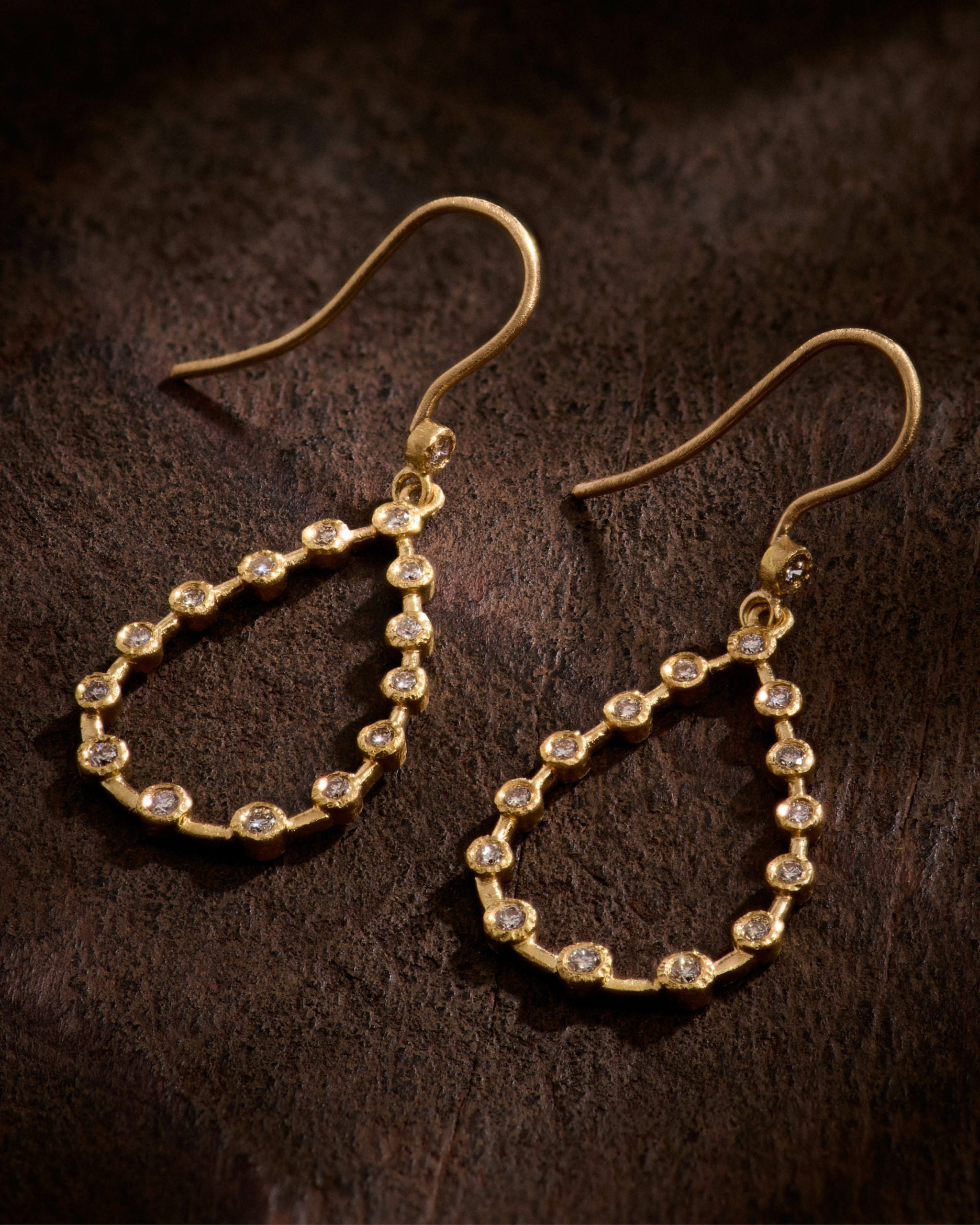
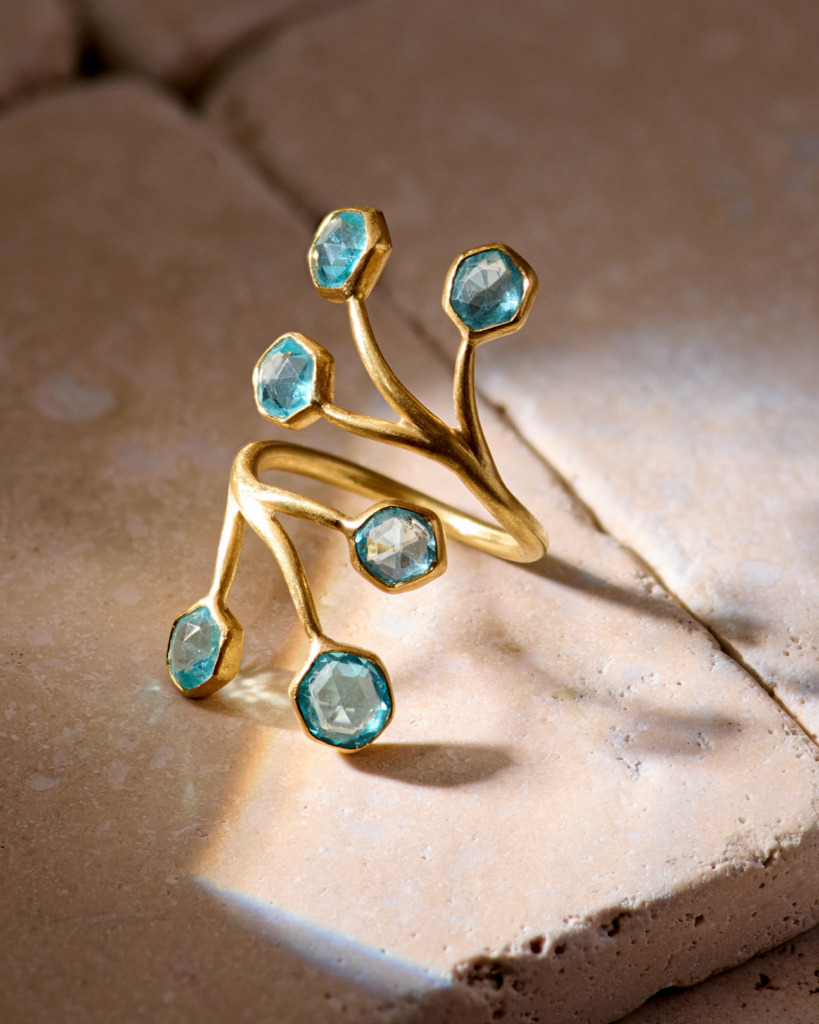
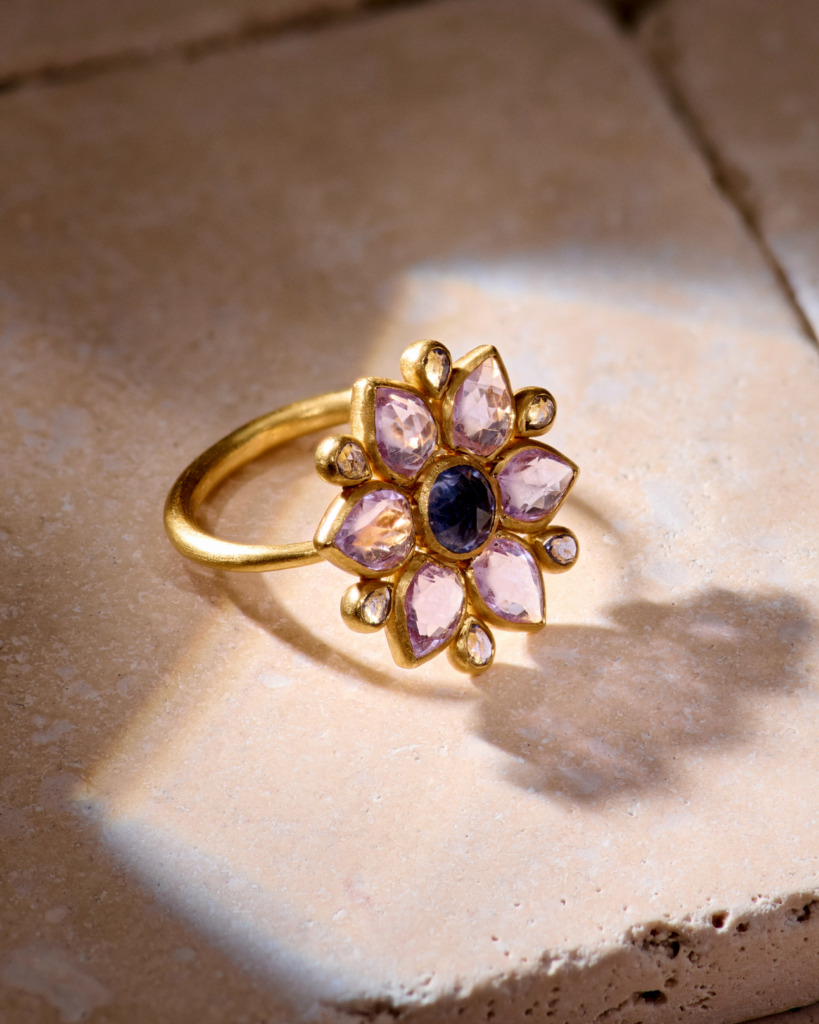
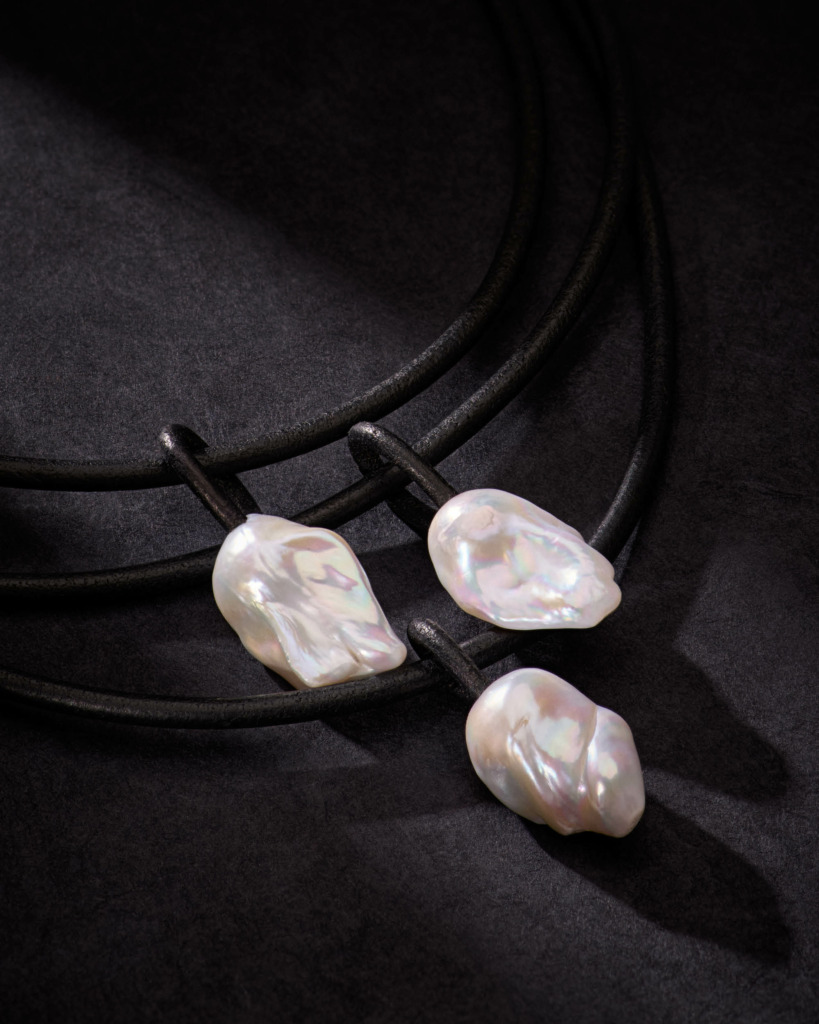
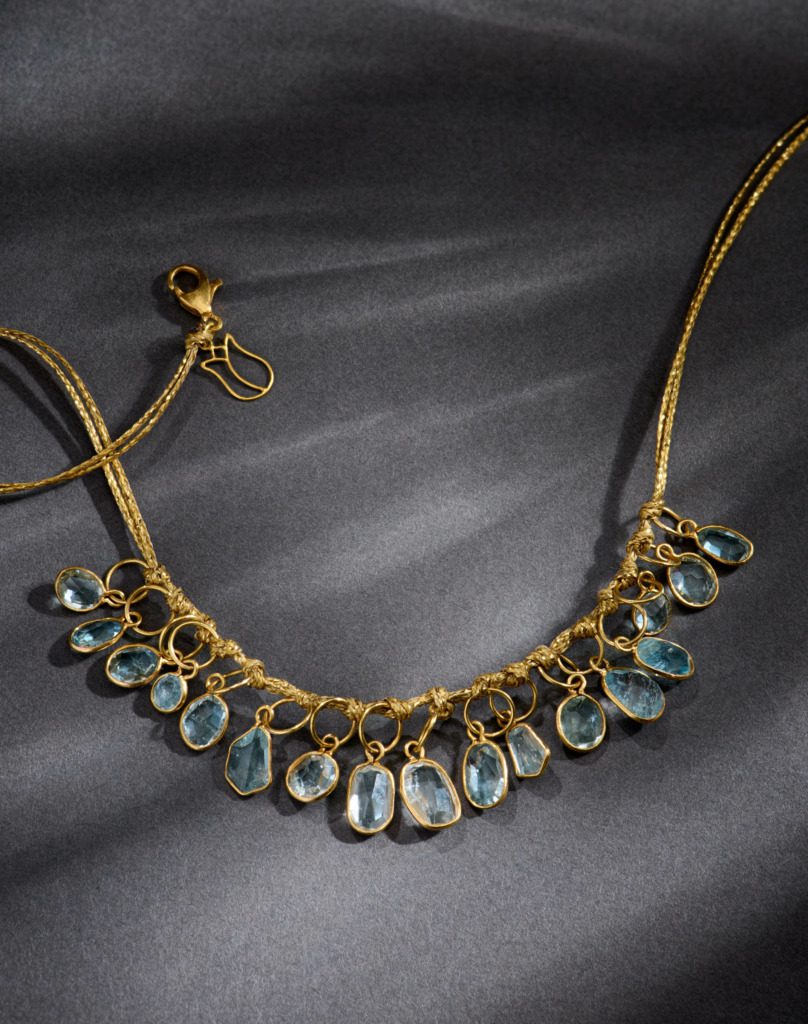
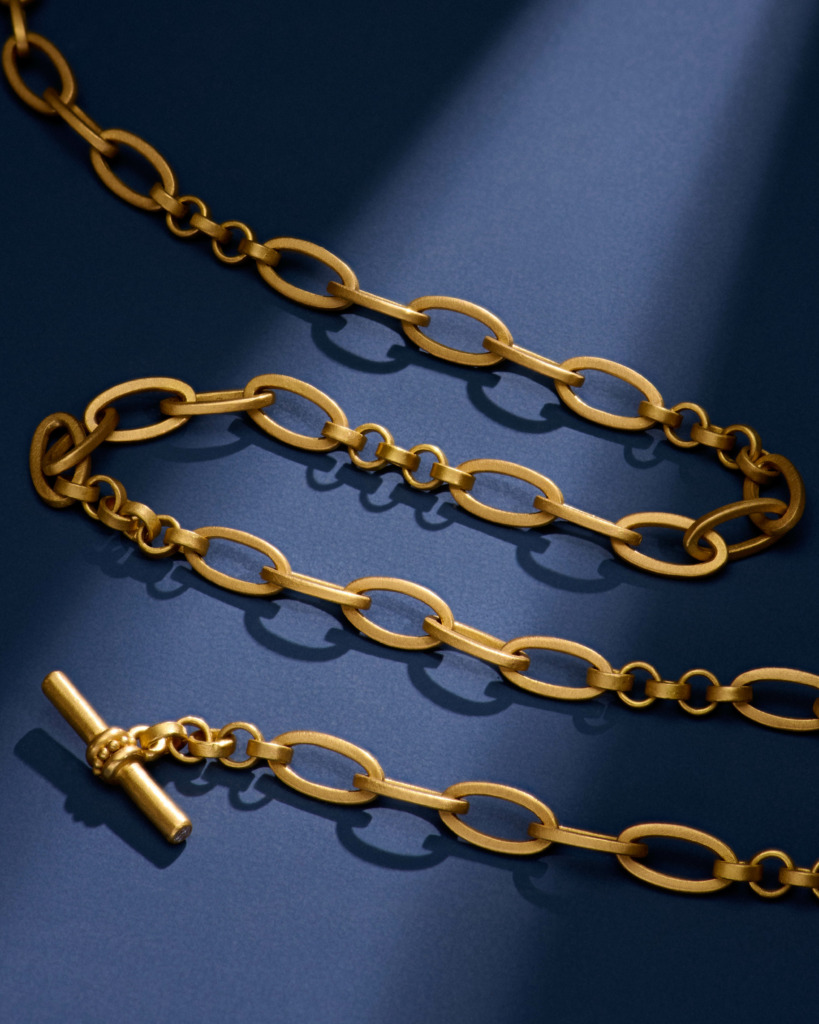
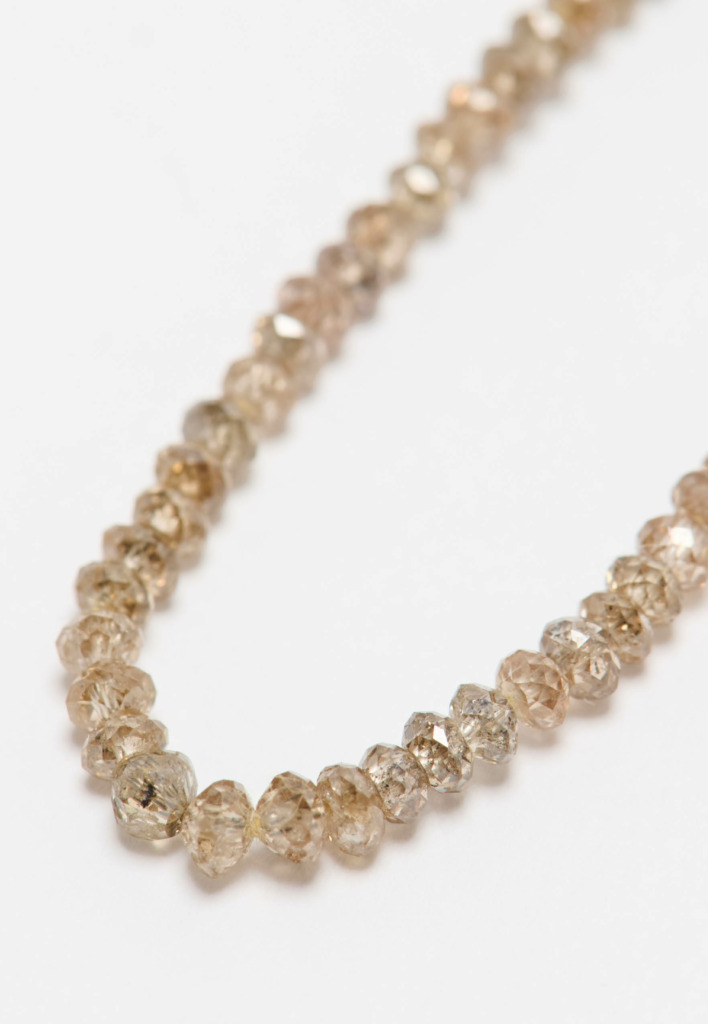
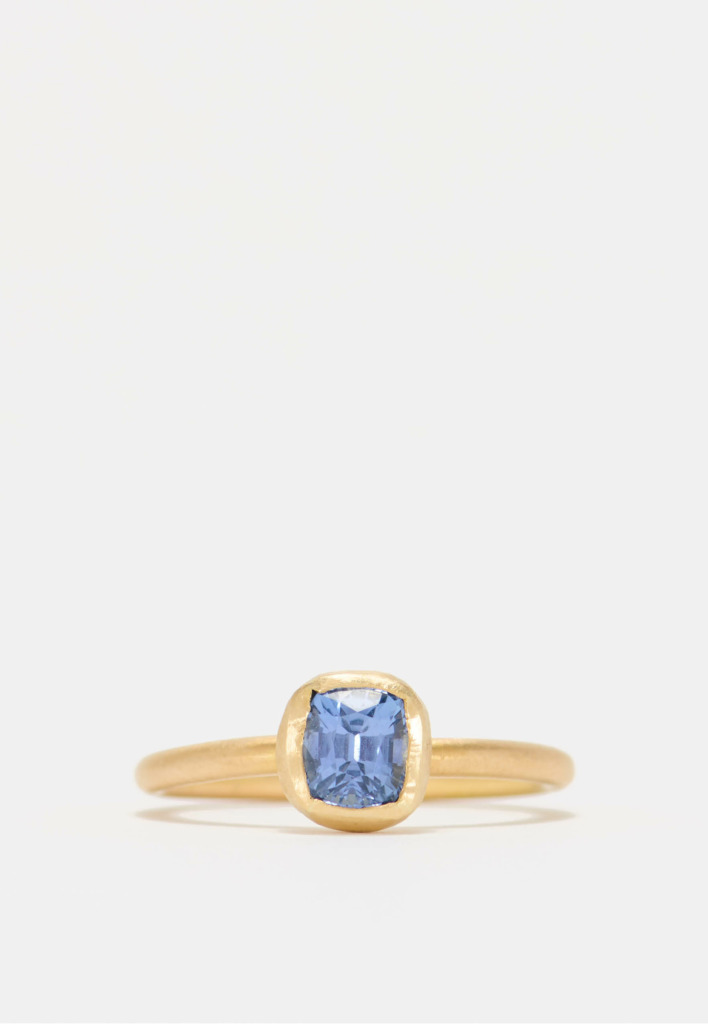
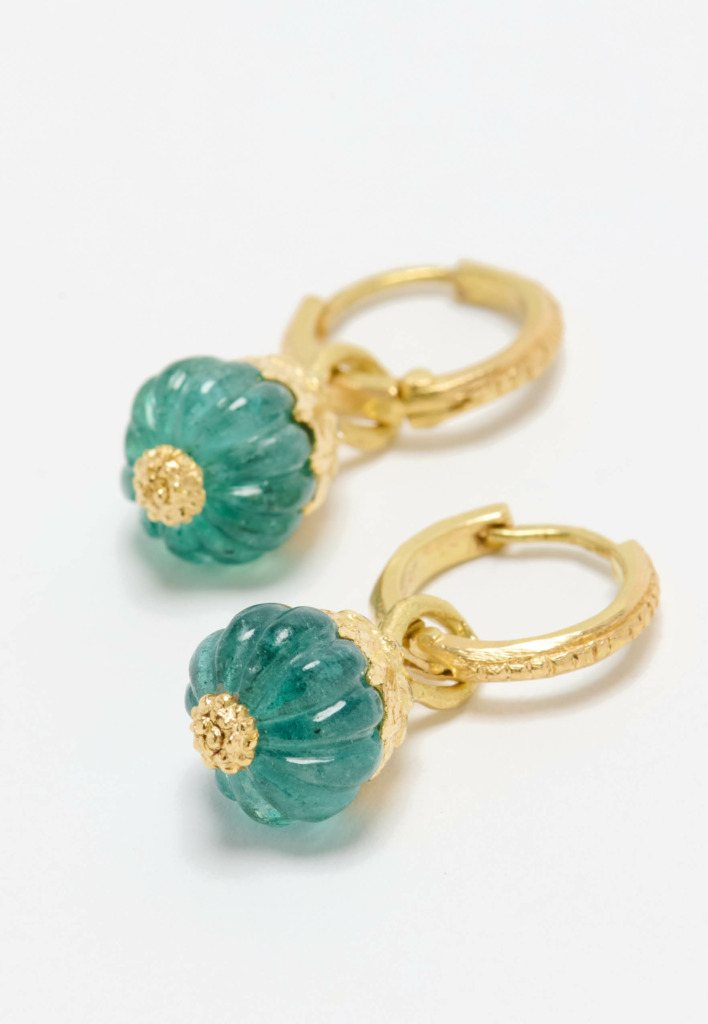
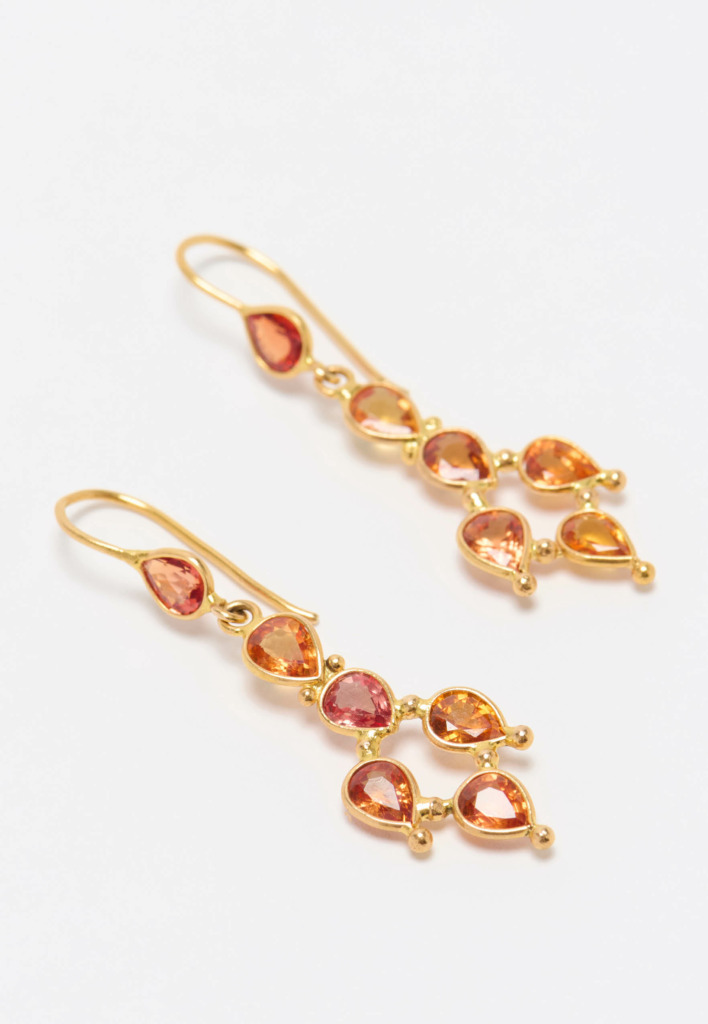
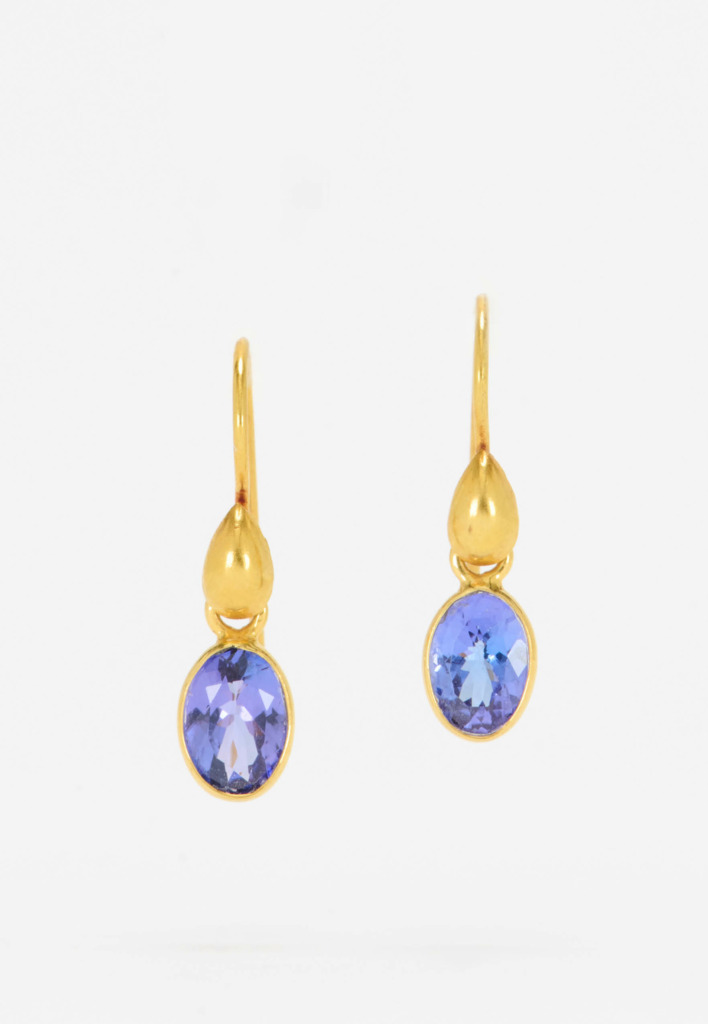
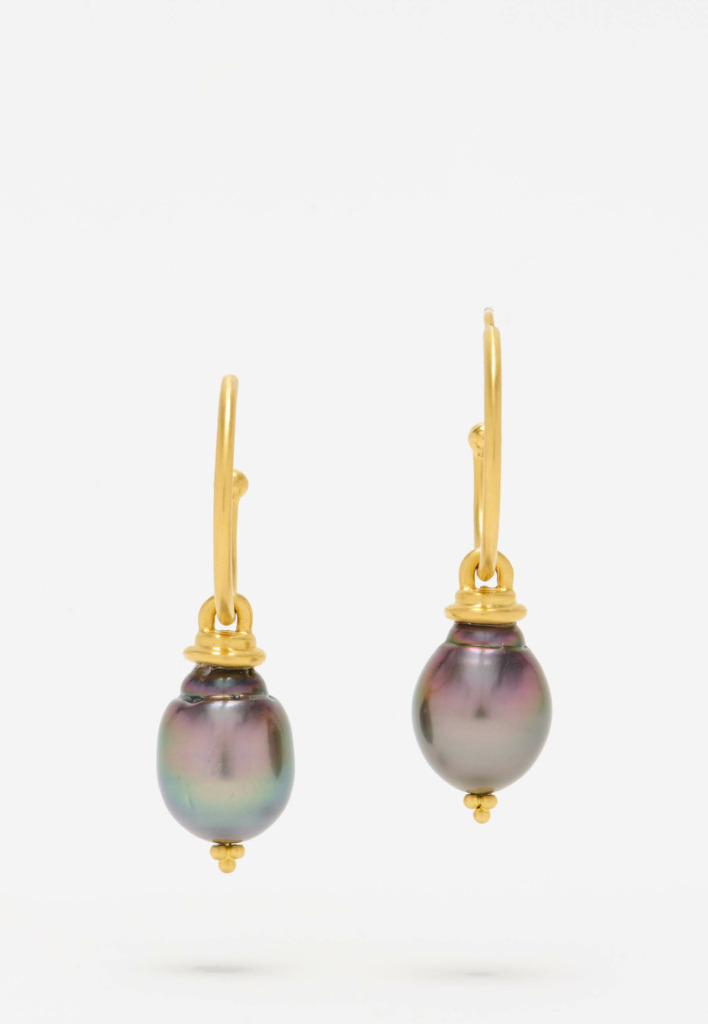
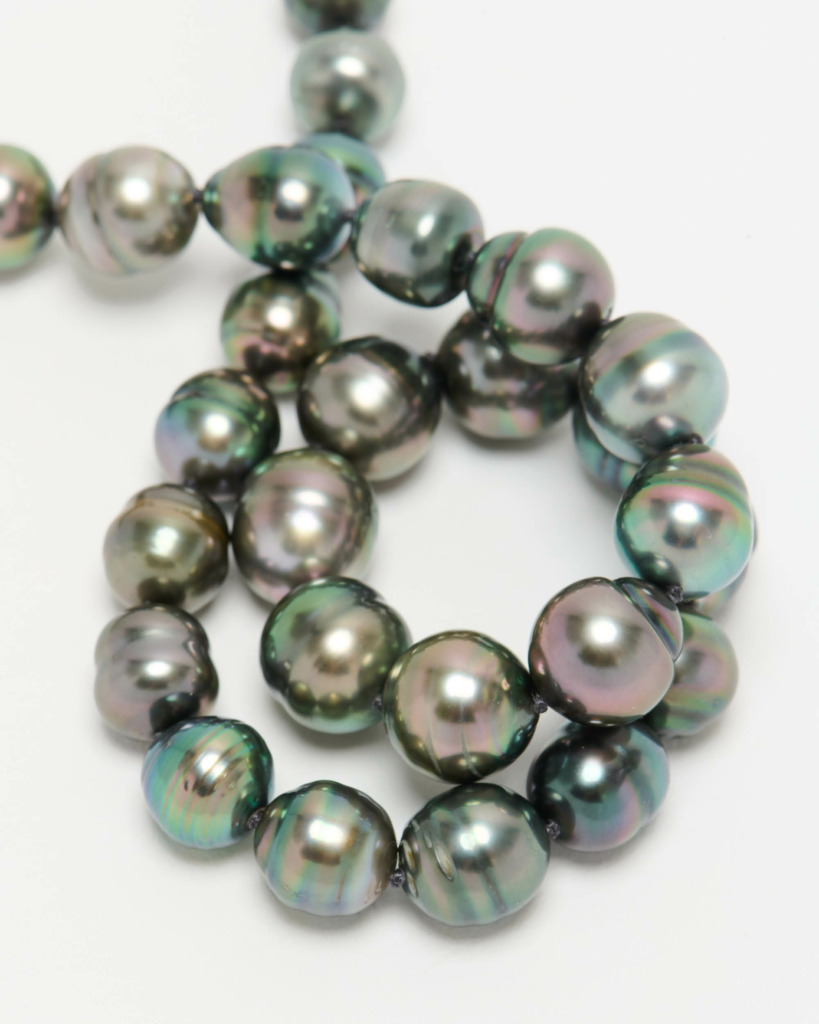
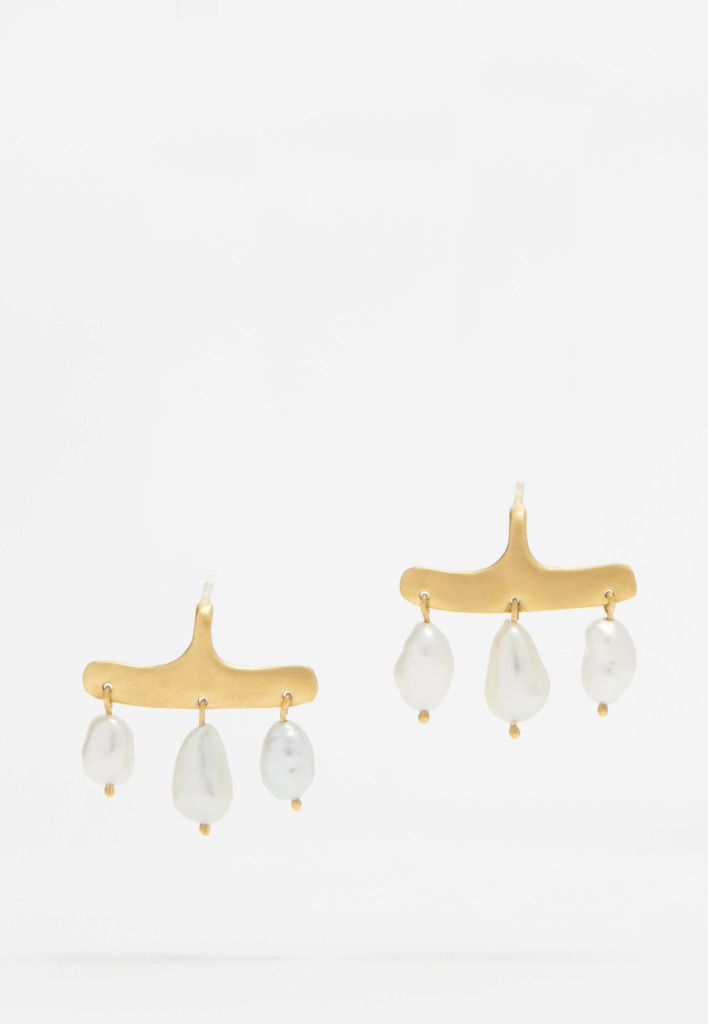
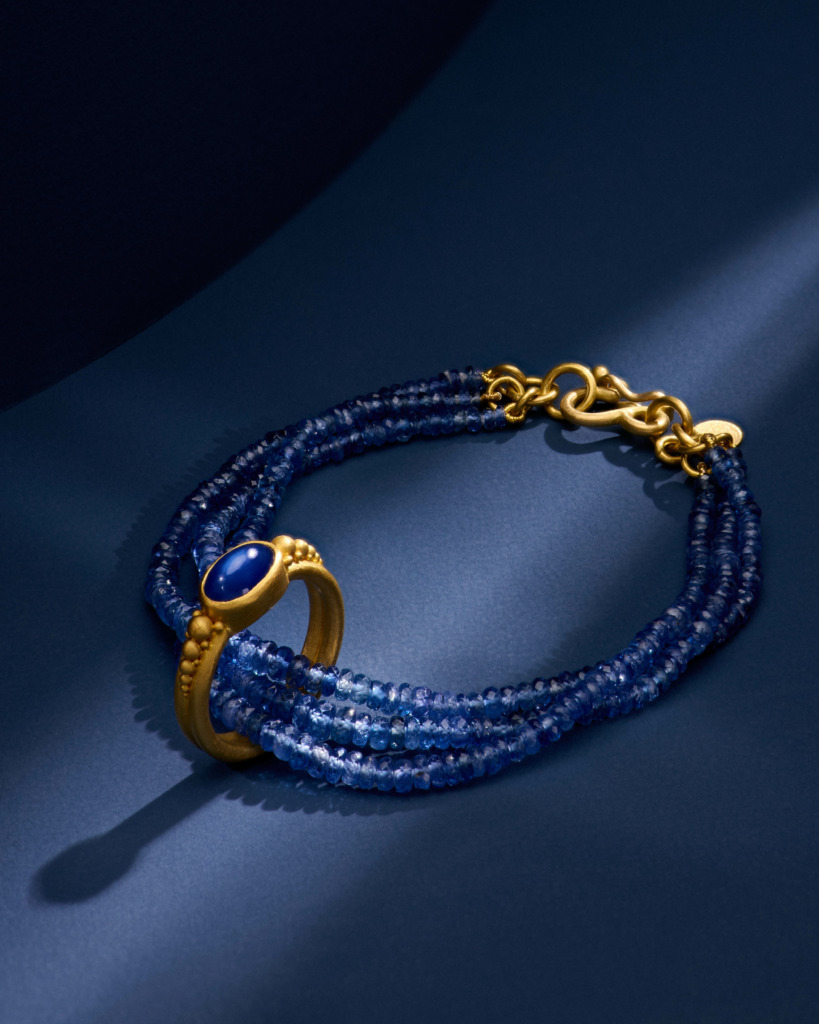
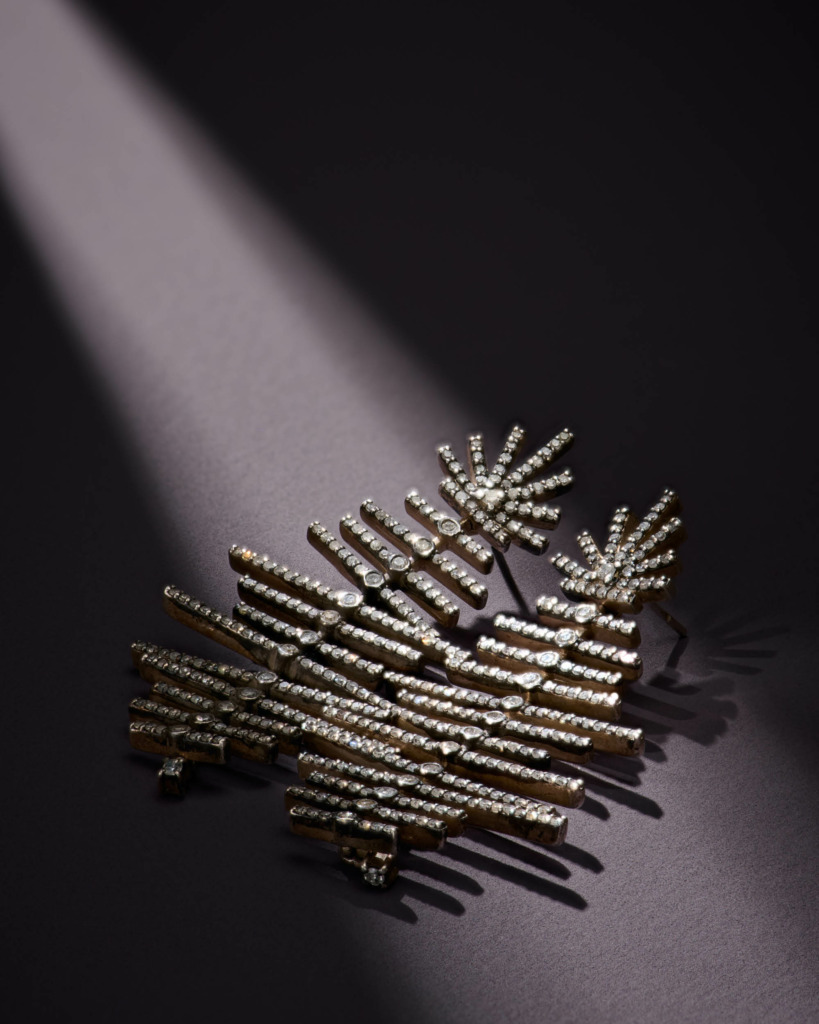
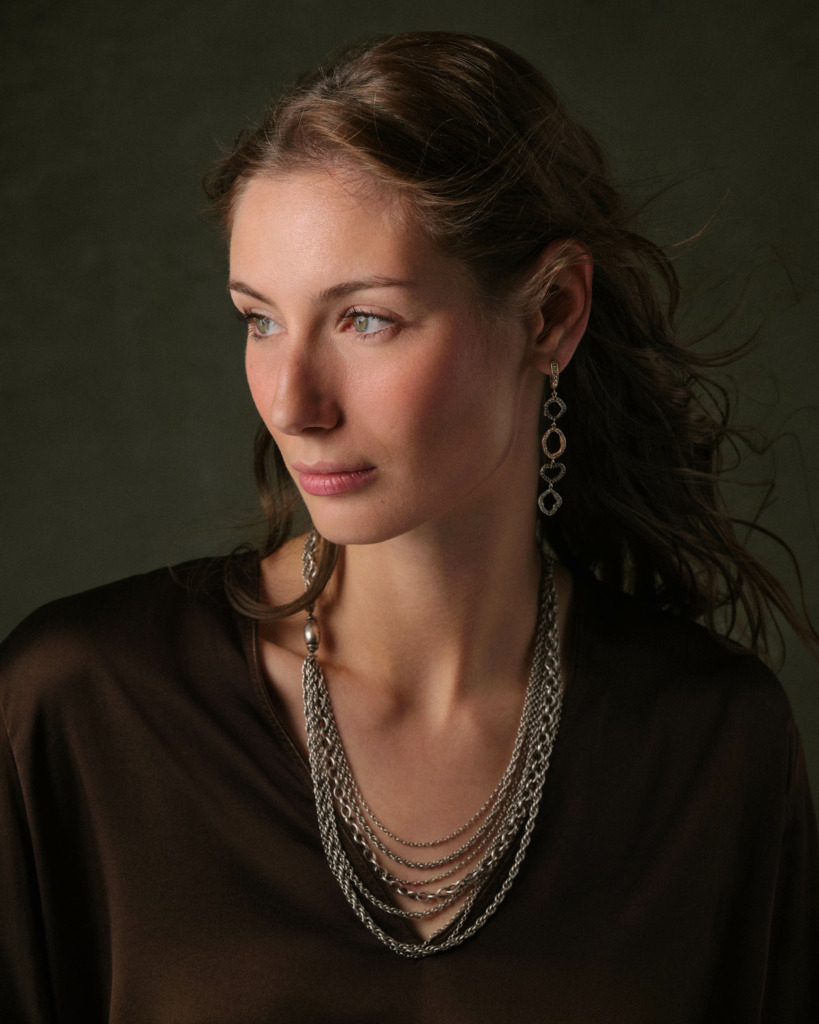
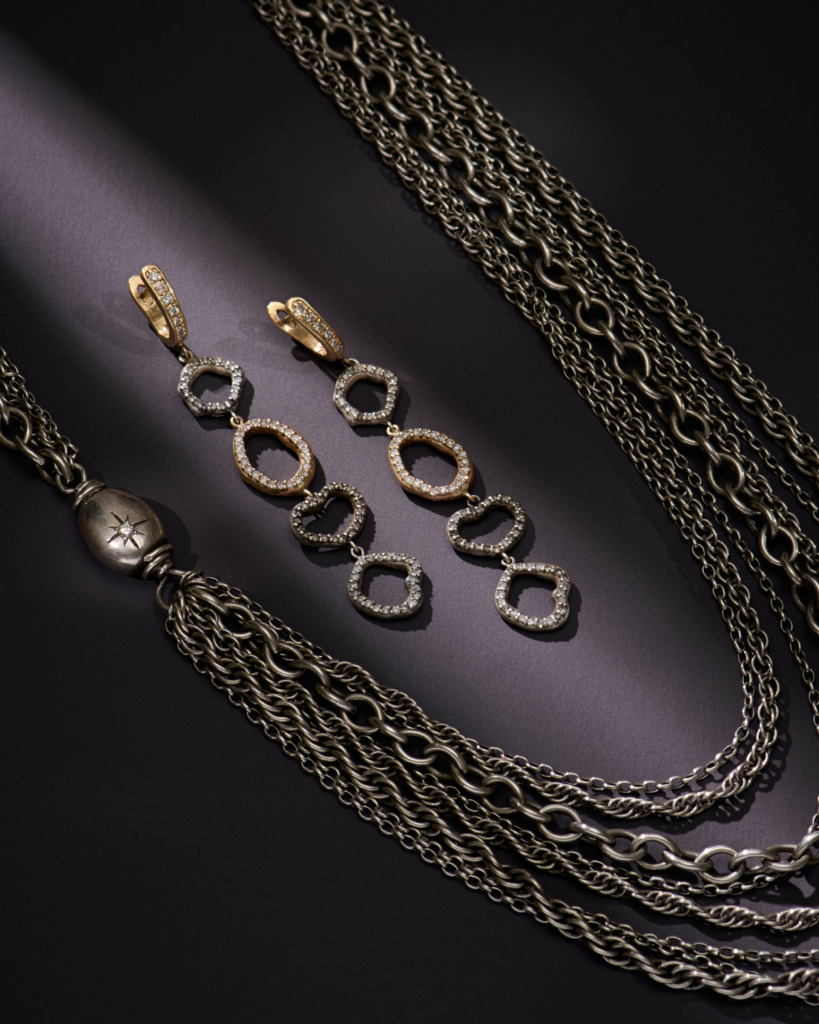
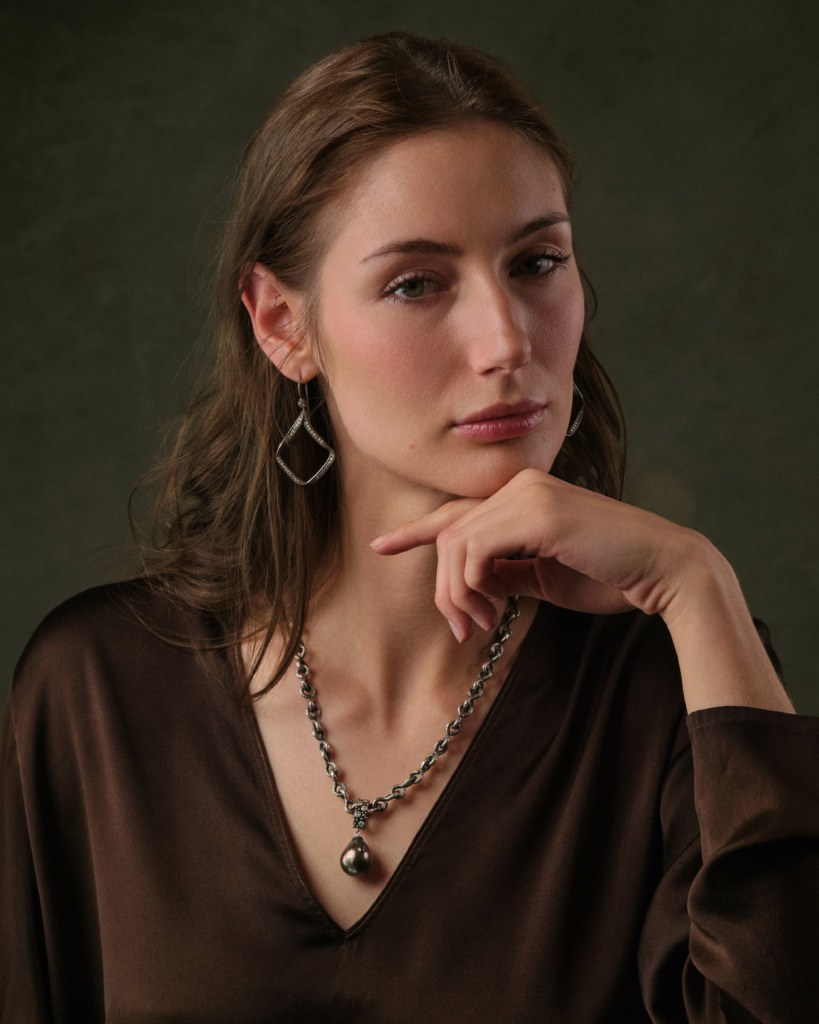
A few tips to give your jewelry the very best care:
We strongly recommend removing jewelry before sleeping, swimming, bathing or gardening. Leather and waxed cord pieces in particular should be kept away from water.
After removing necklaces, take care to re-clasp chains as this can reduce the likelihood of tangles and knots. Similarly, placing earbacks onto stud earrings after taking them off will help prevent them from rolling off a nightstand or getting lost in the bottom of a jewelry box.
In general we advise against using chemicals, commercial cleaning solutions or polishing cloths as they can alter the finish of your jewelry.
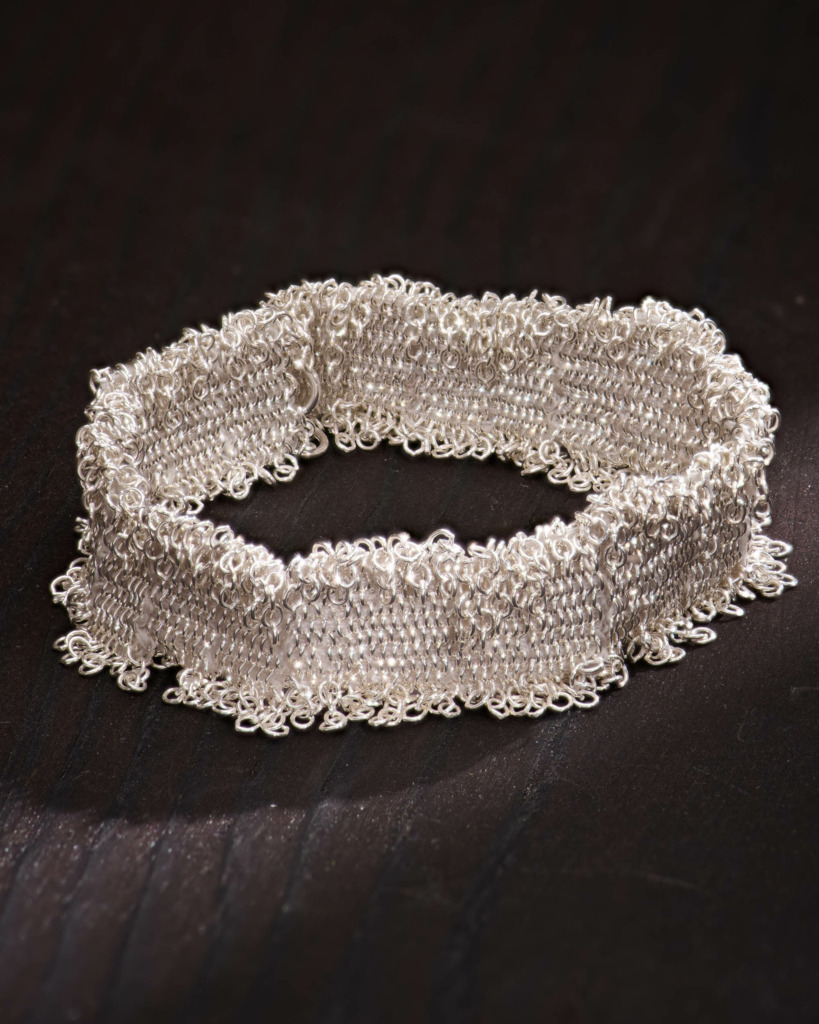
Sterling silver naturally tarnishes over time. White toothpaste is a great way to polish silver and bring back its bright shine. Simply rub a little bit of toothpaste onto your jewelry with your fingertips, a soft cloth or toothbrush and rinse well with water. Take care around any diamonds or gemstones.
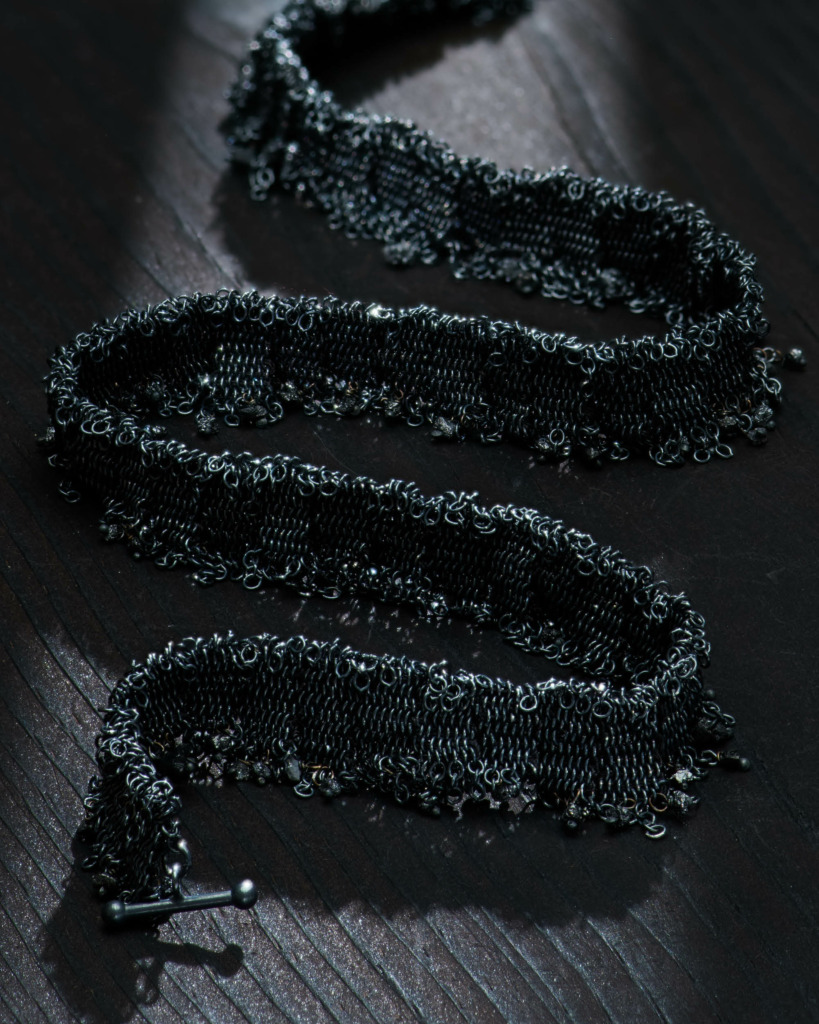
Oxidized or blackened silver is a surface treatment and lightens softly over time with wear. Do not use polishing cloths or chemicals on oxidized silver as it will remove the finish. To clean, wash gently with soap and water. We like to use a gentle soap, like dish soap, to clean our pieces.
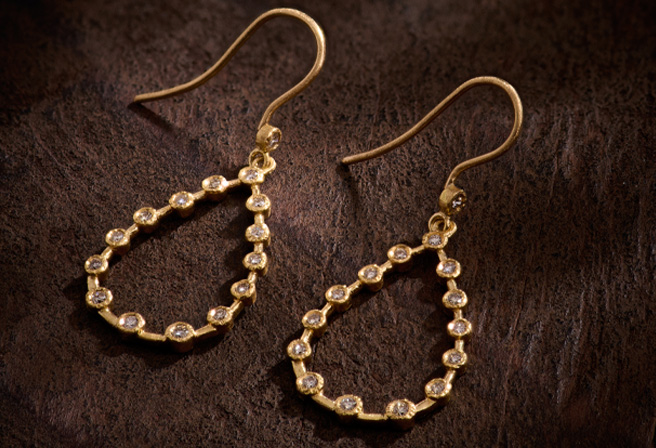
To clean, wash with warm soapy water, rinse and dry with a soft cloth. For a more thorough cleaning, soak your gold jewelry in a small bowl of warm water with a drop or two of non-detergent soap to remove any oils and loosen buildup. Remove after a few minutes, rinse and dry with a soft cloth.
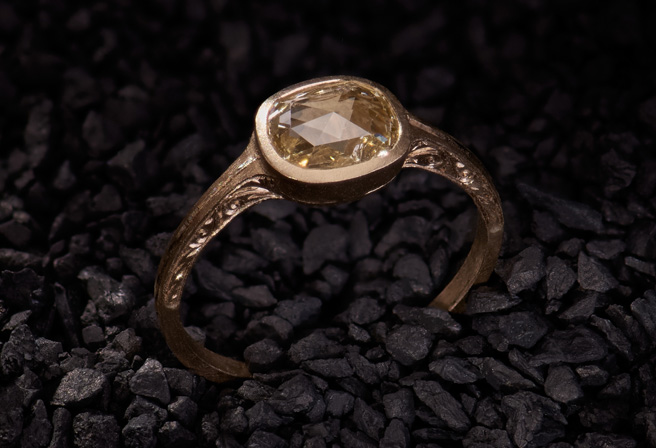
To clean jewelry with stones, add a drop of soap and warm water to a bowl. Use a very soft toothbrush to carefully remove any dirt particles or debris from more intricate components and settings. Rinse thoroughly and dry with a soft cloth.
Necklace lengths range in size and are measured in inches from clasp end to end. To check your preferred length, you can measure a necklace that you already wear, or use a piece of string. To measure: unclasp the necklace, lay it flat on a ruler and measure end to end, including the clasp.
We recommend getting sized in store at Santa Fe Dry Goods or by a professional jeweler locally. For international ring sizes you can find a conversion chart on findmyringsize.com.
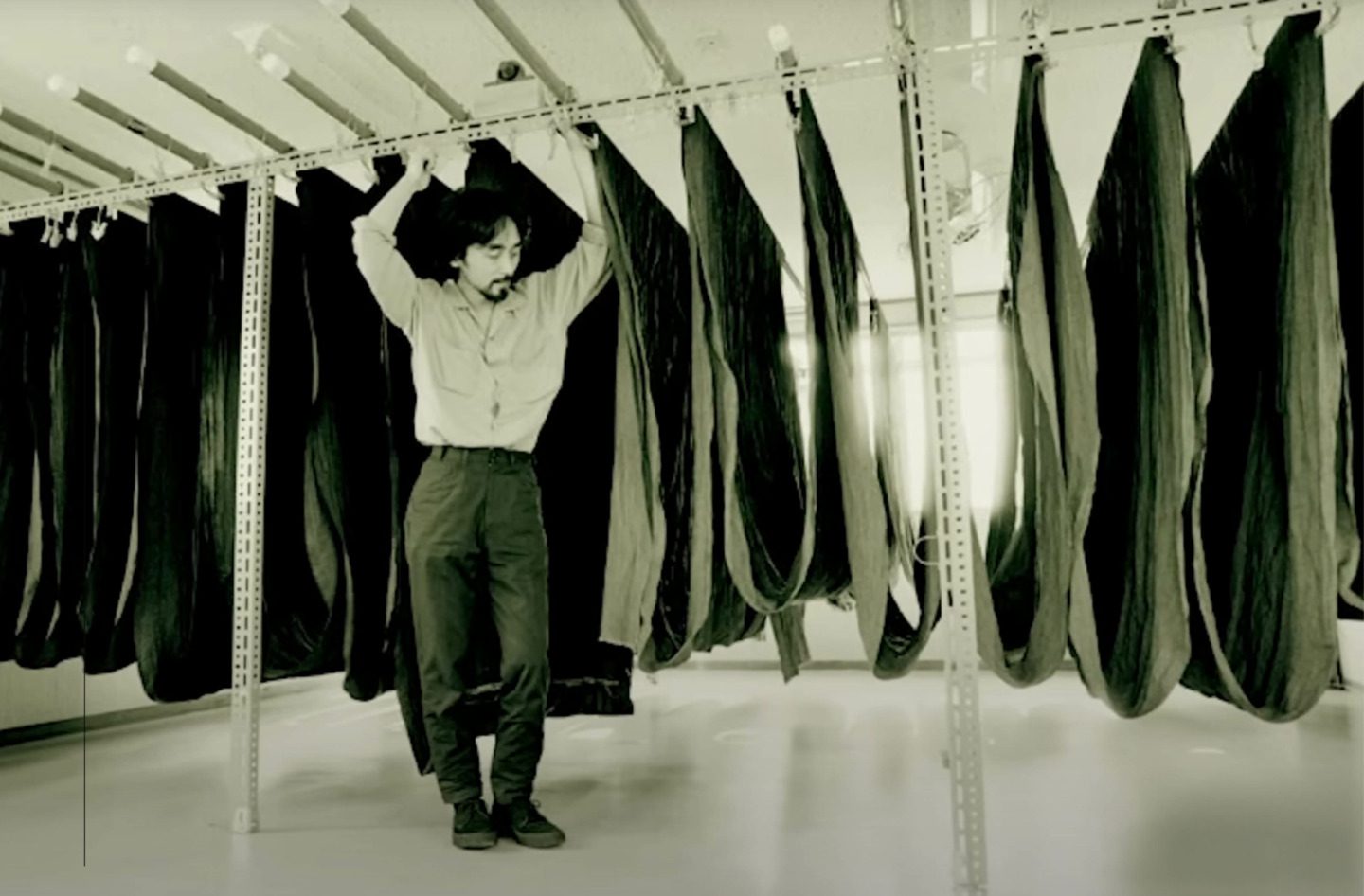
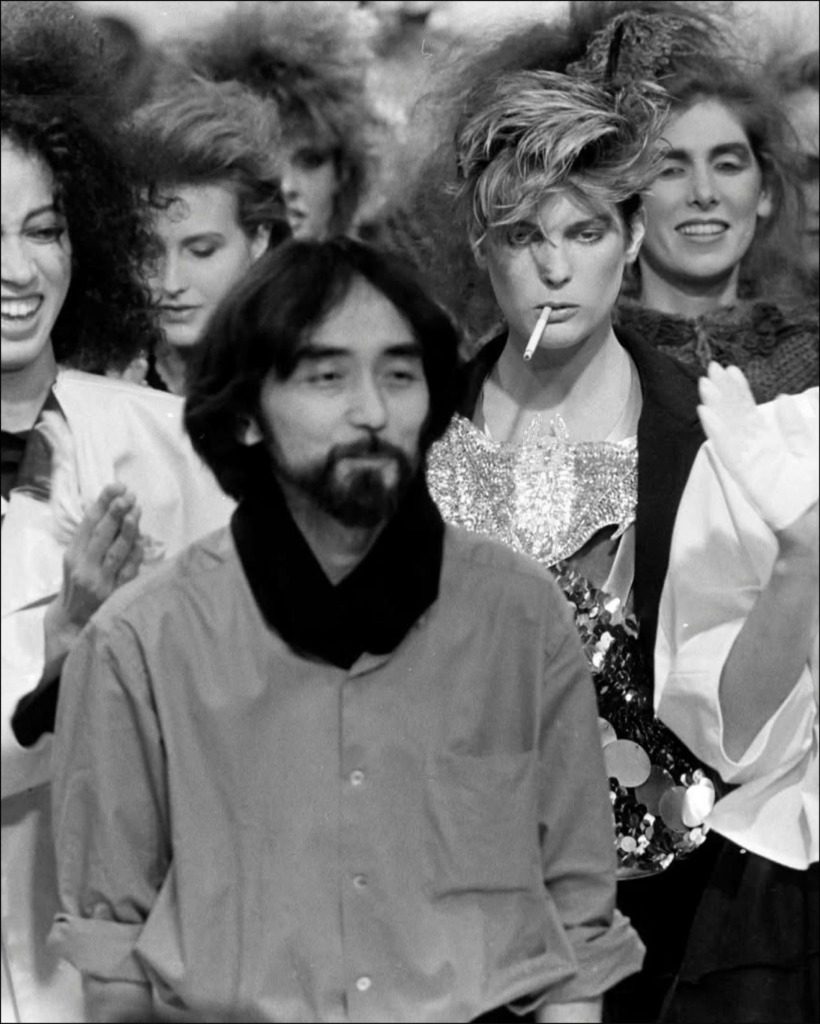
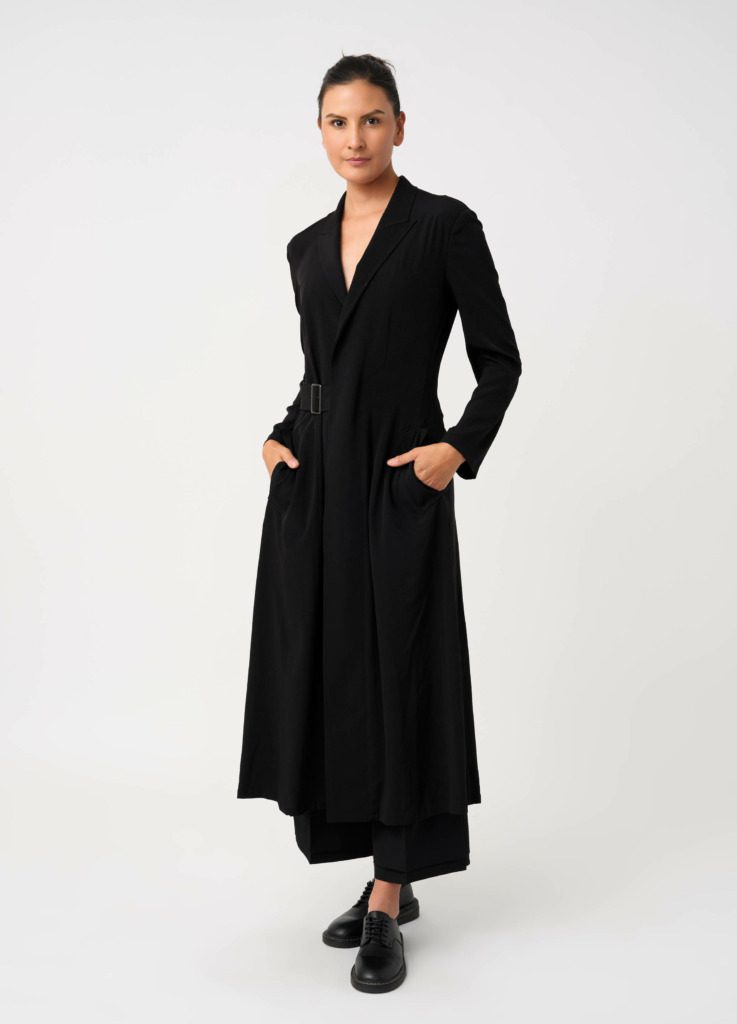
When it comes to names in fashion, Yohji Yamamoto is among the most famous. His influence is on par with the likes of Dries Van Noten, Ralph Lauren and Coco Chanel, shaping the way we think about modern dress. Though his garments are memorable and provocative, Yohji is far from just a clothing designer… he is an alchemist who has transmuted the language of fashion altogether.
Yohji Yamamoto in his studio.
Born in Tokyo during the waning years of World War II, Yohji’s modest childhood formed in equal parts around the ravage experienced by Japan in the war’s aftermath and his mother’s delicate work as a seamstress. He learned to sew from a young age, working alongside her in their home dressmaking studio. While Fumi Yamamoto had hoped her son would pursue a career as a lawyer, and Yohji even graduated with a degree in law, he ultimately rejected what he considered “ordinary society.” Instead, Yohji felt drawn to the wild possibility of fashion, which was blooming in Europe at the time as designers such as Oscar de la Renta and Yves St Laurent dominated the runways.
Subverting traditional notions of women’s fashion.
A widow after the war, Fumi’s strength and independence defined the way Yohji viewed women. When he began to design, he sought to create clothing that honored the spirit and fortitude of women, rather than revealing or objectifying them. Following this design philosophy, he launched his first brand, Y’s, in Tokyo in the early 70s. This label focused on practical women’s essentials with a masculine edge, the first foray into what would eventually become his defining aesthetic.
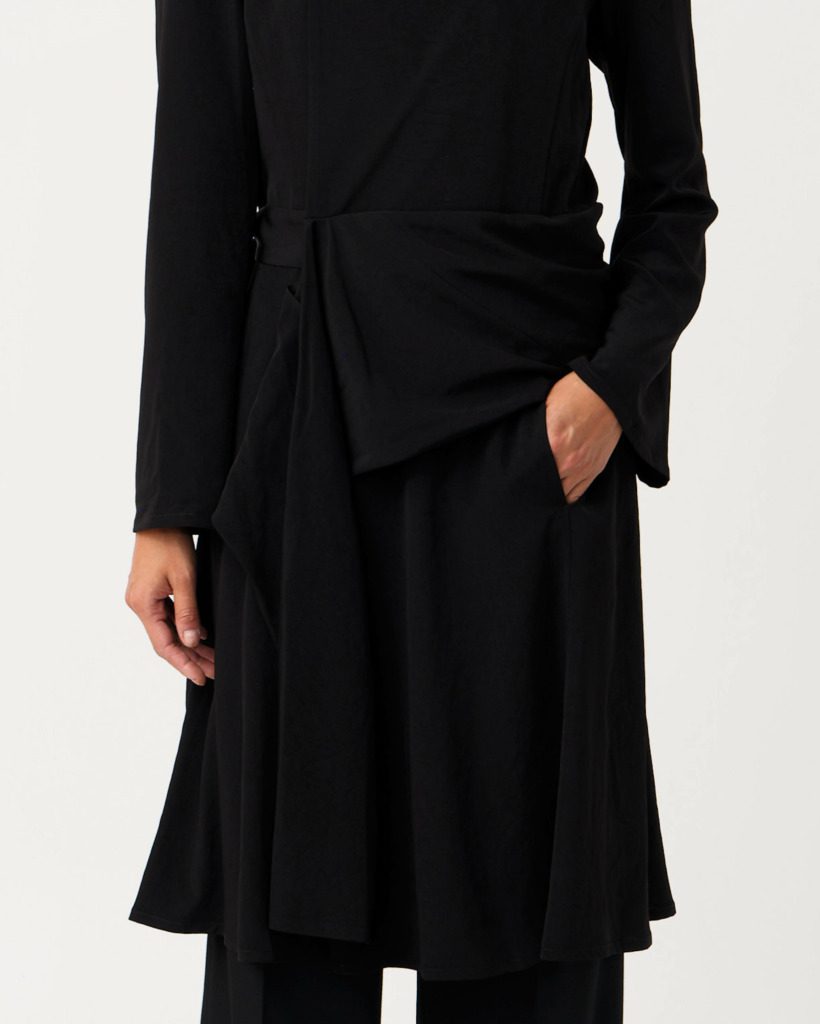
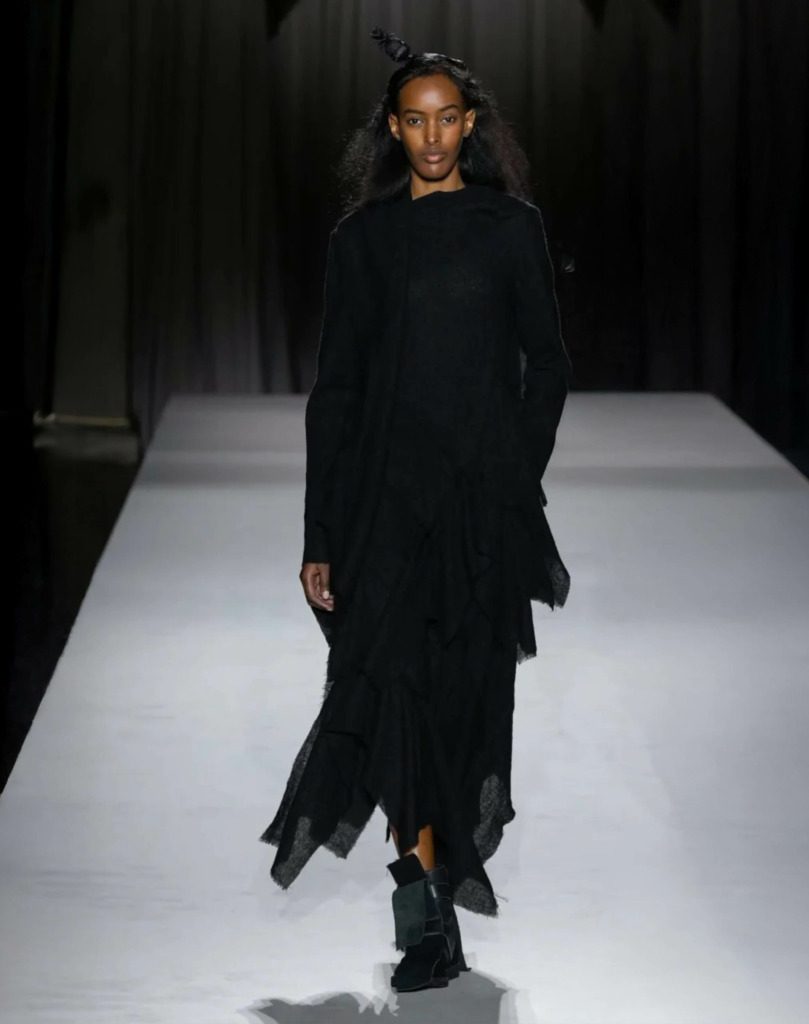
Embracing the Japanese concept of wabi-sabi, in which an object’s soul is revealed through impermanence and imperfection, Yohji set about creating garments that could really live with their wearer. Raw edges, irregular cuts and unfinished draping heightened the freedom, movement and, ultimately, the humanity of his designs. These elements imbued his work with soul.
To Paris with a Dream
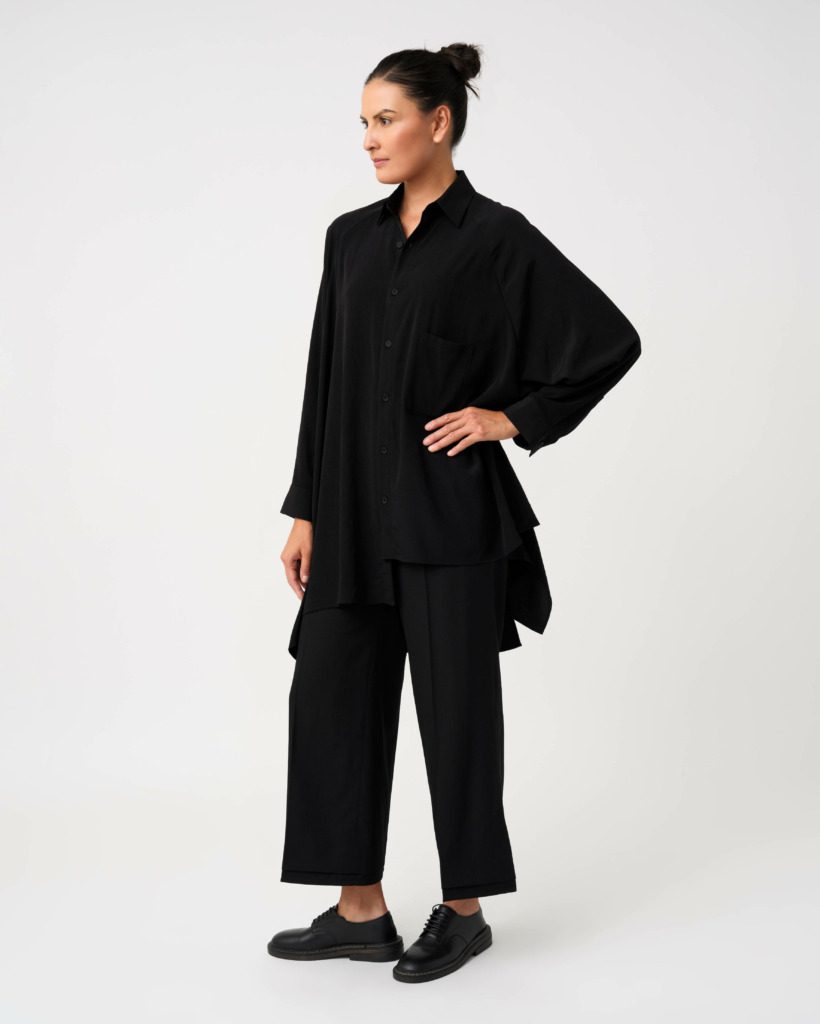
When Yohji first appeared on the runway in Paris in the 1980s, alongside Rei Kawakubo of Comme des Garçonnes, he challenged almost every dominant aesthetic at the time. The austerity and melancholy of post-war Japan had heavily informed his minimalist, avant-garde style. Instead of feminine colors and tailored glamour, he worked with loose, deconstructed and often asymmetrical designs that emphasized the shape of the garment over the body of its wearer. In an era defined by emphasizing femininity, this departure from gendered wear was a completely radical approach.
Decades before gender-neutral design went mainstream, Yohji was experimenting with designs that would defy the binary. Oversized coats, drop-crotch trousers and flowing layers blurred traditional masculine and feminine codes into one wearable aesthetic. While so often this tenet tends to be the defining technique of designers working in the avant-garde, at the time, Yohji’s designs sparked as much praise as they did controversy. His approach liberated fashion from strict Western ideals of symmetry, polish and luxury defined by opulence, instead proposing a subtle, intellectual elegance that we continue to see in modern collections. He ultimately turned anti-fashion into a statement–a quiet rebellion that still resonates with those who see fashion as a cultural critique beyond simple commerce.
While Yohji’s expressions of femininity are far from traditional, we still find moments of softness throughout his designs. In elements such as an open collar that unfurls along the neckline or a clever slit along the backside of a garment, he heightens the wearer’s presence and movement without emphasizing their literal form. Additionally, one of the most notable features of Yohji’s collections is his use of monochromes, which he considers not just a stylistic choice, but a philosophy for living. For Yohji, black is universal–a unifying canvas that works across genders, ages, body types. He often says that it is “modest and arrogant at the same time”–a tone that refuses decoration, but commands attention. By harnessing the absence of color, Yohji strips away distraction, allowing the cut, movement and idea of the garment to come forward.
An International Phenomenon
Over the next thirty years, Yohji became an international phenomenon. In addition to his Yohji Yamamoto Main Line and Y’s, he established several diffusion lines, such as the streetwear focused Y-3 in collaboration with Adidas, to continue to innovate and explore the future possibilities of wear. Many modern designers, from Rick Owens to Ann Demeulemeester to Carsten Rundholz, owe part of their creative DNA to Yohji. In 2011, he celebrated 30 years on the runway–a fête culminating in a major retrospective exhibition at the Victoria and Albert Museum in London. A living legend, he continues to design to this day, sharing his time between Paris and Tokyo.
Pursuing Mystery in Design
For Yohji, black is universal–a unifying canvas that works across genders, ages, body types. He often says that it is “modest and arrogant at the same time”–a tone that refuses decoration, but commands attention. By harnessing the absence of color, Yohji strips away distraction, allowing the cut, movement and idea of the garment to come forward.
FW25 and Into the Future
Fall/Winter 2025 marks our second foray into the world of Yohji, after carrying the line for a few seasons over a decade ago when Workshop first opened. Having the line back in-store feels like something of a homecoming as we reunited not only with the brand, but also with their Director of Sales, Emmanuel Harent, an old friend of the stores.
We will be receiving more of Yohji’s work over the next few weeks, but even this small delivery is striking. Sweeping, graphic shapes in black and white comprise the collection, defined by interpretations of workwear. We are mainly focused on bringing in pieces from his Y’s line, which are intensely wearable and cool, however we will also be bringing in a handful of runway pieces from his Main Line to help drive forward this aesthetic in Workshop.
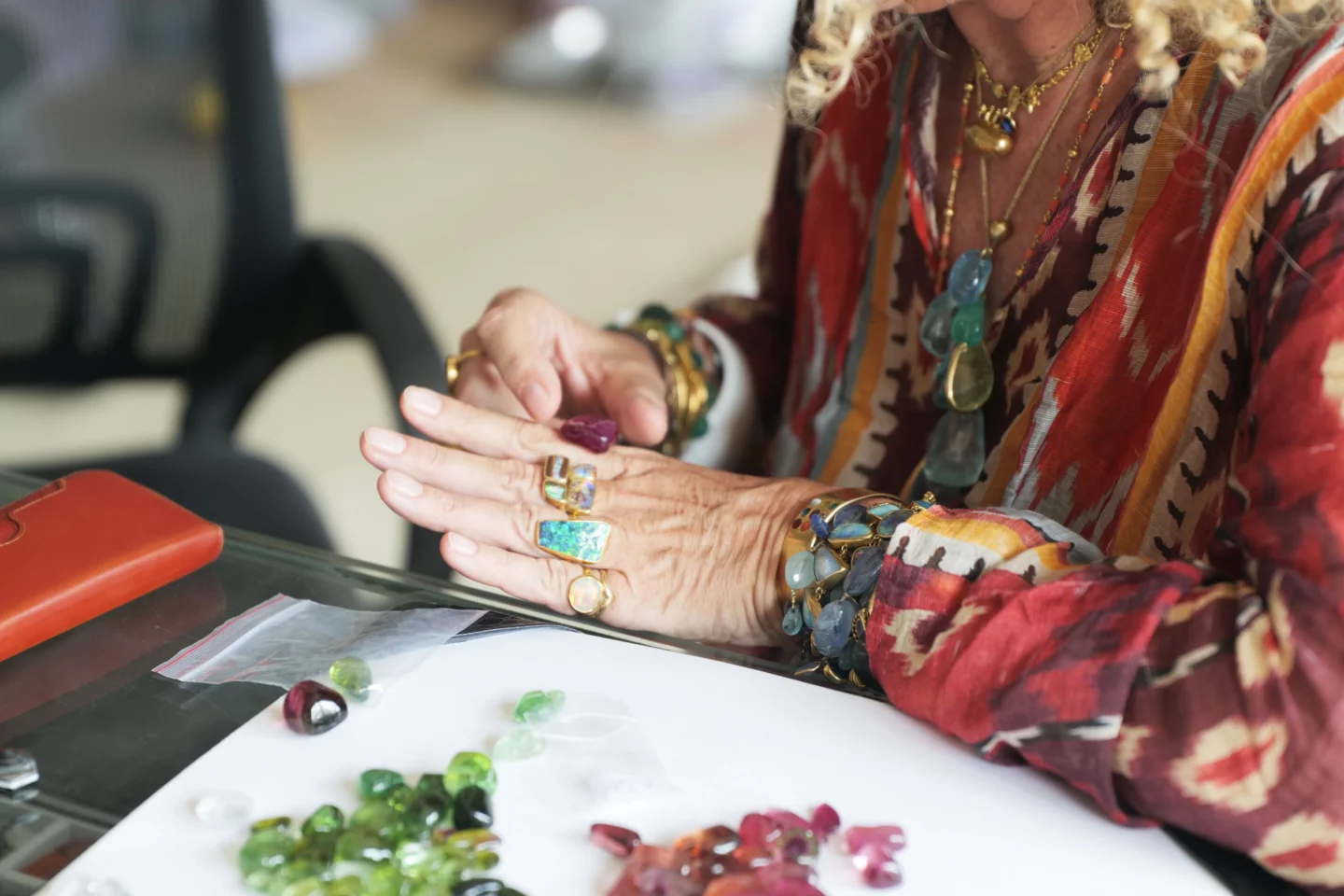
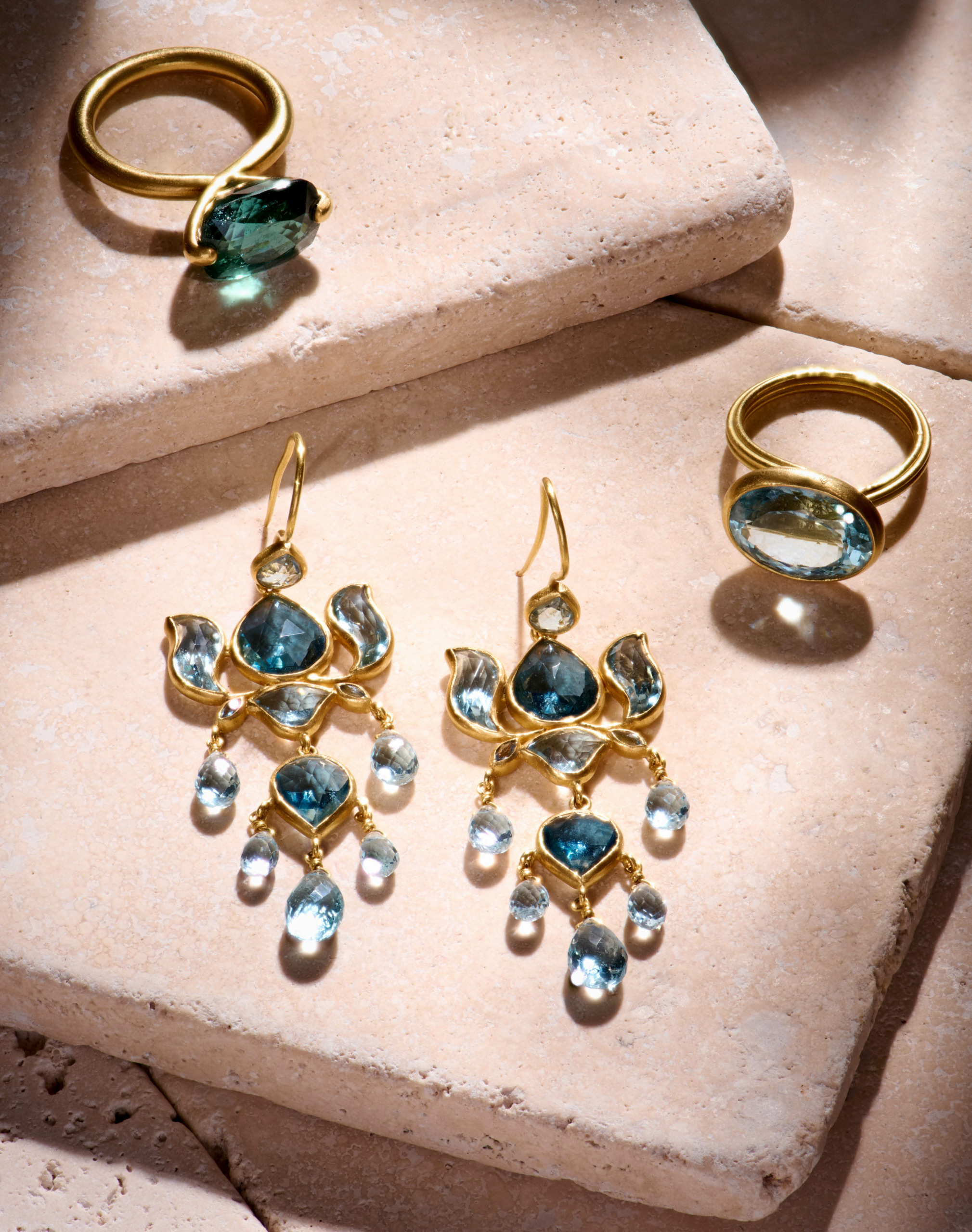
London-based jeweler Pippa Small believes that every stone has a story to tell. With her ethical fine jewelry, she lets these stories take center stage – each a unique imprint of the stone’s place of origin, such as fiery Brazilian kyanite or dulcet Pakistani aquamarine. Her artisan-made jewelry feels distinctive and personal, as if they were specially crafted for the wearer and the wearer alone. A classically-trained anthropologist, Pippa’s designs are inspired by her lifelong passion for travel and the cultures she has learned from along the way.
Pippa holds the firm conviction that the importance of safe and creative jobs, reinforcing a sense of cultural identity and tradition through jewelry is hugely important. Pippa works with Fairtrade and Fair Mined materials and supports a project hand panning gold in Columbia. Pippa was named ambassador of the human rights organization Survival International and awarded an MBE by the Queen in 2013 for ethical jewelry and charity work. She continues to venture further in exploring ways of making jewelry, reviving traditional skills and techniques in communities in Central and South America, Southern Africa, Asia and the Middle East.
Pippa Small on her design process:
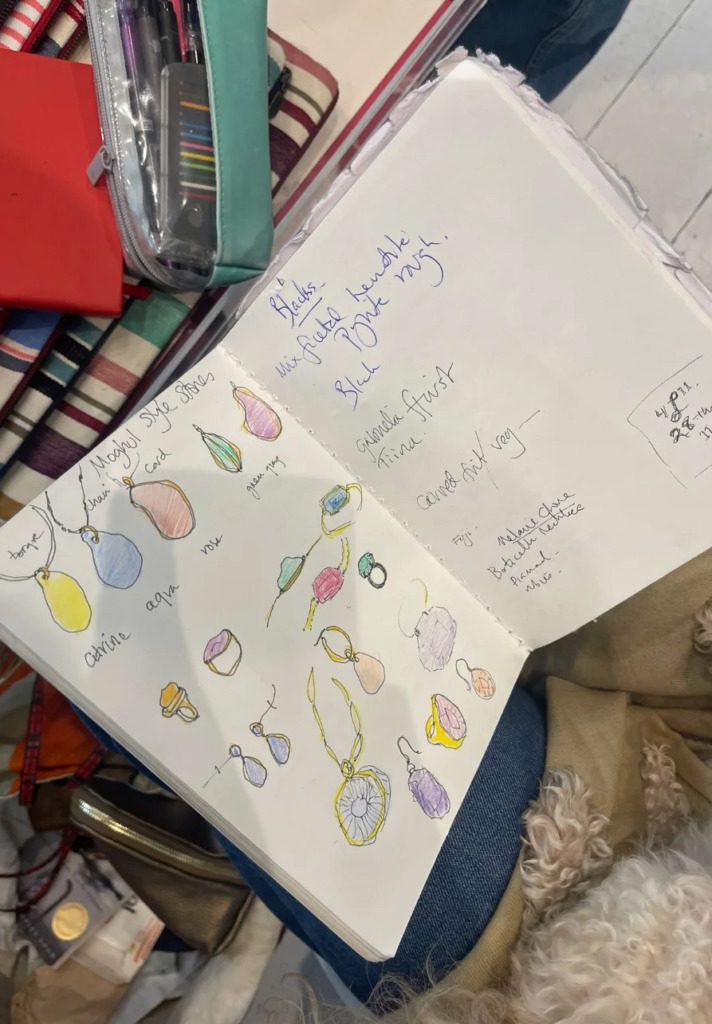
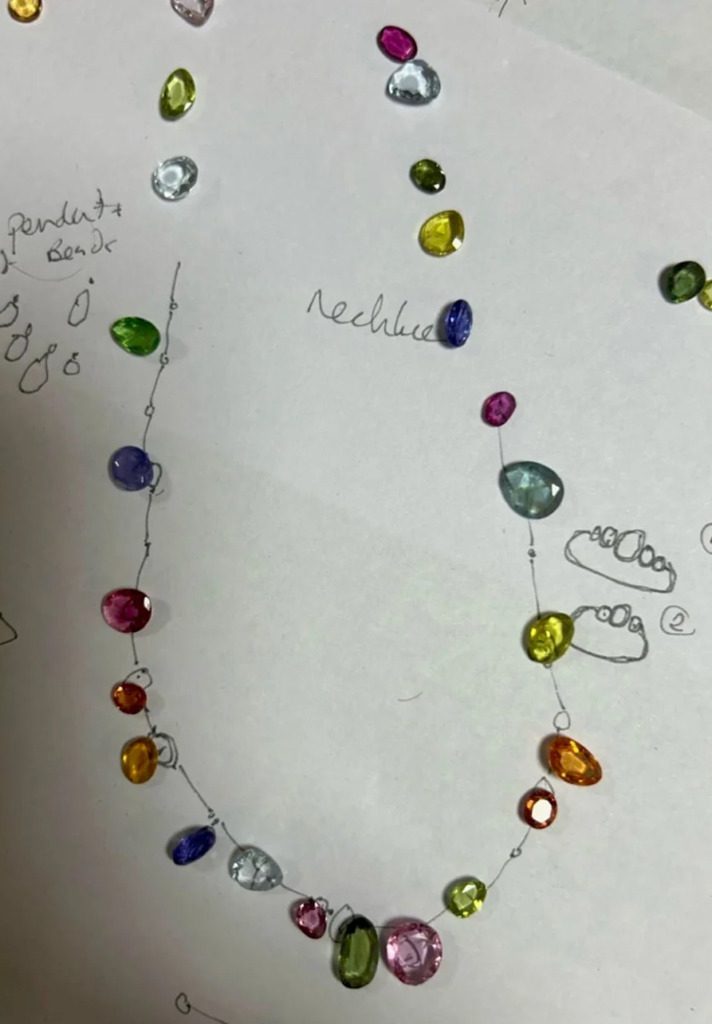
“In thinking about the ways I design, I realise that in some ways I do it quite unconsciously. It can be a word, a feeling, a story; something I have seen: a photograph, a painting. I gather colours, shapes, forms, and textures, and compress them into a notebook over six months – photographs fill the storage of my phone.”
“Designing is about observation, looking at the wider world around us and finding the patterns, the shapes that please, fascinate, and charm; of finding what we long for, what we want to hold on to. Designing is a practice, one that I love.”
“I think about the people in the workshops of the different places where I work: their particular skills, the traditional techniques we can bring to life in new ways, the local gems we can use. In each country, I spend a great deal of time researching through museums, books, archives, and old collections; I delve into the past, and I also observe the present. I note what men and women are wearing, how they are wearing things, what feels essential, and seems to be a design that has a clear voice about the culture in which it is made.”
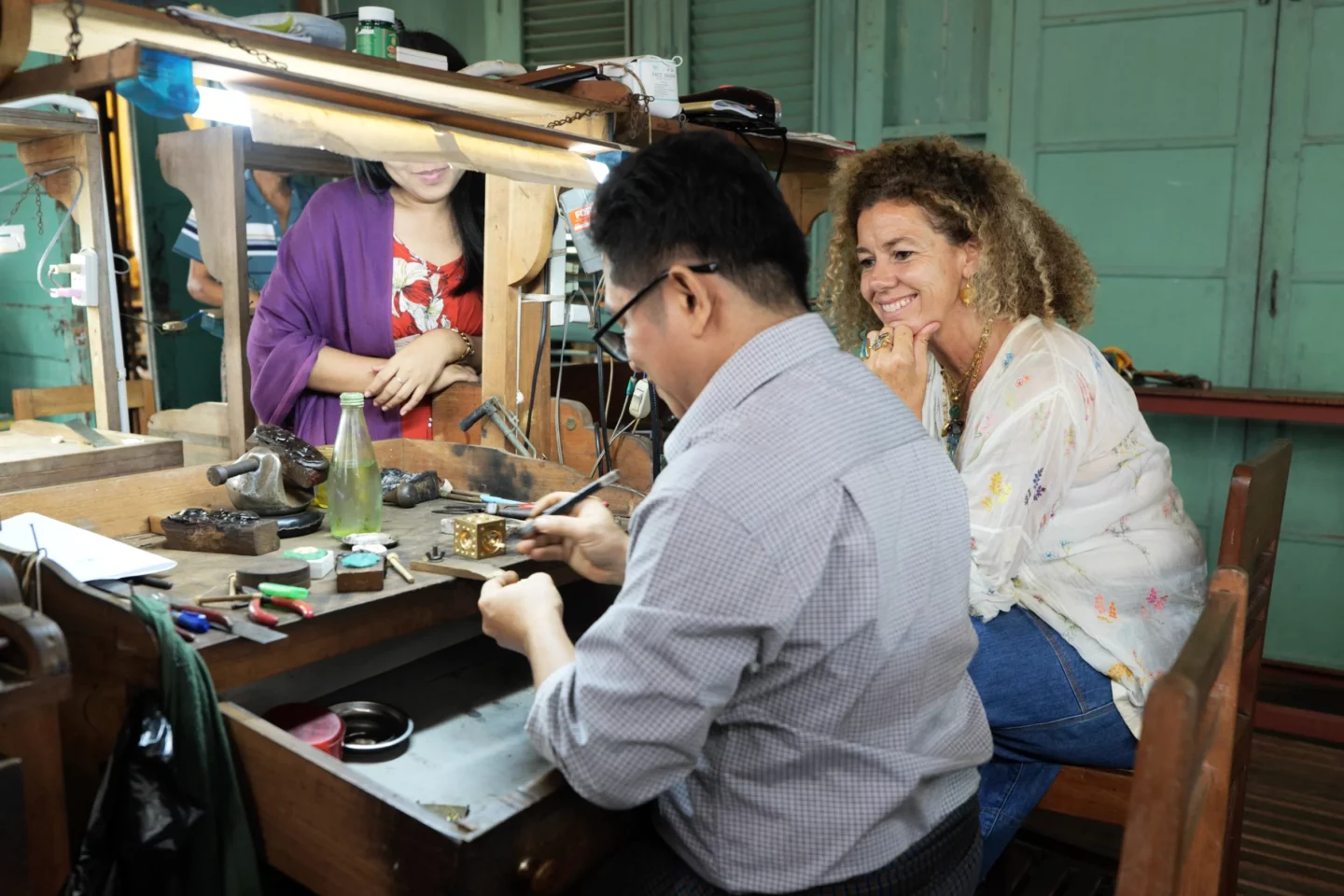
“I travel to the places where I work and I sit in workshops. I have conversations with the makers, I search for stones in markets, with dealers and gem cutters. I arrive with an idea, but often it morphs into something new, or I stumble upon a new stone or cut, and the new collection unfolds through the materials.”
“I draw so much inspiration from the past – I am at heart, a nostalgist, I gravitate to the feeling of ancient art, of things made by human hands: worn, loved, and passed down through generations. Each wearer adds something to the energy of the piece. My hope is simply to recreate this feeling.”
Pippa Small on working with gold:
“I have spent my career travelling the world, working with master craftsmen and diverse communities to help redefine what ethical jewellery can look like. My journey has taken me from Bolivia and Colombia to Afghanistan, India, Myanmar, and Palestine—places rich in cultural heritage and artisanal skill and often impacted by conflict and economic fragility.”
“Each collaboration tells its own story—rooted in the traditions of its land, shaped by the hands of the artisans, and echoing the feel of the earth from which the materials are drawn. Yet no matter the setting, one principle remains constant: a commitment to creating jewellery that respects both people and the planet.”
“Our jewellery is so much more than just something to be worn. We create pieces that become part of you—an extension of your values that adorn you like a second skin, for those who appreciate the value of handmade, and who find the beauty and uniqueness in imperfection.”
Lodestars Anthology is an independent magazine-meets-journal for curious travelers who are interested in being inspired, seeing the word and meeting interesting characters along the way. Focusing on one country per issue, Lodestars is a scrapbook of place, a magazine that goes deep into the heart of a location and uncovers its charms, flavors and splendor, taking a truly personal, beautifully crafted and slow approach to the art of travel journalism.
For the release of Lodestars Italy issue, the editors sat down to chat about photography, life and Italy with cover photographer Chiara Dalla Rosa. Read on for their conversation.
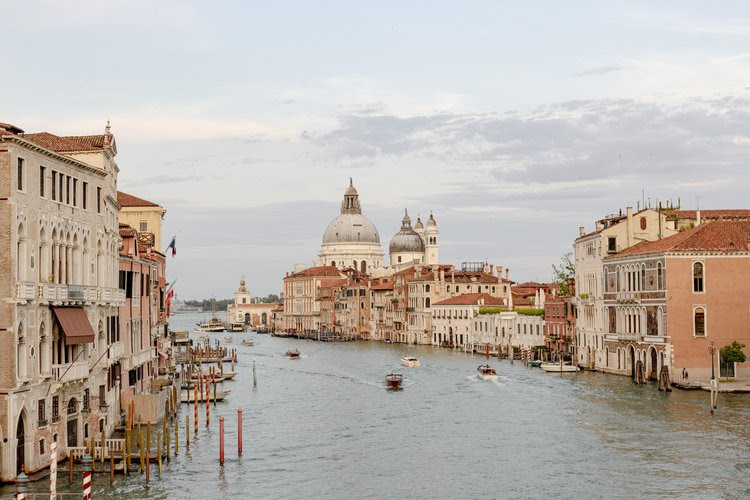
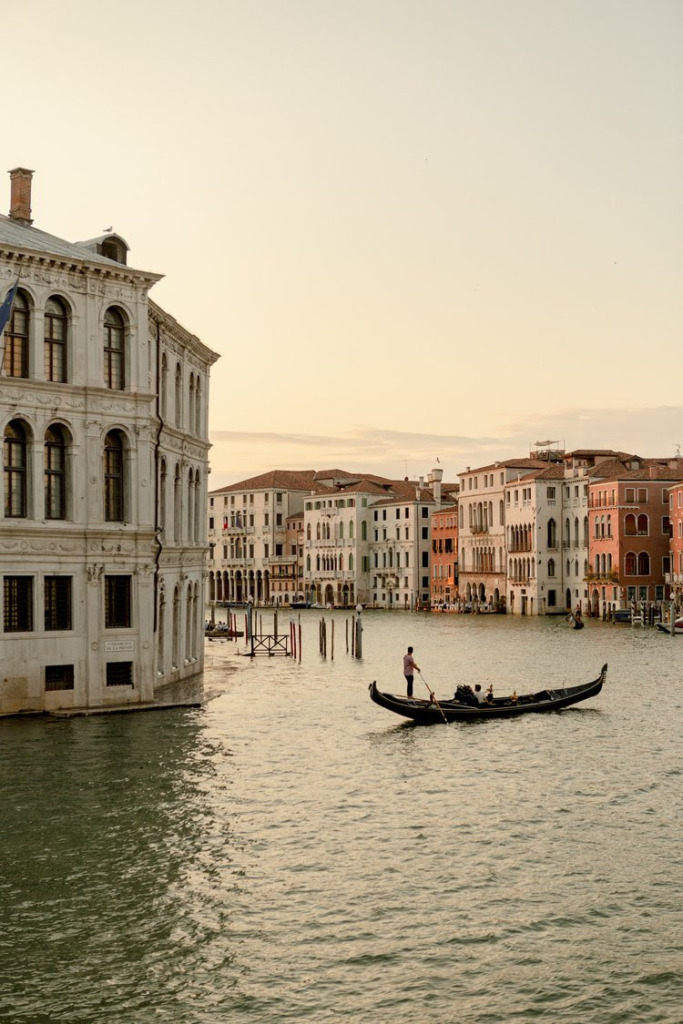
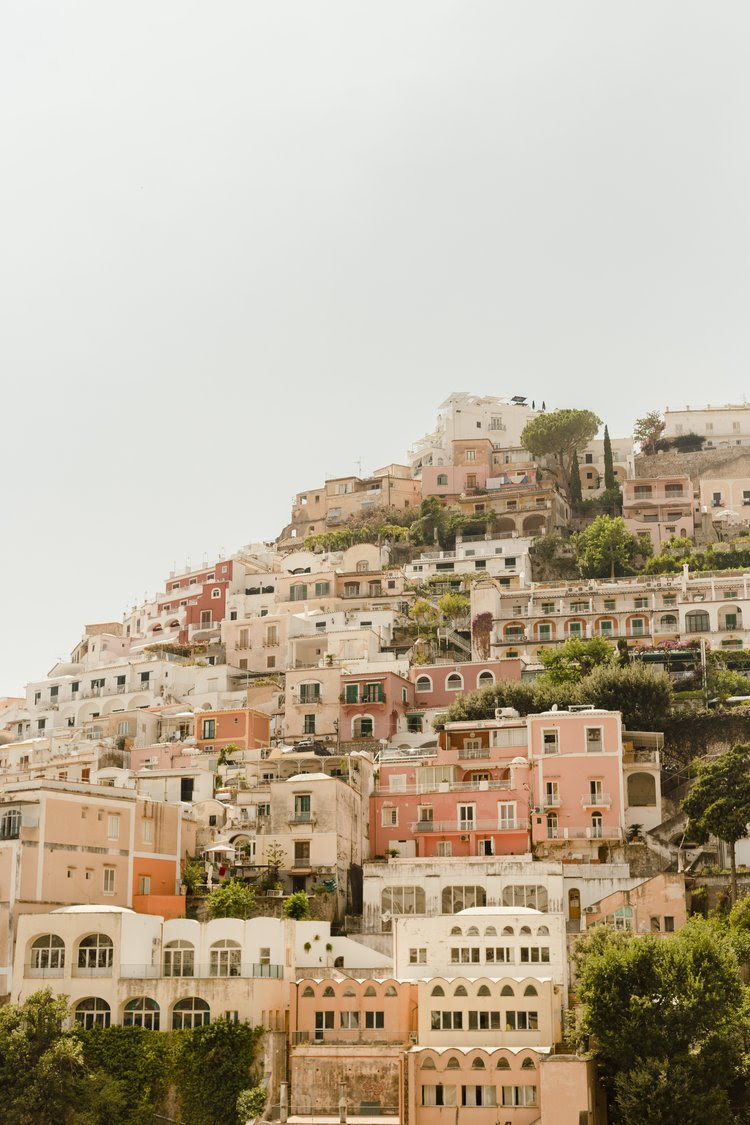
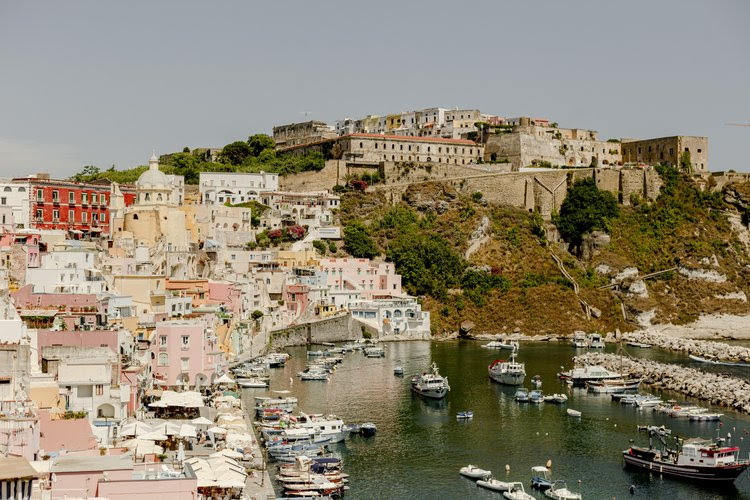
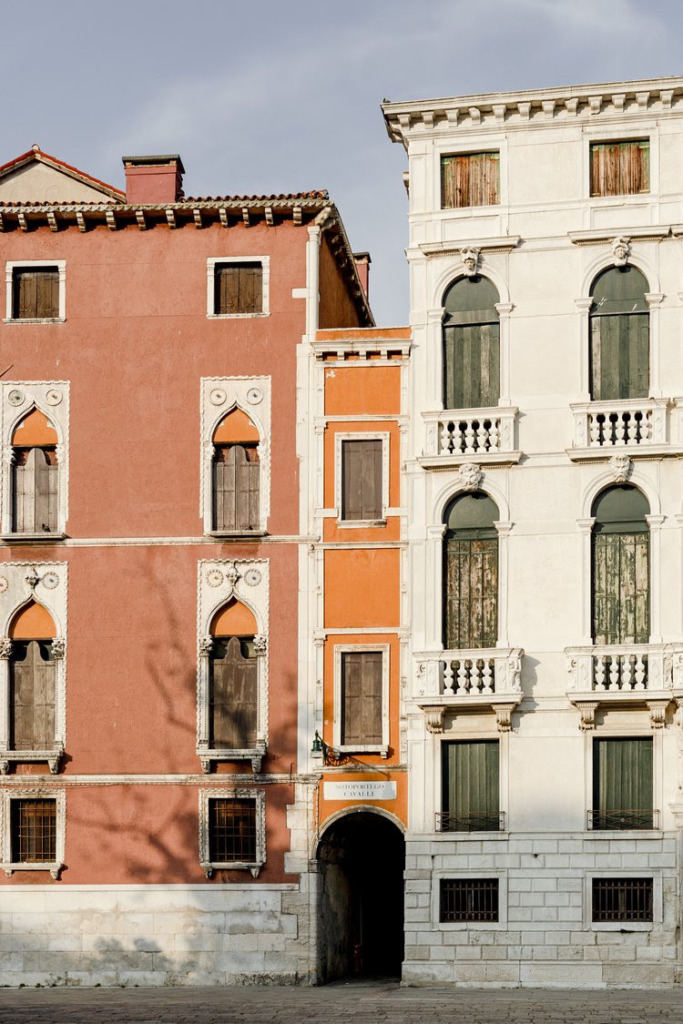
Venice, Italy, all photographs by Chiara Dalla Rosa
Can you tell us about the story behind the cover image?
The cover image for the Italy magazine was captured on a warm late afternoon in May, one of the best times to experience Venice as the days grow longer and the light turns warmer. I decided to take a leisurely stroll to enjoy the weather and the final hours of sunlight on the island. As I wandered through the narrow calles, I took my time to observe my surroundings, fully immersing myself in the beauty of the moment. I waited patiently for the sun to set, aiming to capture the perfect shade of pink reflecting on the emerald waters of the Canal Grande. Standing on the Rialto Bridge, I paused to take in the breathtaking views, reminded of how special and unique this city that I call home really is.
Venice has been your home for many years – what marks the city so special?
Venice is truly a place where time seems to stand still and history envelops you as you wander through its streets. It’s a city where you know your neighbours, where you meet friends by chance while walking around, where the pastry shop owner downstairs knows your name, and where strolling is a slow but delightful way to get around. Despite its rich historical heritage, Venice is also a vibrant, contemporary hub that attracts creatives from around the world. Historically a crossroads of cultures, this relevance endures today. Venice is a bustling city where the young generation is eager to forge new opportunities.
How important is community and connection when working as a photographer?
I believe that building a community and fostering connections is essential for a photographer. Staying inspired and maintaining mental well-being often hinge on these interactions. The ability to bounce ideas off others and engage in constructive discussions with fellow creatives is crucial in any artistic endeavour. Personally, I constantly seek affirmation and inspiration from those around me. Sharing my work and receiving feedback is both validating and reassuring, helping me to find the best path forward. Having a familiar face to turn to in moments of doubt can make all the difference.
What do you want people to feel when they look at your images?
I aspire for my images to evoke a genuine connection to the places and the people they depict, transporting viewers into a different realm and allowing them to experience the inherent beauty of each scene. When capturing people in the art and hospitality sectors, I aim to convey their essence, passion and dedication. I want my photos to inspire curiosity and encourage exploration, revealing the stories of the remarkable places and people I encounter. To me, each image is layered with meaning, and I hope viewers can appreciate these layers and interpret them in their own way, discovering the rich narratives within.
What do you enjoy most about the work that you do?
As a travel, food and portrait photographer, I relish the opportunity to collaborate with inspiring professionals and explore incredible destinations worldwide. Capturing renowned chefs and artists and their innovative creations, alongside adventuring on mountain peaks or canyoning in serene lakes, is a dream come true for me. I have a deep passion for framing moments and memories, and I count myself lucky every day as I get to share my unique perspective of the world.
Being a photographer gives me the opportunity to view the world from a unique perspective, encouraging me to slow down and truly observe my surroundings. I cherish this process, as it allows me to craft images that can transform into new worlds and tell compelling stories within a single frame.
How important is community and connection when working as a photographer?
I believe that building a community and fostering connections is essential for a photographer. Staying inspired and maintaining mental well-being often hinge on these interactions. The ability to bounce ideas off others and engage in constructive discussions with fellow creatives is crucial in any artistic endeavour. Personally, I constantly seek affirmation and inspiration from those around me. Sharing my work and receiving feedback is both validating and reassuring, helping me to find the best path forward. Having a familiar face to turn to in moments of doubt can make all the difference.
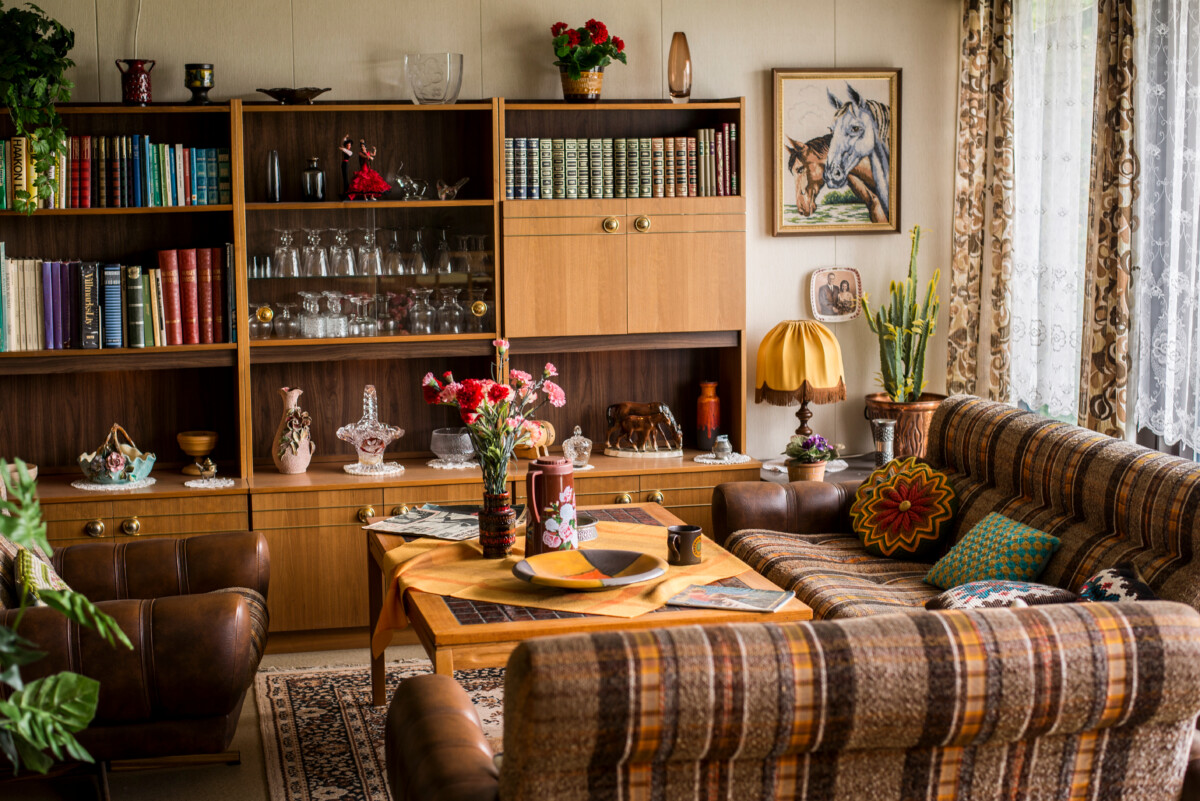
What Is Considered Vintage? A Complete Guide to Vintage Home Decor
Why does the age of an item matter?
Most experts agree: 20 years is the entry point for vintage. But age isn’t just about numbers. Nika Patterson explains that “age tells a story; not just of when something was made, but the how and why of the people who made it.”
Raimondo Rossi adds, “Every thread, color, label, and material holds history.” The age of an item connects us to the energy, craft, and culture of its time.
From an automotive standpoint, Steven Keller notes that while cars are typically classified as vintage between 1919 and 1930, emotional and technological value also play a role in defining this category.
Age also plays a significant role in value. “A 1920s Bakelite radio with provenance can hold far more allure than a modern lookalike,” explains Sara MacKarvich. The history and craftsmanship behind vintage pieces often make them more valuable, as they offer a unique connection to the past that modern replicas can’t replicate.
Expert contributors: ● Nika Patterson from clothing store Santa Fe Dry Goods ● Raimondo Rossi. style editor at Milan Weekly ● Sara MacKarvich of Certified Estate Sales in Metro-Atlanta ● Steven Keller from Seattle Antique And Classic Car Appraisal
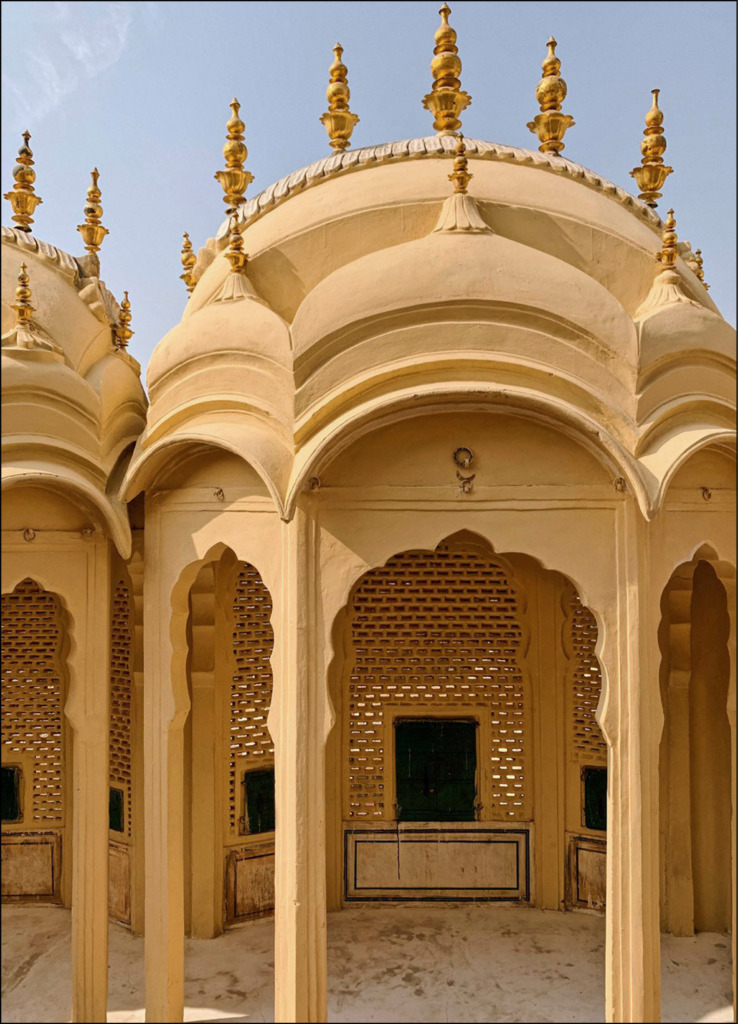
One of our most exciting acquisitions for spring comes from the royal intricacy of Jaipur: Munnu The Gem Palace. Established in 1852, this exquisite studio has stood as one of India’s most iconic jewelry houses for almost 200 years. Referred to as a “museum atelier,” their work has been featured in exhibitions at the Met and Neue Galerie in New York as well as discerning boutiques and private collections. Legends of all stripes have collected their work, including Princess Diana, Jackie Kennedy, Mick Jagger and more.
Passed by word of mouth between jewelry connoisseurs for decades, The Gem Palace is a studio like no other. This ninth-generation family business is helmed by the Kasliwal family, rumoured to have been started by an ancestor who sold gems to the Mughal courts in the 17th century. Described as a “unique family of aesthetes,” the Kasliwals are skilled jewelers and gem cutters who have passed on extraordinary talent and taste from generation to generation. They are utterly devoted to the heritage of Indian artistry in their work, favoring 22K gold, intricate filigree and polished enamel details.
Jaipur, India
The most current iteration of The Gem Palace flourished under Munnu Kaliswal–the Munnu for whom the studio is now named. Growing up in Jaipur, Munnu’s affinity for the earth’s rarest minerals was fostered from a young age. As they toddled around their father’s workshop, Munnu and his brother, Sanjay, were often given sacks of semi-precious stones to play with as if they were marbles.
As he grew, Munnu displayed the same natural affinity for gemstones and craft as his forebears, creating some of the most striking and memorable designs in the studio’s history. While Munnu drew upon geomorphic modernism and Victorian complexity, a hallmark of his style is the opulence of the Mughal era.
Today, the brand is helmed by the next generation of Kaliswals, including Munnu’s sons Siddarth and Samarth. Having worked alongside his father in the studio, Siddarth, in particular, has been hailed for his creative vision and intuitive approach to design.
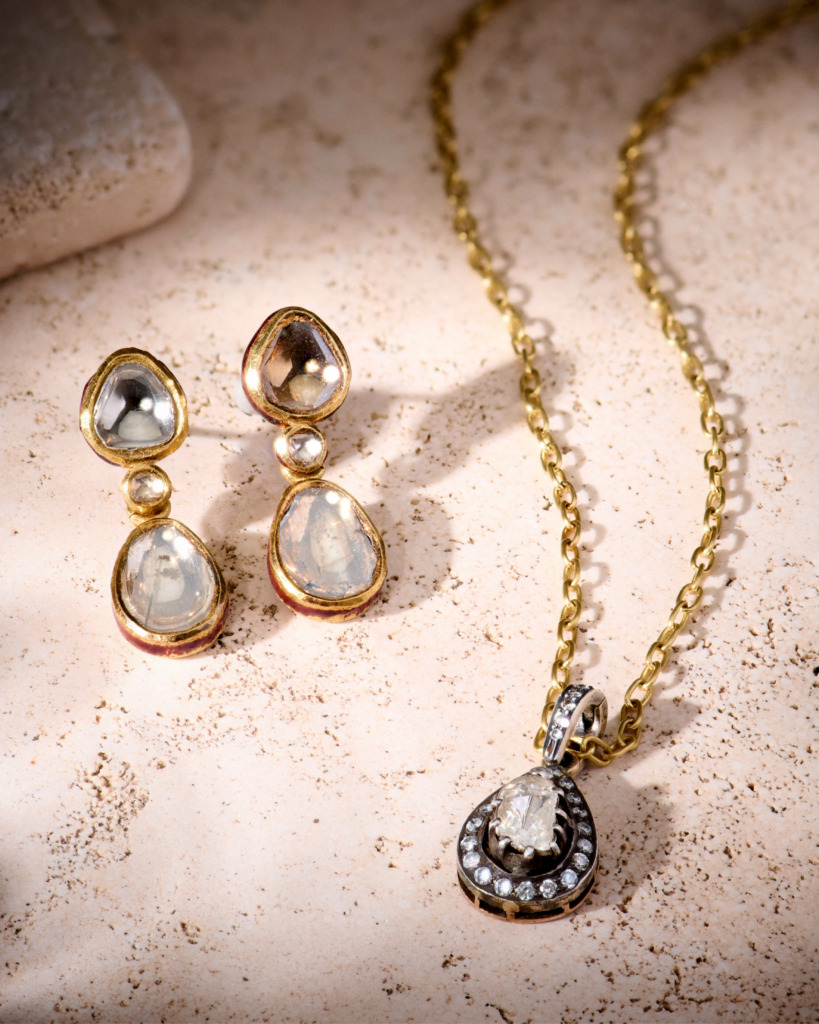
Munnu The Gem Palace, Earrings and Pendant
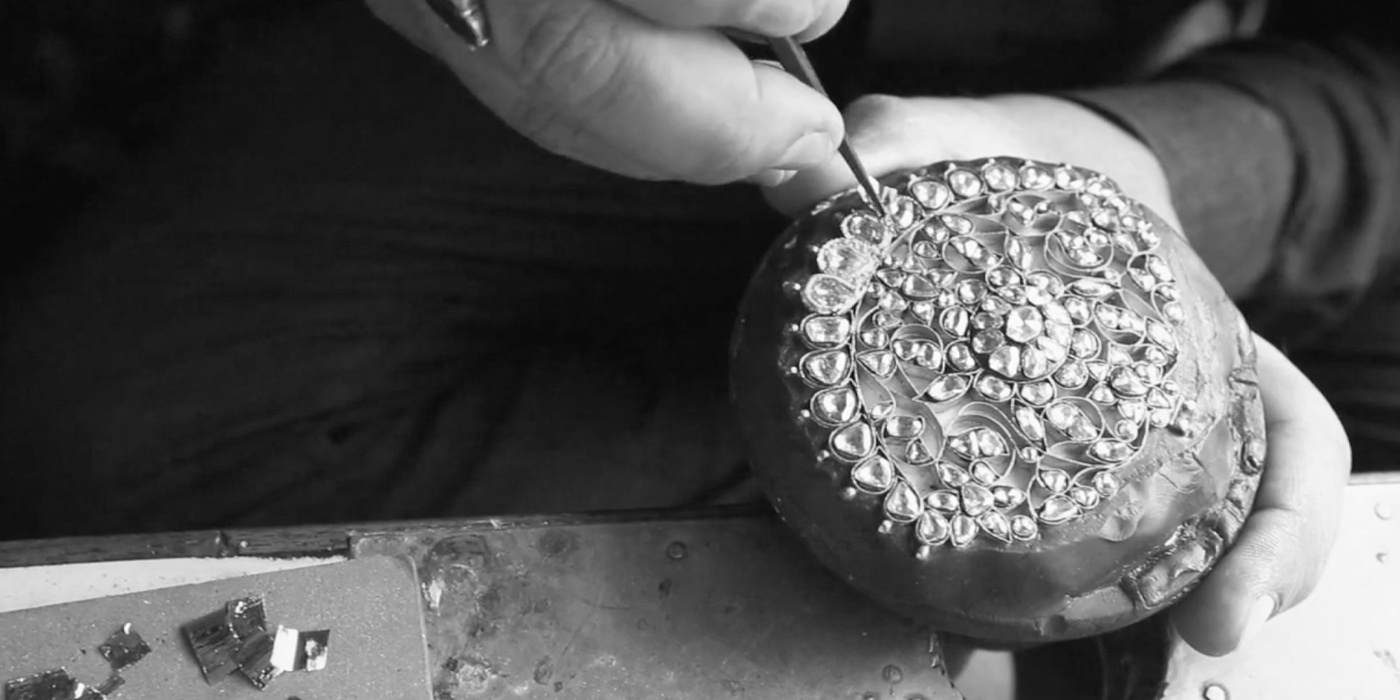
The Gem Palace’s jewelry designs are intricate and undeniably gemmy. They skimp on no part of the process. Rather than default to modern convenience, the family opts for the same intensive hand-carving and setting, painting, cutting and enameling practiced by the artisans that came before them.
They painstakingly source their stones from reputable mines and dealers all over the world. But above all, their most important ingredient is attention. From concept to creation, a single piece can often take years to realize.
Jaipur, India
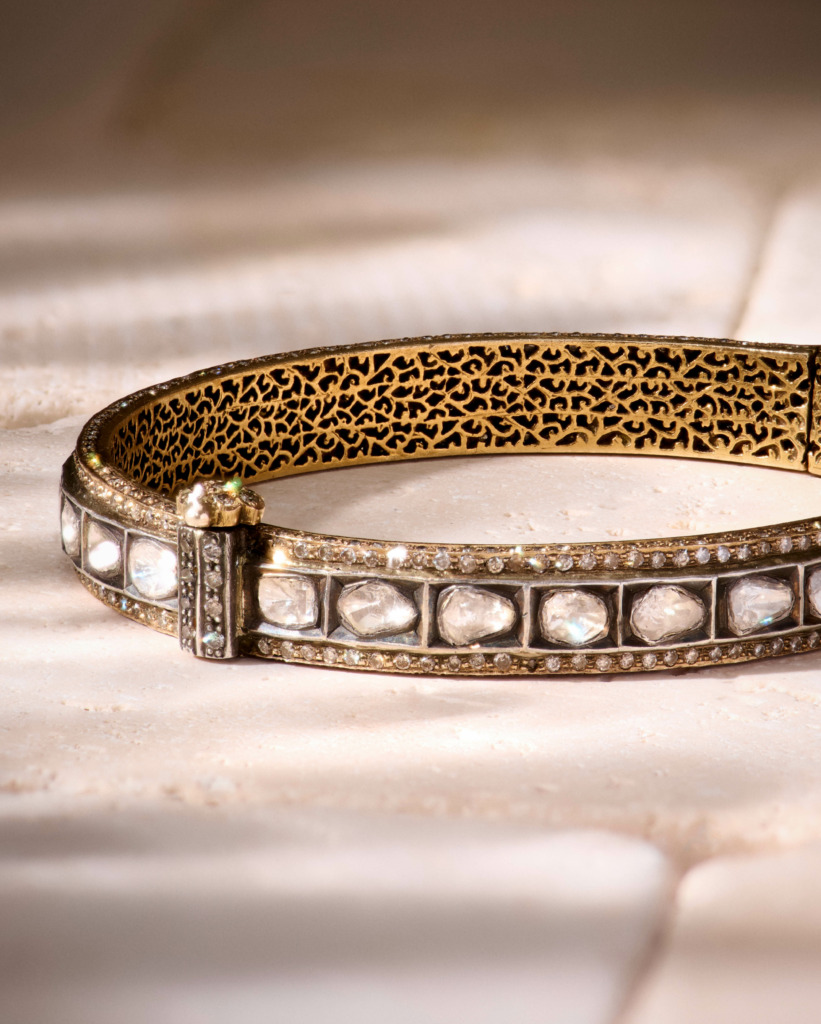
The pieces we have brought into Santa Fe Dry Goods come largely from The Gem Palace’s Universal collection–designs that celebrate simple, natural beauty with flowing, linear designs. Among the organic gold twists of the offering, find a special bracelet and pendant chosen from their Indorussian collection, designs intended to evoke a blend of victorian and imperial jewelry standards. These pieces stand out not only for the brilliance of their stones (the bracelet alone has nearly 100 diamonds studding its exterior,) but the complex filigree of their designs.
“People shouldn’t hide their jewels away in vaults or save them for special occasions. Gems only come alive in the light.”
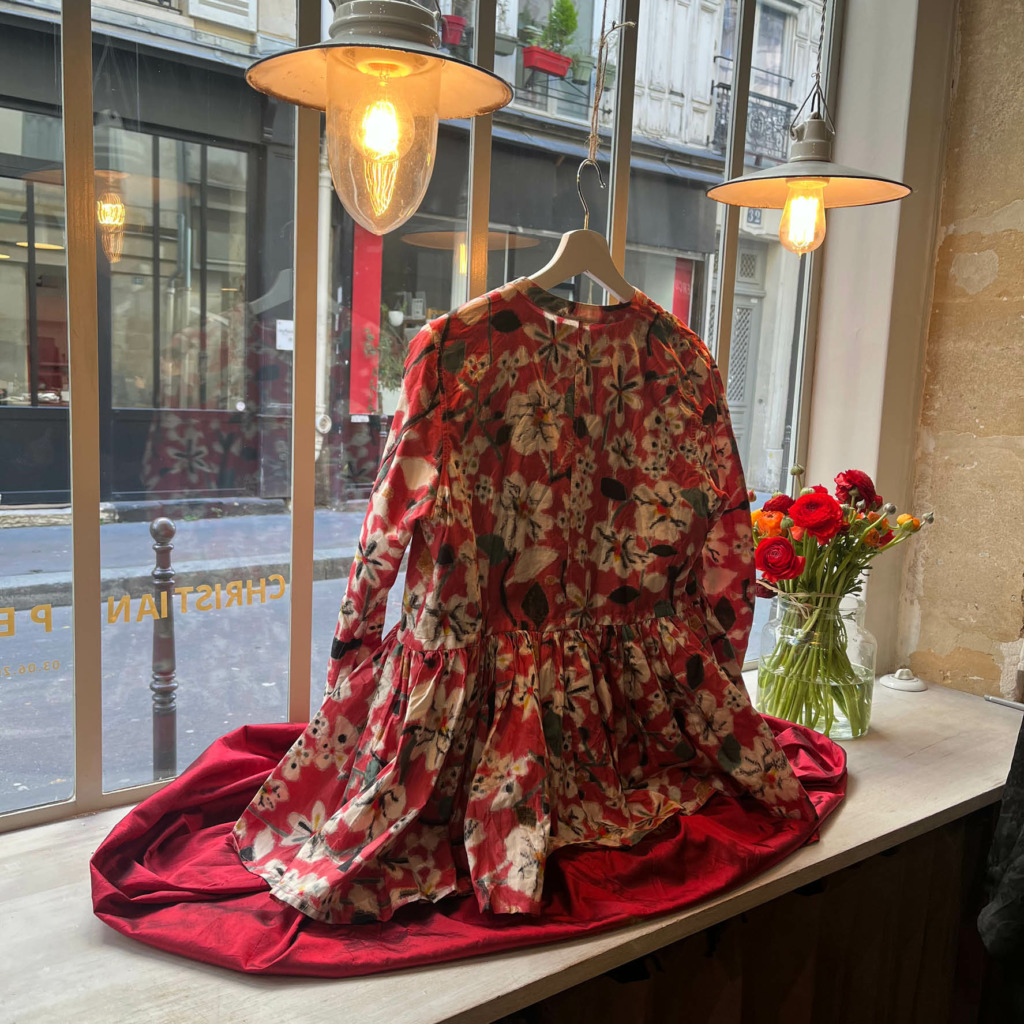
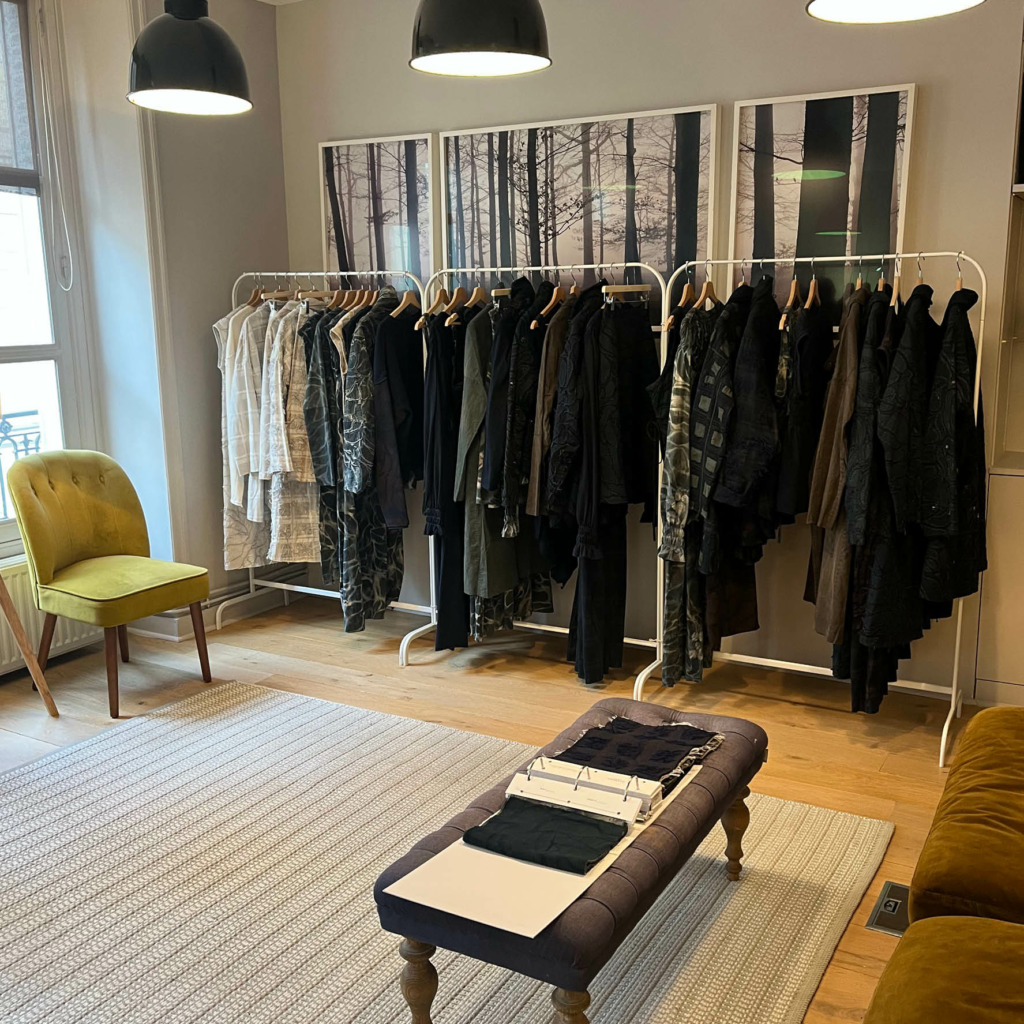
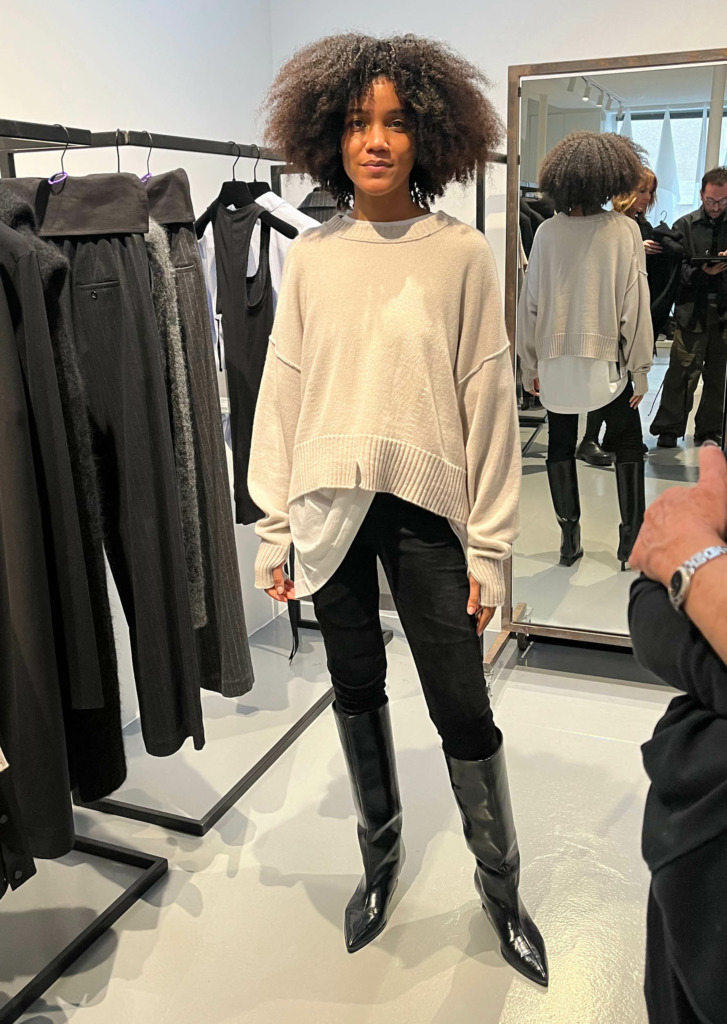
Last week, we returned to Santa Fe after spending a week dashing through Paris for Fashion Week. While we have been to France and Italy already this year to begin buying for next season, this latest trip encompassed the bulk of our buy for Fall/Winter 2025. Among the stand-outs on our travels were bright red florals and soft pinks at Christian Peau, a veritable cashmere rainbow at the Avant Toi showroom, a quilted tree wrapped in Rianna + Nina’s intricate patterns, and a selection of impeccable Sicilian shirting from Asciari.
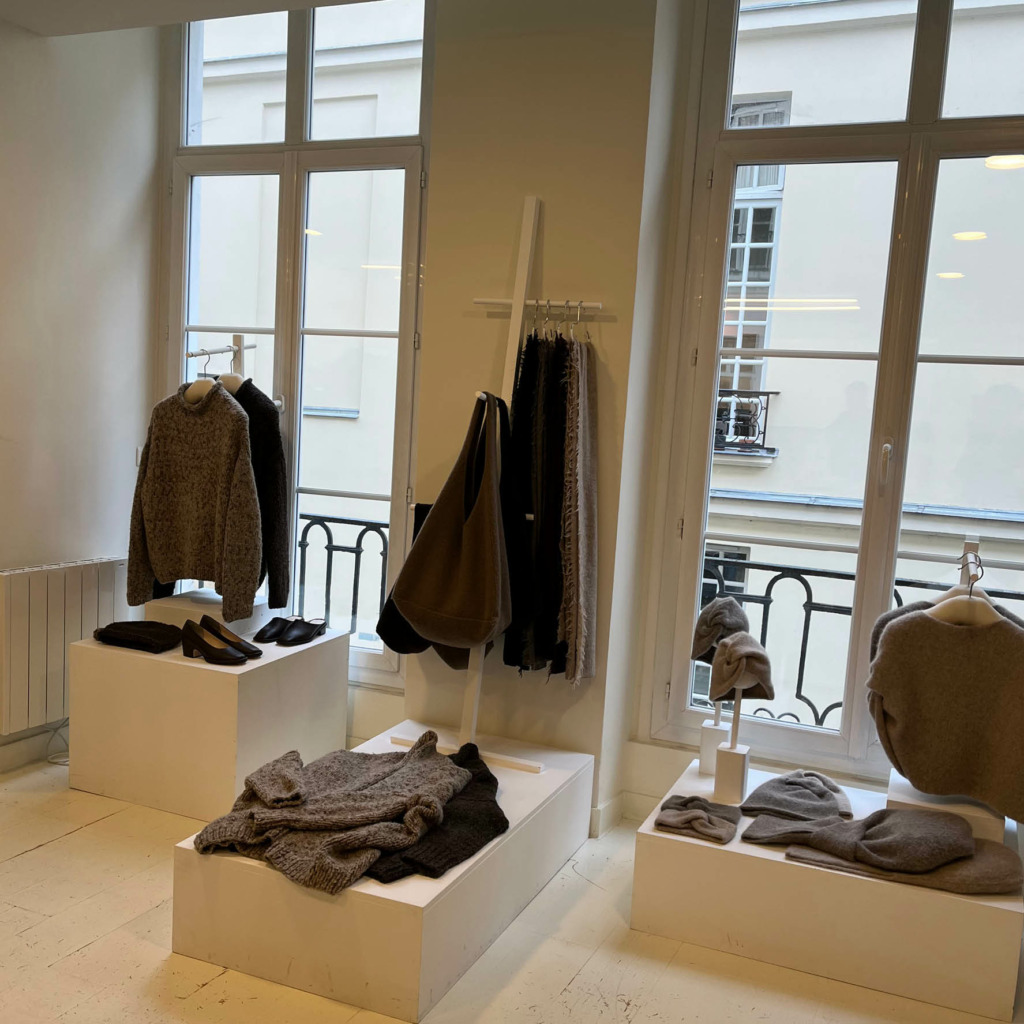
The knitwear coming for fall is equally promising, with lots of layers from Album di Famiglia, Boboutic, Lauren Manoogian, Nanna Pause and Isabel Benenato. Julian Klausner’s first full collection for Dries Van Noten delivered a mix of patterns and prints in bold colors—both a tribute to the past and a nod towards the future. At Biek Verstappen, Alabama Chanin and Horisaki Design & Handel the focus was on the handmade and hand finished.
Looking forward to sharing these special collections with you come fall.
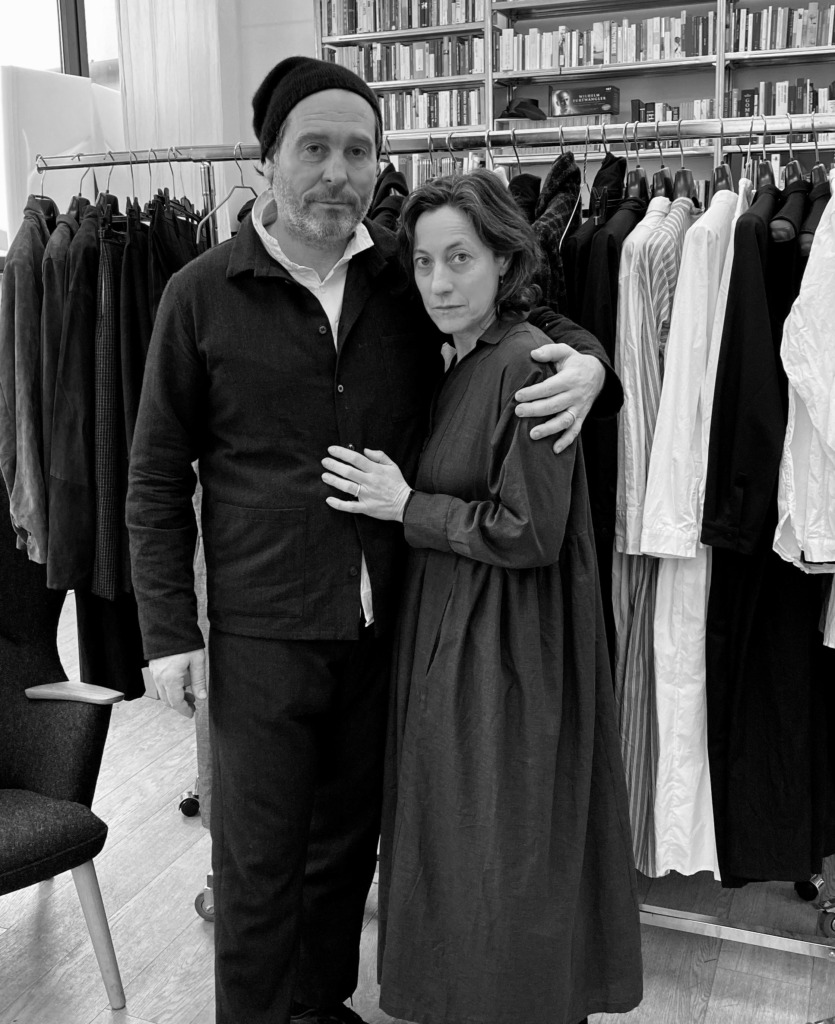
For Klaus Plank and Barbara Cavalli of Bergfabel, design is not just an art form, but a way of life. They make their clothes not simply for others but for themselves, creating pieces intended to live in and look stylish doing so. Their collection is a love letter to the classics–well-made, tailored pieces with just the right amount of artful crumple. Their clothing is effortless and layerable, made with natural textiles that move seamlessly between seasons. While Shobhan and Tatiana were in Paris, they visited with Barbara and Klaus—who shared a bit more about the Italian clothing line’s inspiration and process. Read along for an interview with Bergfabel.
Klaus Plank and Barbara Cavelli of Bergfabel
What is the essence of Bergfabel?
The essence of Bergfabel is a deep connection to nature, tradition, and craftsmanship. It tells the story of South Tyrol through high-quality clothing that reflects simplicity, family life, and poetic beauty. The brand values authenticity and timeless design, bringing the spirit of the mountains to the world.
How would you like people to feel when wearing your clothing?
We want people to feel connected to nature, tradition, and quality. When wearing Bergfabel, they should feel comfortable, confident, and surrounded by a sense of poetry and timeless beauty. Our clothing is made to bring warmth, authenticity, and a touch of the mountains into everyday life.
What compels you to create clothing?
I want to share the culture and beauty of my home, South Tyrol. Clothing is a way to tell a story—about nature, tradition, and a simple, poetic way of life. I believe in quality and craftsmanship, making pieces that feel timeless and personal. My goal is to create something meaningful, where people can feel connected to the essence of the mountains and the warmth of family life.
Can you tell us about how you source textiles?
My process of sourcing textiles is deeply personal and intuitive. I travel to select mills in Italy and Japan, searching for fabrics that have a special touch, texture, and story. I work closely with artisans who share our values of quality and tradition.
I believe fabric should speak to the senses—its weight, softness, and movement must feel just right. Touching and feeling each textile is essential before I decide to use it and it takes a long time. Some fabrics are custom-made for us, inspired by traditional weaves and vintage garments, ensuring a unique character.
What is the inspiration behind your silhouettes?
The inspiration behind our silhouettes comes from my past and my wife. Memories of traditional South Tyrolean workwear, the way people dressed in the mountains, and the simplicity of rural life all influence the shapes of our garments. My wife also inspires me—her elegance, her sense of poetry, and the way she moves bring a soft, timeless feeling to the designs.
South Tyrol, Italy
Can you tell us about how Bergfabel clothing is made?
Each Bergfabel piece is made with deep care and attention to detail. Some pieces are hand-finished, adding a personal touch that makes them special. I also focus on washing techniques to give the clothing a lived-in feel, as if it has a story of its own. Each garment is made to be worn and loved for years.
What draws you to shirting?
I love wearing shirts, but I always felt they were either too classical or too sporty. That’s why I wanted to create something different—shirts that feel timeless yet modern, structured yet relaxed.
For me, the perfect shirt should be easy to wear, with beautiful fabrics that feel natural and soft against the skin. I focus on small details—subtle proportions, special textures, and handmade touches—that make each piece unique.
They should be effortless, with a quiet elegance that fits into everyday life while still feeling special.
And then I found the best paper cotton to make them—crisp yet soft, structured yet breathable. This fabric is incredible on the skin, with a lightness that makes it feel almost weightless. It has the perfect balance: sharp enough to hold its shape, yet comfortable enough to wear all day. I love how it changes with time, becoming even more beautiful as it softens with wear. It gives the shirts a fresh, effortless elegance—never too formal, never too casual, just perfectly refined in a natural way.
What inspired the color palette for Spring?
The color palette for spring is inspired by gardens—wild, natural, and full of life. I love how nature’s imperfections create the most beautiful harmony. Faded greens, earthy neutrals, soft florals, and sun-washed tones reflect the quiet poetry of a garden in bloom.
How would you describe your approach to jackets and coats?
My approach to jackets and coats is about balancing structure and softness, tradition and modernity. I am inspired by classic workwear and traditional tailoring but reinterpret these ideas with a poetic, effortless feel.
For me, a jacket or coat should feel like a trusted companion—something you reach for every day, that carries stories and memories, and only gets better with wear.
Is there anything else you would like to tell us about Bergfabel?
Bergfabel is about quality, not trends. It is about creating garments that feel personal, that become part of your story, and that only grow more beautiful with time. My inspiration comes from my home, my past, and my family, and I hope that when you wear Bergfabel, you feel that same warmth and authenticity.
—Barbara Cavelli and Klaus Plank, with love from the mountains.
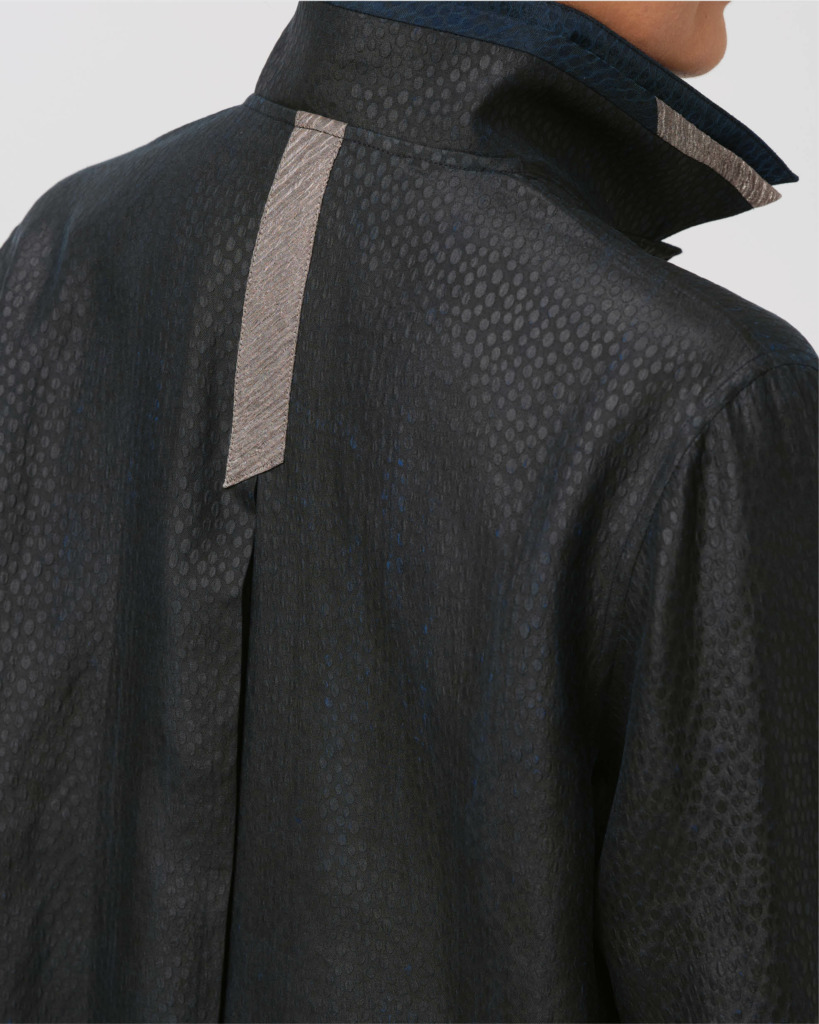
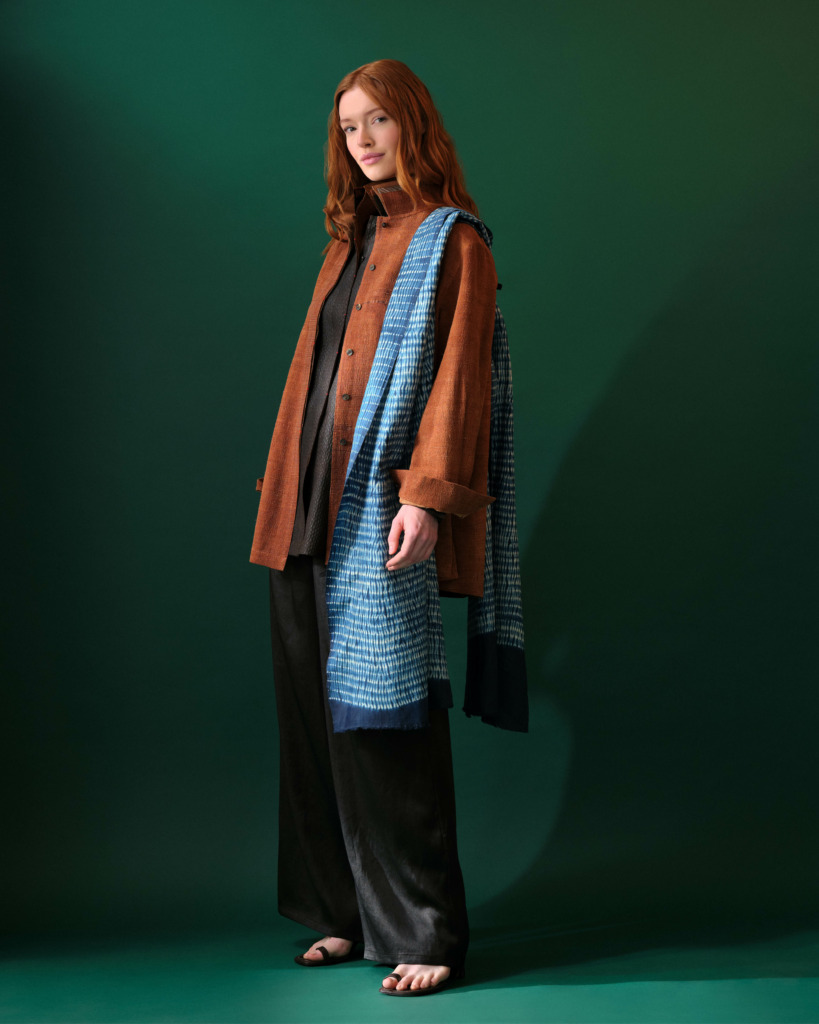
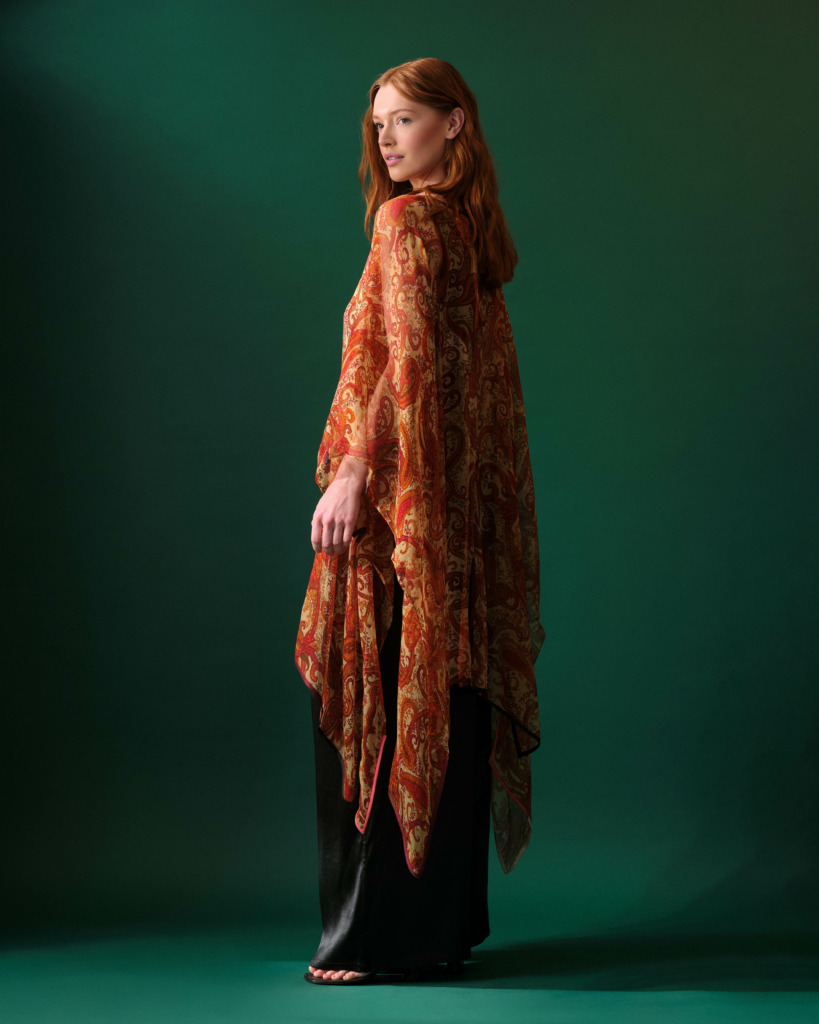
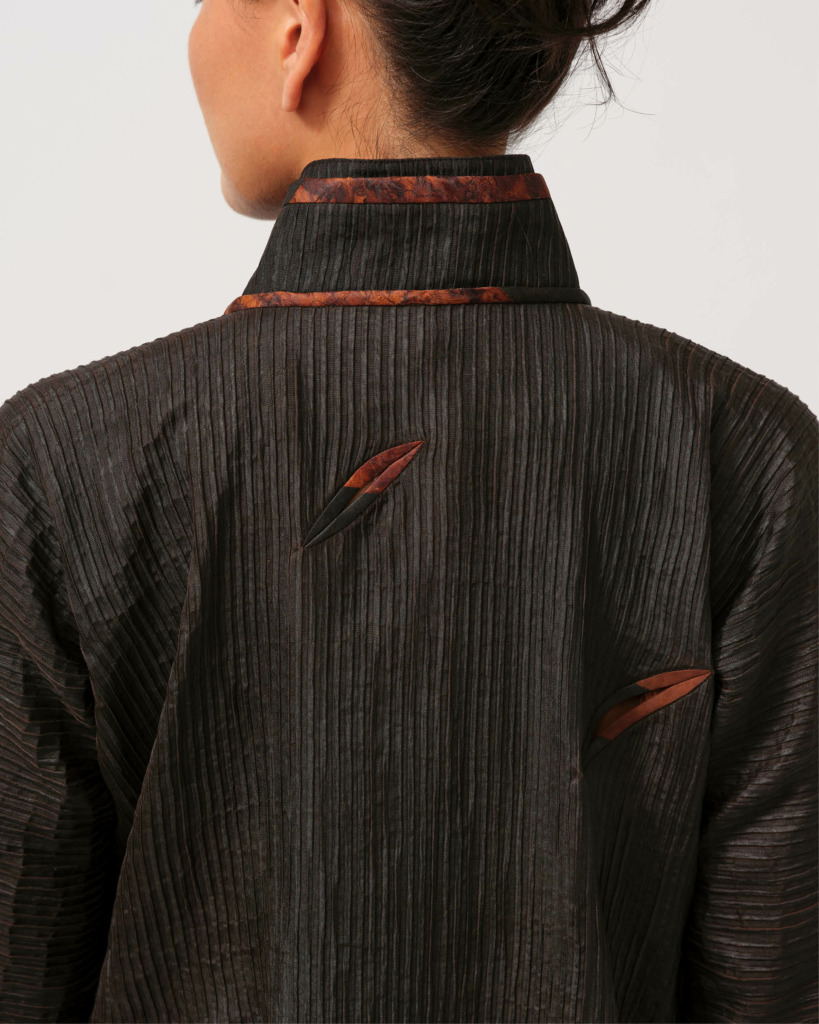
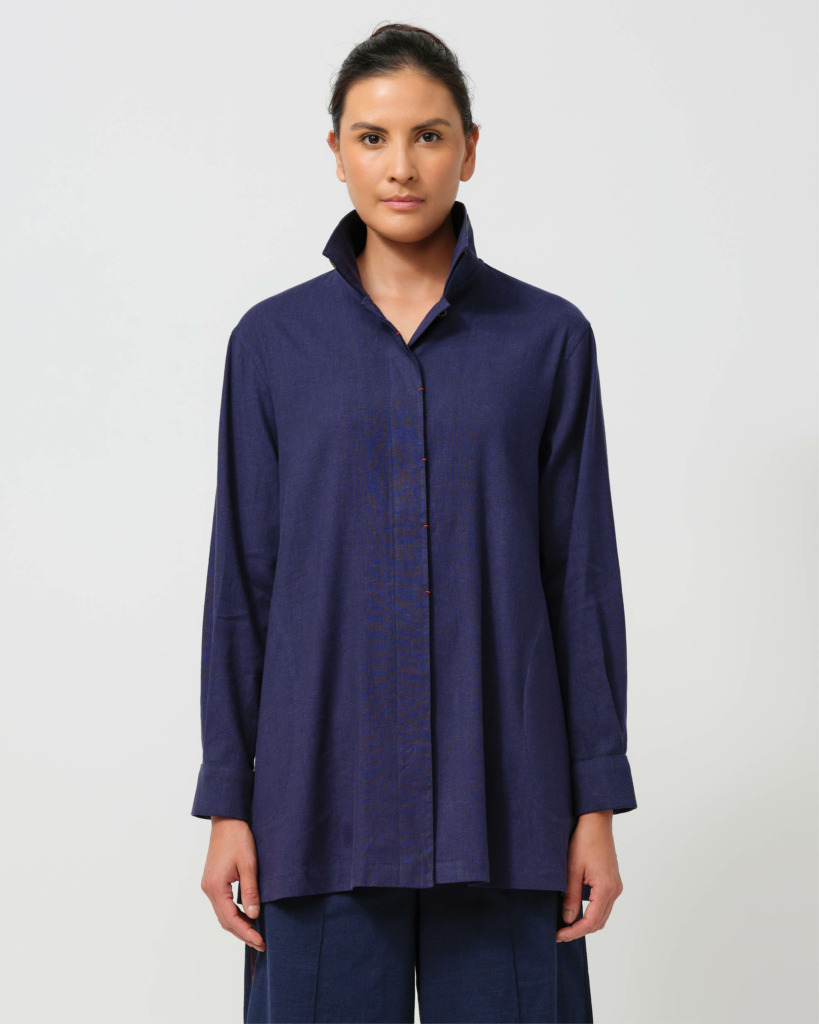
Sophie Hong’s accolades are too numerous to count. She is not only an internationally awarded clothing designer, but a textile researcher to boot, credited with the resurgence of traditional Guangdong mud silks in high fashion.
Sophie Hong’s clothing brand was founded nearly 50 years ago. Today, all manner of textiles flourish under her practiced touch. Of note in Sophie Hong’s latest delivery is a slate of intensely detailed silk jacquards with a raised, textured finish.
Find in this collection moments of the subtle extraordinary: glossy glass beads buttoning plackets, tiny seed pearls sewn along hems and stylish double collars on the shirting that is just oh-so-unmistakably Sophie Hong.
With your help, this year we were able to donate and support the following causes both at home and abroad. We gave to a variety of local and international non-profits, focusing primarily on areas of critical humanitarian need and global sustainability.
The entries here followed by a star rating have been vetted and assessed by Charity Navigator, an organization that evaluates the transparency, efficacy and impact of non-profits worldwide. Each charity they assess is assigned up to four stars based on the aformentioned criteria.
Planned Parenthood – $10,000
★★★★ – Planned Parenthood is the nation’s leading provider and advocate of high-quality, affordable sexual and reproductive health care for all people, as well as the nation’s largest provider of sex education. With nearly 600 health centers across the country, Planned Parenthood organizations serve all patients with care and compassion, with respect, and without judgment, striving to create equitable access to health care.
★★★★ – 1 in 7 New Mexicans experiences food insecurity, a lack of consistent access to healthy foods. The Food Depot’s partner nonprofits and innovative hunger-relief programs provide food and support services to 40,000 people experiencing food insecurity. In 2023, The Food Depot’s fleet of vehicles traveled over 400,000 miles across nine counties. Our specific donations go to their Food 4 Kids program, which provides meals to children whose parents are unable to provide food for them at home.
★★★★ – The Center for Biological Diversity (CBD) believes that the welfare of human beings is deeply linked to nature — to the existence in our world of a vast diversity of wild animals and plants. Because diversity has intrinsic value, and because its loss impoverishes society, CBD works to secure a future for all species, great and small, hovering on the brink of extinction. CBD does so through science, law and creative media, with a focus on protecting the lands, waters and climate that species need to survive.
★★★★ – Doctors Without Borders is an international medical humanitarian organization that provides aid to nearly 60 countries. Their primary focus is people whose survival is threatened by violence, neglect or catastrophe primarily due to armed conflict, natural disasters, epidemics, malnutrition, or lack of healthcare infrastructure.
Zeitz Foundation and Segera Wild Life Refuge – $10,000
The ZEITZ foundation creates and supports projects promoting an inclusive, holistic paradigm of conservation that enhances livelihoods and fosters intercultural dialogue while achieving long-lasting positive impact and sustainability. One of their projects, and home to the ZEITZ foundation, the Segera Conservancy is a 50,000 acre wildlife refuge in the heart of Laikipia, Kenya. The ZEITZ foundation, Segera and The Long Run share a holistic “4C” philosophy balancing Conservation, Community, Culture and Commerce, geared towards delivering tangible and sustainable benefits for land, wildlife and rural communities.
The United Nations Relief and Works Agency for Palestine Refugees provides services that encompass education, health care, relief and social services, camp infrastructure and improvement, microfinance and emergency assistance, including in times of armed conflict.
★★★★ – Food is essential to life every single day, all over the world—and it is more important than ever in a crisis. The World Central Kitchen’s work is guided by the belief that food is a universal human right. World Central Kitchen teams across the world are deeply committed to serving delicious, chef-prepared meals to people with the dignity they deserve.
Also known as Pete’s Place, the Santa Fe Interfaith Homeless Shelter offers a safe and secure place for the homeless as they overcome adversity and stabilize their lives. As the only minimal barrier shelter in Northern New Mexico, they provide a much needed respite for the most vulnerable and oft overlooked members of our community. In addition, they offer a range of support services, such as assistance with SNAP, health care, applying for work and substance abuse counseling.
★★★★ – The Campaign for Female Education is tackling poverty and inequality by supporting girls to go to school and succeed. Their model focuses on inequality and encourages wider social movement in the communities they serve by unlocking the benefits of girl’s education. Over almost 30 years, their education programs in Zimbabwe, Zambia, Ghana, Tanzania and Malawi have directly supported more than 3.3 million students and provided an improved learning environment for more than 5.7 million children.
★★★★ – Rainforest Action Network preserves forests, protects the climate and upholds human rights by challenging corporate power and systemic injustice through frontline partnerships and strategic campaigns. RAN works toward a world where the rights and dignity of all communities are respected and where healthy forests, a stable climate and wild biodiversity are protected and celebrated.
Breakthrough Santa Fe supports motivated public middle school students whose identities have been historically excluded from higher education on their path to college. In addition, the program provides high school and college-age young adults with a rewarding experience as teachers and mentors.
★★★★ – Advocates for Trans Equality fights for the legal and political rights of transgender people in America. A4TE was founded in 2024 as the National Center for Transgender Equality (NCTE) and Transgender Legal Defense and Education Fund (TLDEF), two long-time champions for the trans community, merged together as one organization. A4TE builds on their successes to boldly imagine a world where trans people live our lives joyfully and without barriers.
★★★★ – The New Mexico Wildlife Center connects people and wildlife through conservation education and rehabilitation because a world with wildlife is a better world. NMWC’s wildlife hospital treats between 650 and 900 injured and orphaned wild animals of more than 120 species annually, returning as many as possible to the wild.
★★★★ – As one of Africa’s oldest wildlife charities and a leading conservation organisation, the Sheldrick Wildlife Trust (SWT) embraces all measures that complement the conservation, preservation and protection of wildlife. The Sheldrick Wildlife Trust operates the most successful orphan elephant rescue and rehabilitation program in the world.
★★★★ – VERA challenges racial and economic injustice and is committed to protecting basic human rights for the most vulnerable people in American society. They provide legal representation to those who have been illegally convicted, unfairly punished or abused in state jails and prisons. They also provide re-entry assistance to formerly incarcerated people and ensure their assimilation back into society is smooth and complete.
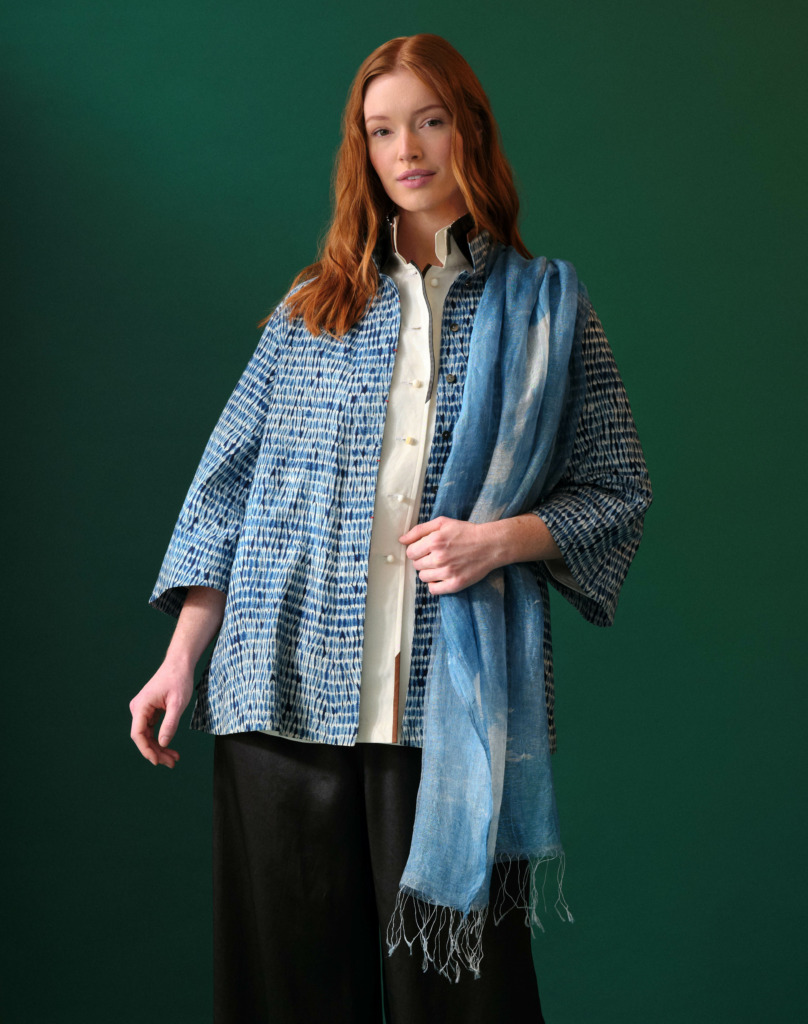
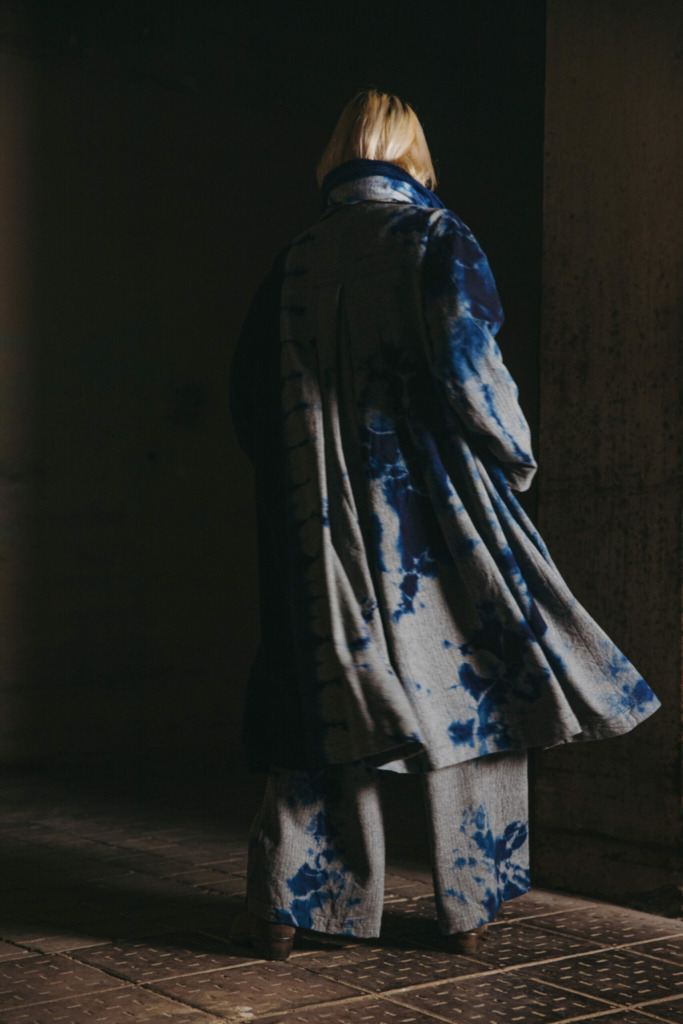
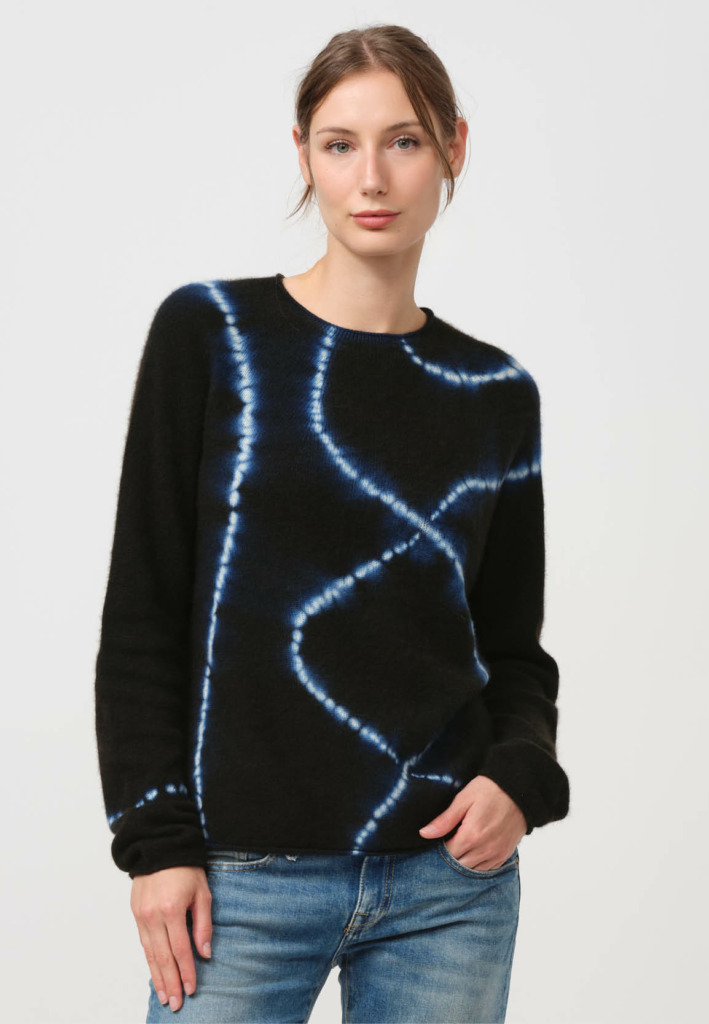
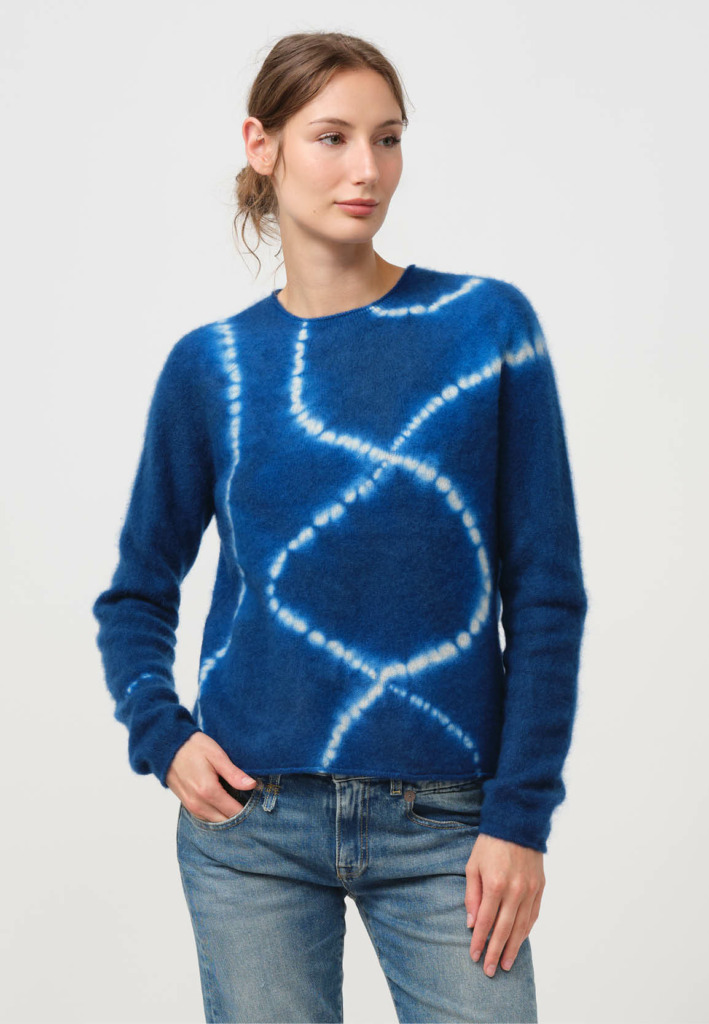
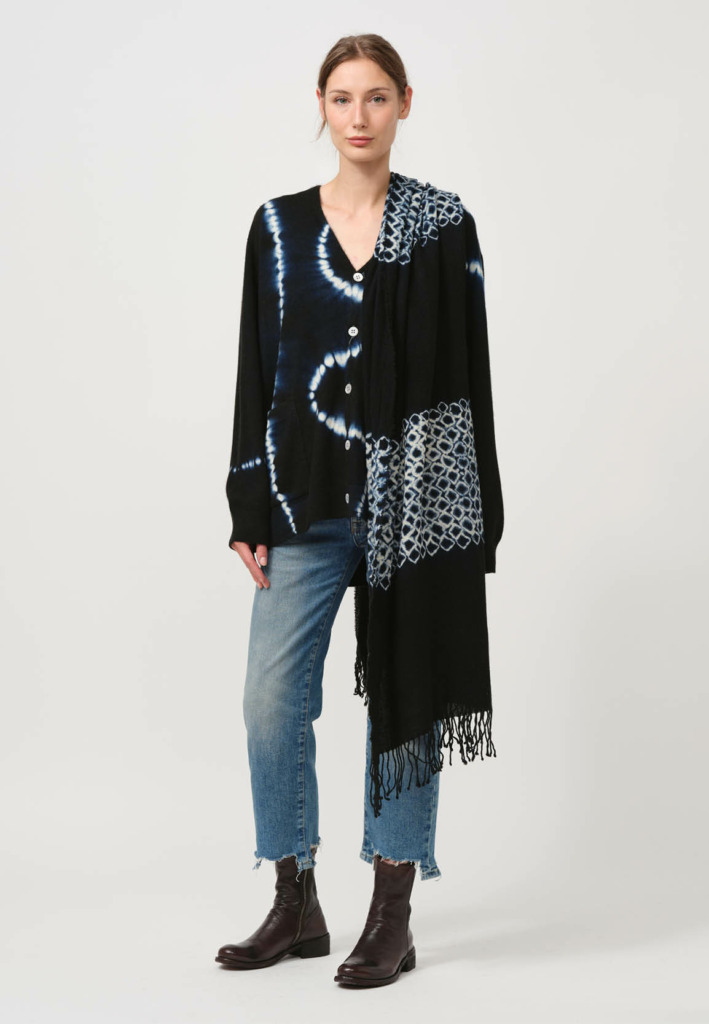
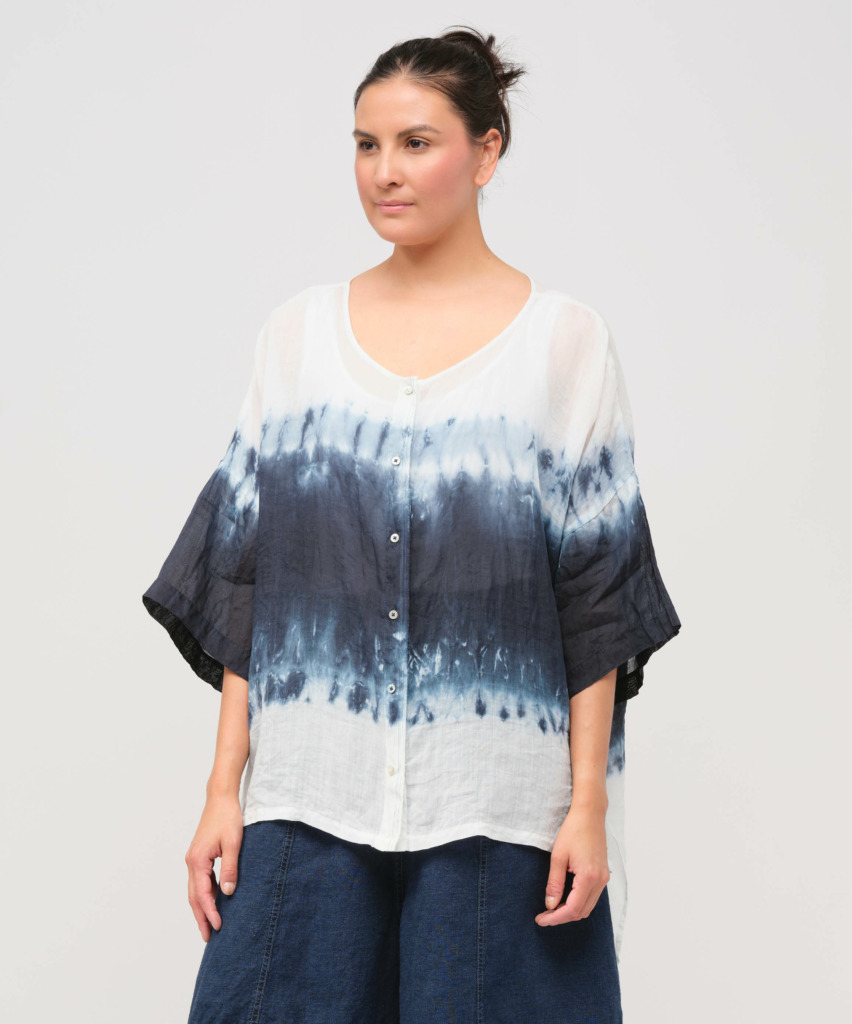
One of the most fascinating techniques on the planet is Shibori. Originating from Japan, the term refers to traditional resist dyeing methods wherein fabric is folded, binded or twisted to create complex, textured designs. For Hiroyuki Murase, the designer behind Suzusan, this concept takes on a whole new life.
As a fifth generation artisan, Hiroyuki’s family has been practicing this art for over 100 years. In fact, his hometown of Arimatsu, Japan, is a mecca of the craft. Today Hiroyuki Murase of Suzusan takes this centuries-old practice and translates it for the contemporary wardrobe, creating lush, sophisticated motifs across cashmere and alpaca knits. As the year winks closed, please enjoy this small, plush delivery of blues from the Suzusan studio.
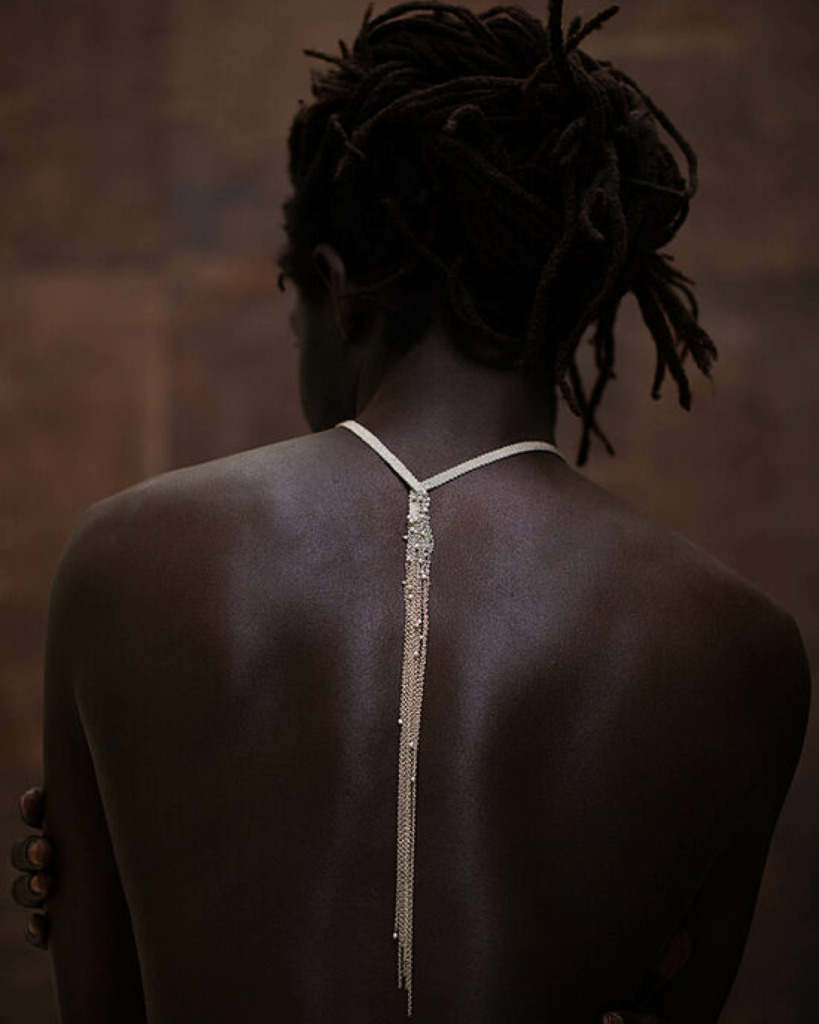
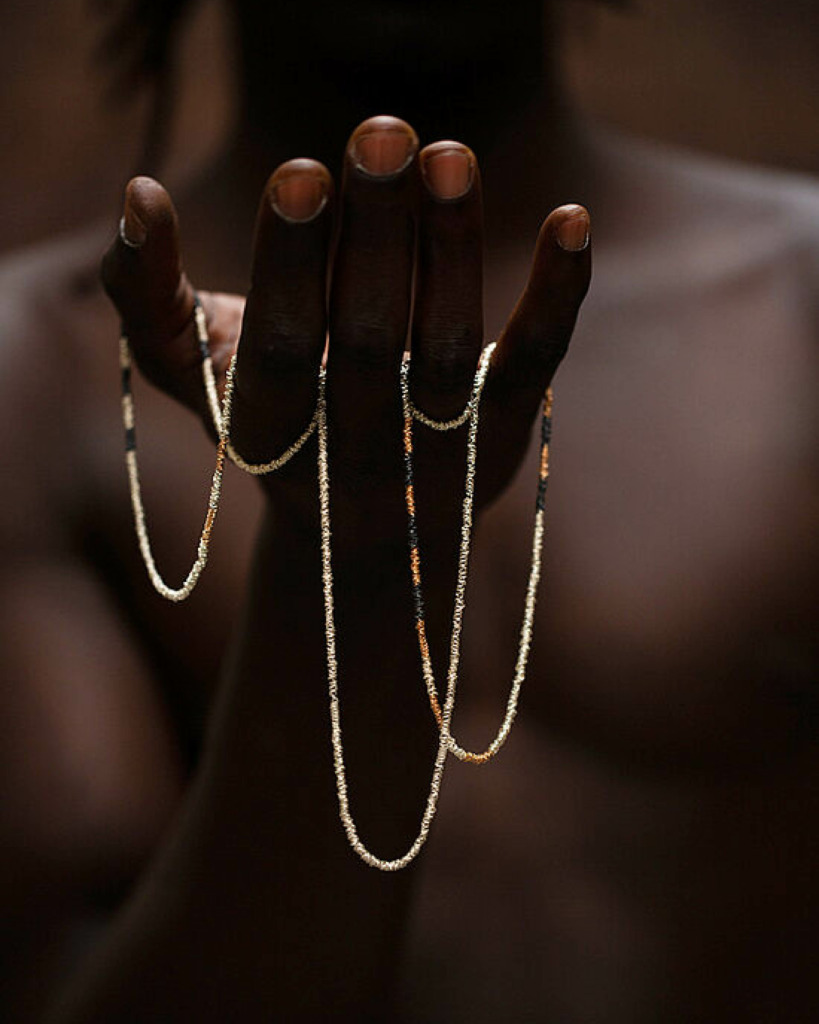
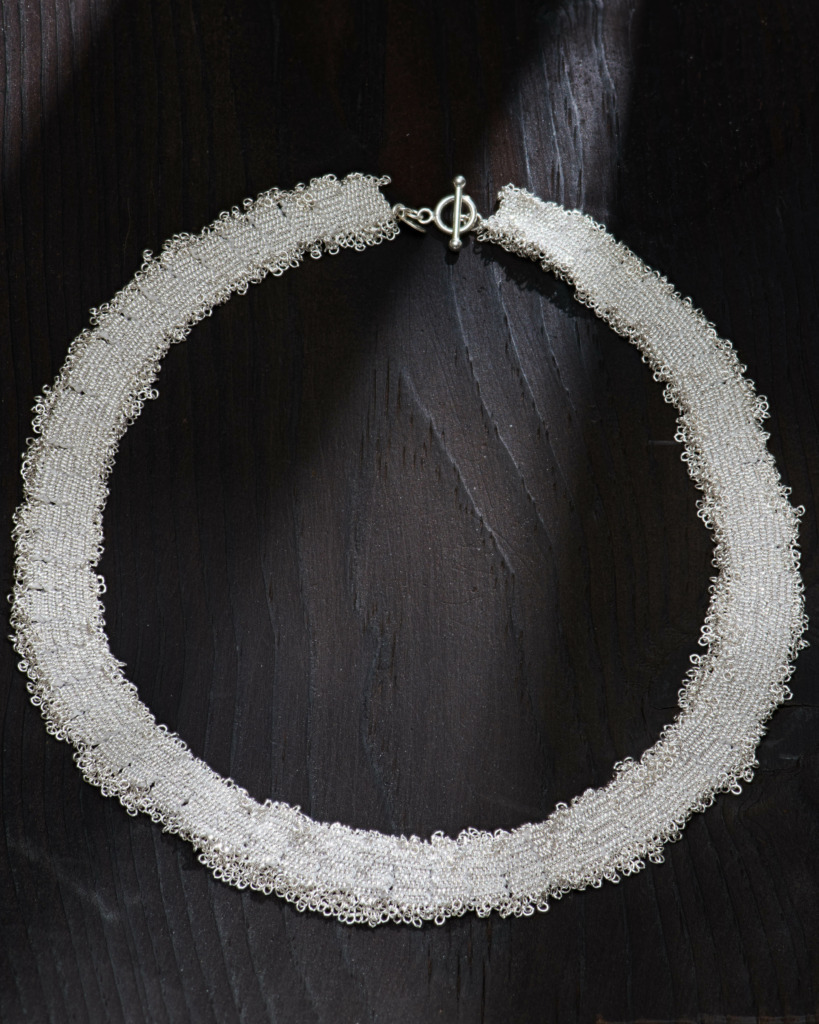
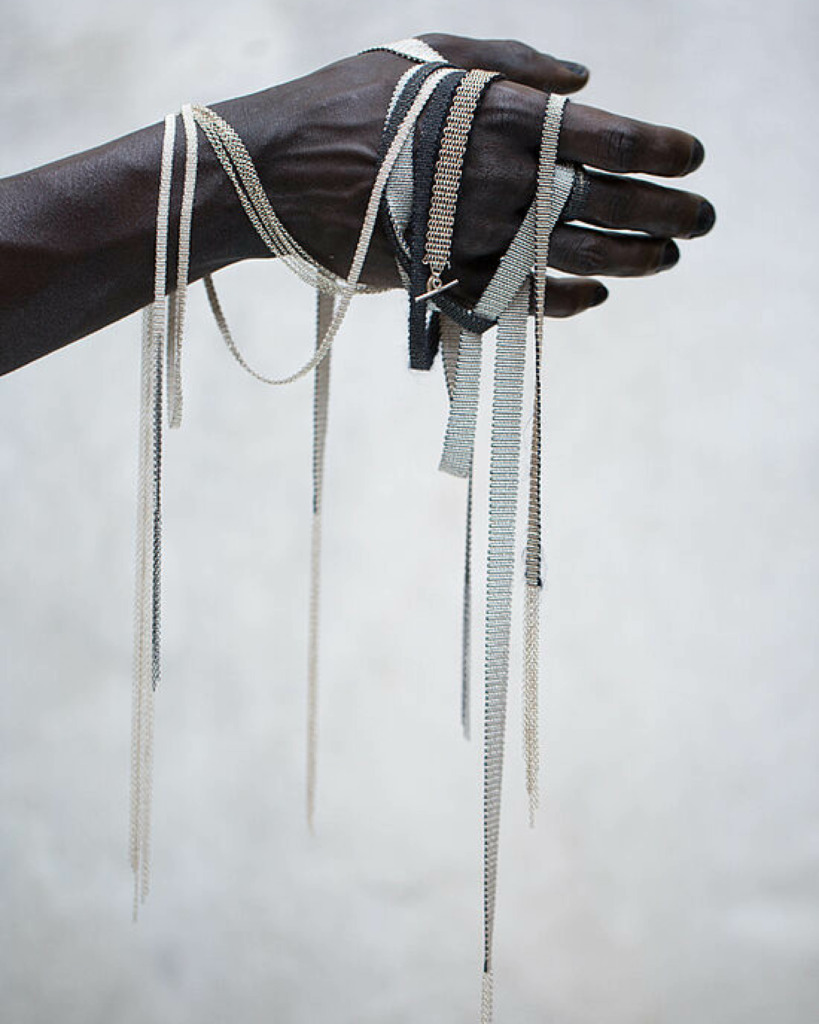
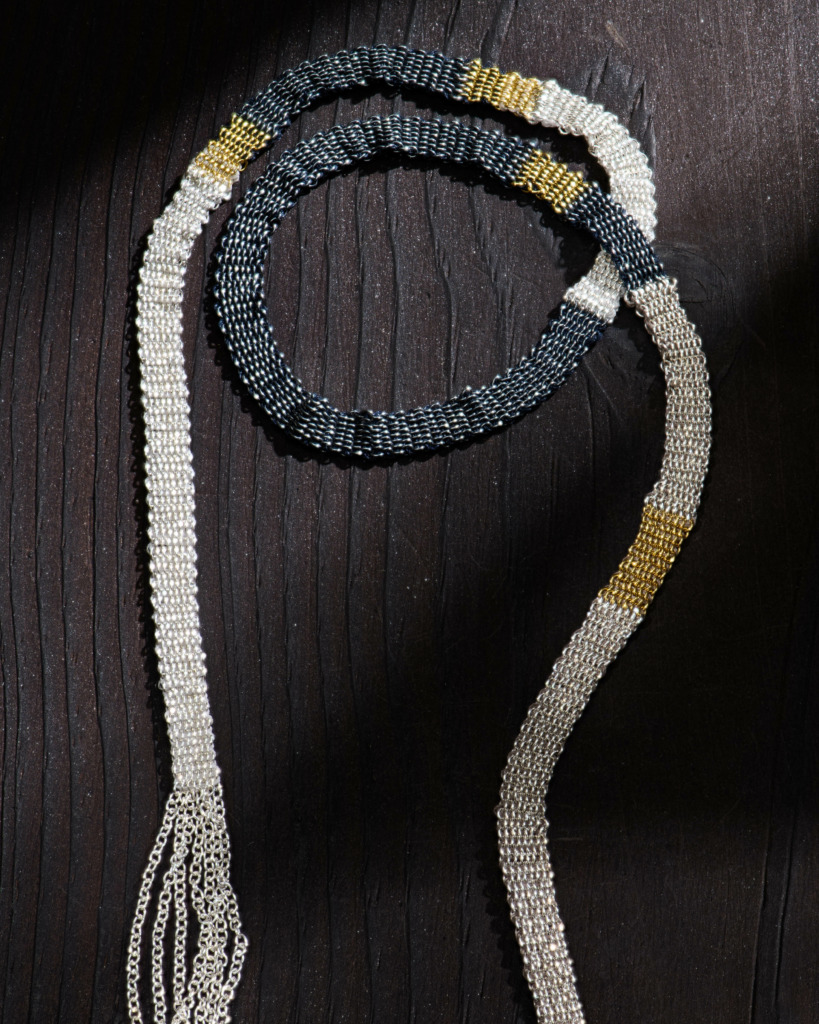
Stephanie Schneider’s jewelry is a synthesis between the natural world and utilitarian imagination–a delicate union of the spontaneous and precise. With a background in both fashion and textile design, the Antwerp-based designer walks the line between sculpture and adornment. Though many designers string beads on silk, Stephanie Schneider takes the concept to a new level–using silver, gold and silk as interlocking yarns to create small, personal tapestries for the body.
After studying fashion and textile design in tandem, Stephanie Schneider opened her jewelry label, 17, in 2006. Her fascination with textiles is obvious within her line, which read as equal parts fine jewelry, futuristic weaving and mini chainmail. At the core of Stephanie Schneider’s practice lies a delicate yet powerful technique: hand-weaving. Drawing inspiration from Bauhaus designer Anni Albers, Stephanie Schneider elevates this humble practice with sterling silver and gold.
Stephanie Schneider choice of materials further amplifies the uniqueness of her pieces. Delicate seed pearls and black diamonds tumble from the interlocking chains, creating a precious spontaneity in each composition. The stones do not simply rest on the surface; they are interlaced with the metal–becoming part of the very fabric of the design.
Each bracelet, necklace, and ring feels more like an experience than an object, inviting a world of tactile enjoyment. Her shawl necklaces, in particular, embody this sensibility, wrapping around the neck in an intimate and unexpected way, with no clasp to break the fluidity of their form. In Stephanie Schneider’s hands, jewelry becomes a living, breathing entity—a natural extension of the wearer’s own style and spirit.
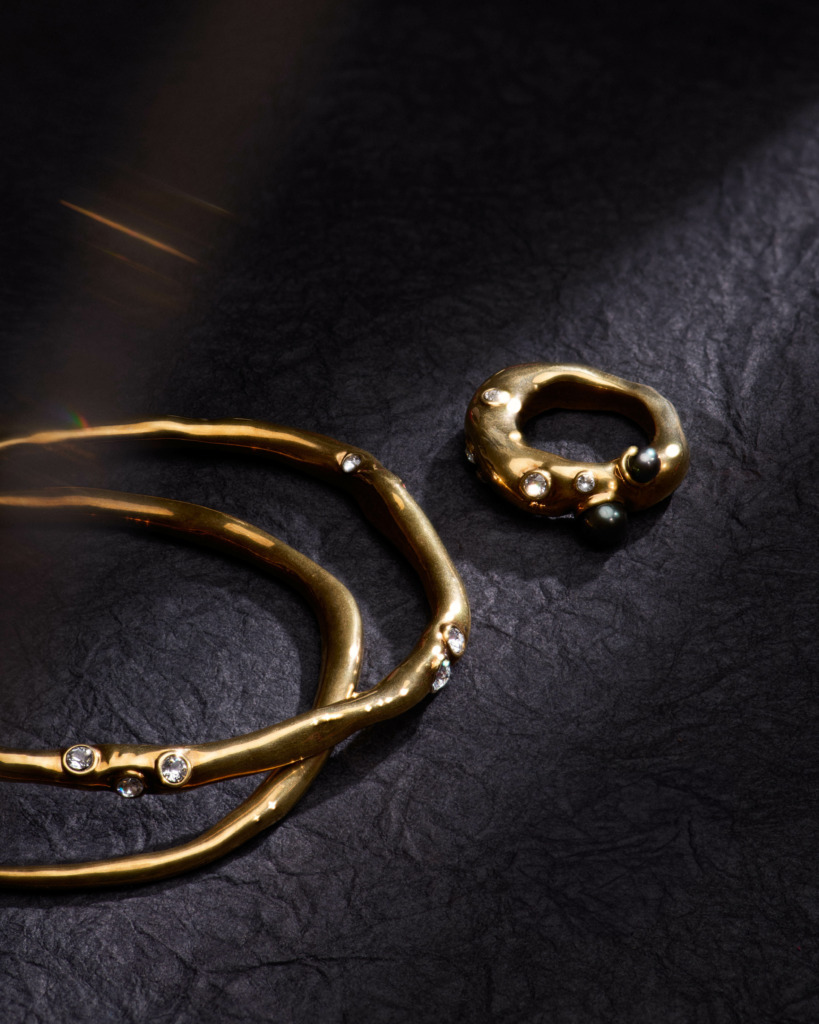
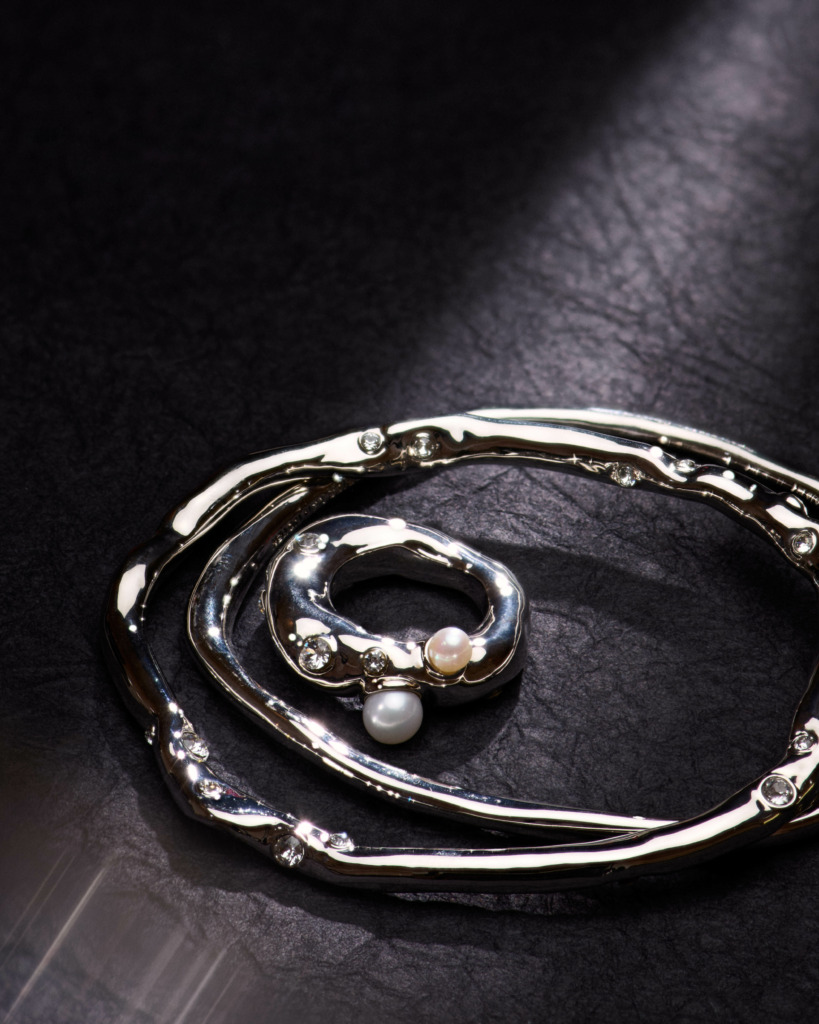
Simon Dooney, the former creative director of Barney’s, once described Dries Van Noten’s effect as “transformative,” going on to say that wearing a Dries piece was a way to become “a more interesting, enigmatic, intriguing person.” In his Fall/Winter 2024 collection, the last designed by Dries himself before his retirement, the Belgian designer strived to blur the lines between precious and pragmatic.
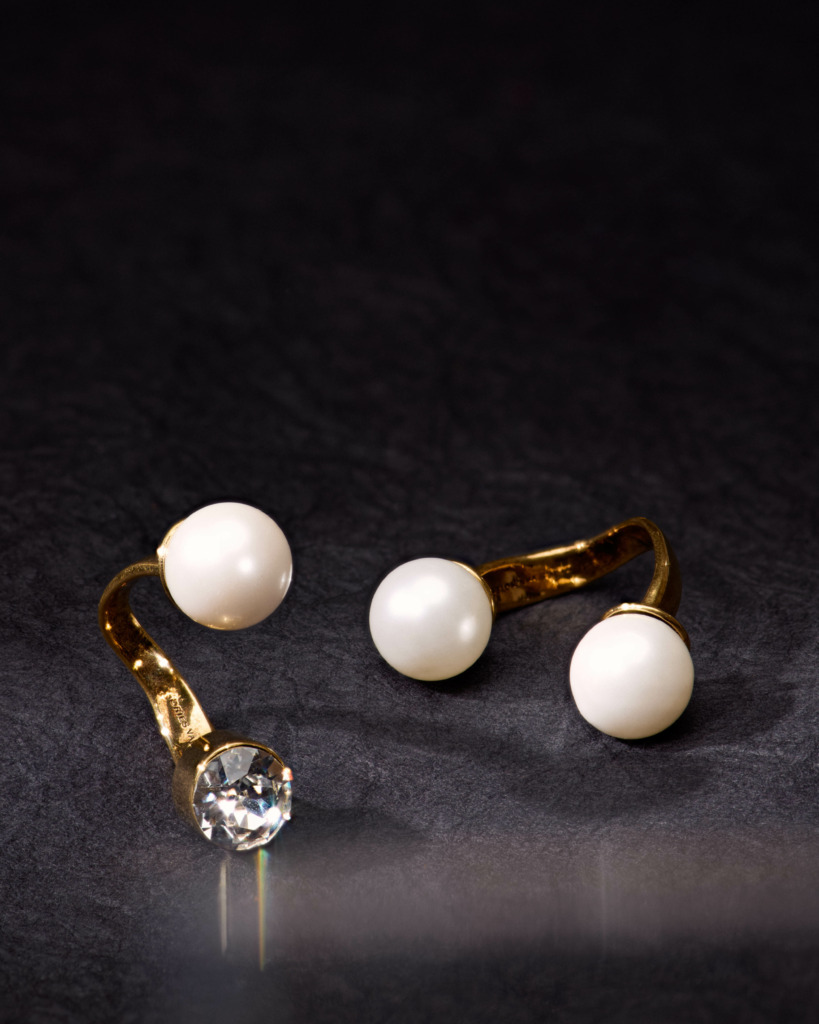
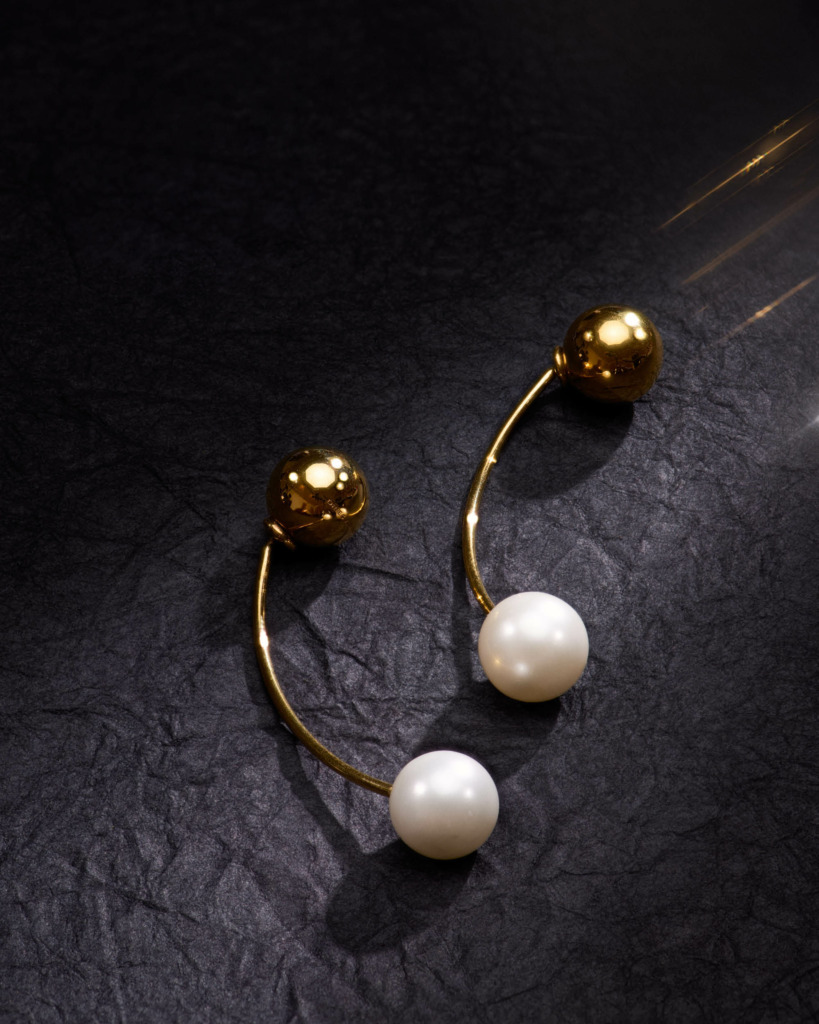
In addition to his shimmering jackets and handbags indicative of the collection, Dries also delivered a handful of cheeky jewelry pieces in brass and silver–perfect for a little bit of glitter at the ears or the wrist.
High-optic strass jewels embed the pieces, complemented on several of the rings by creamy pearlescent studs. The accents are placed organically, the design akin to ore-dotted rock or rare, deep sea coral.
“It’s quite a strong woman, a woman who dares to cut her own fringe. She has an attitude, she enjoys contradictions, she wants to be loved but she wants control.”
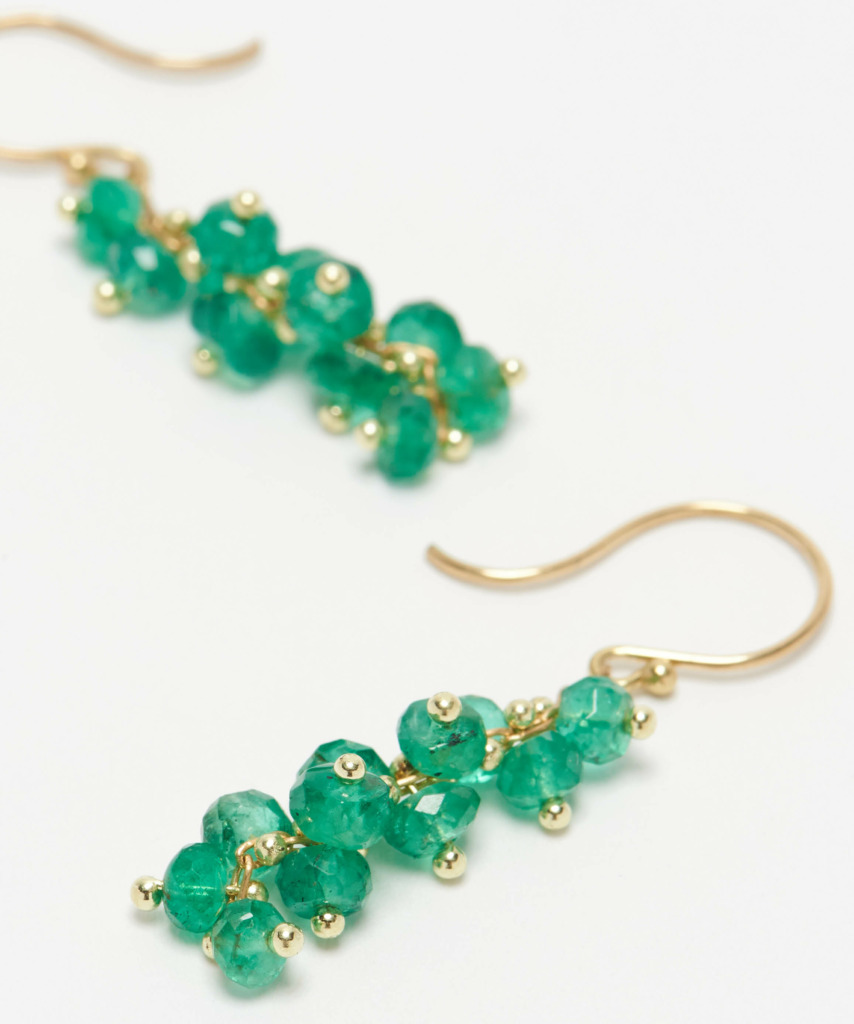
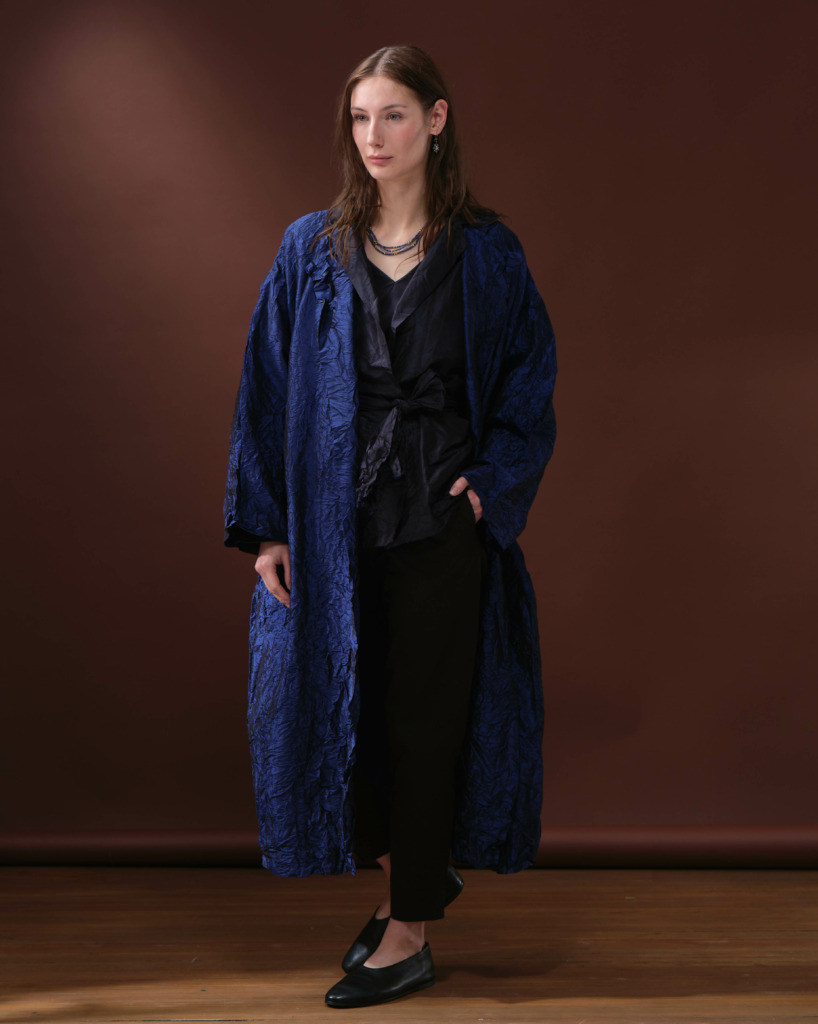
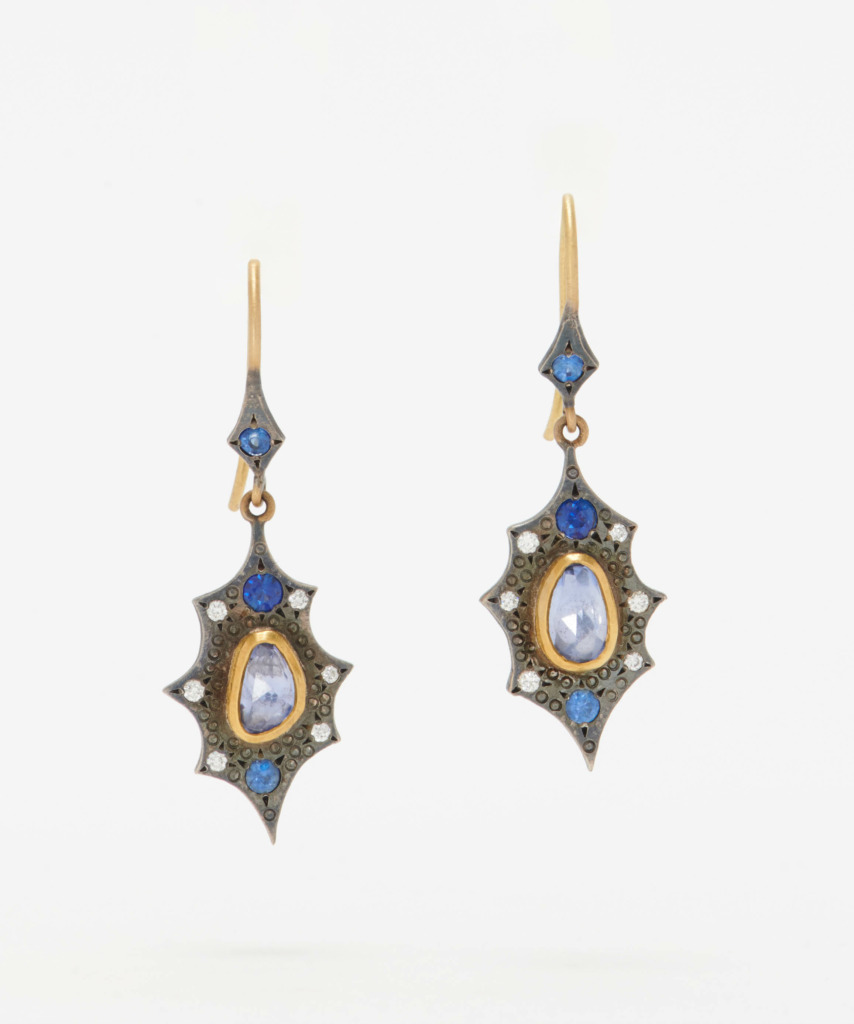
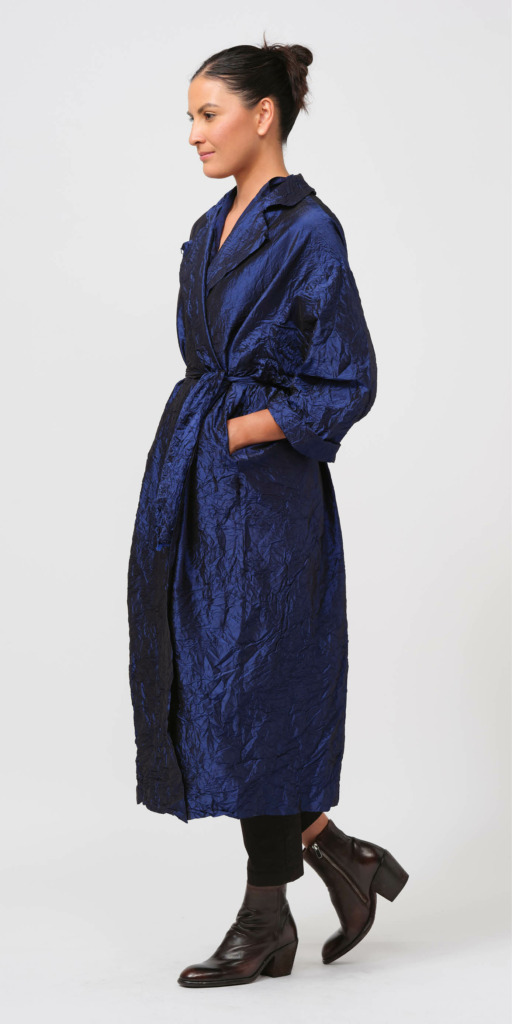
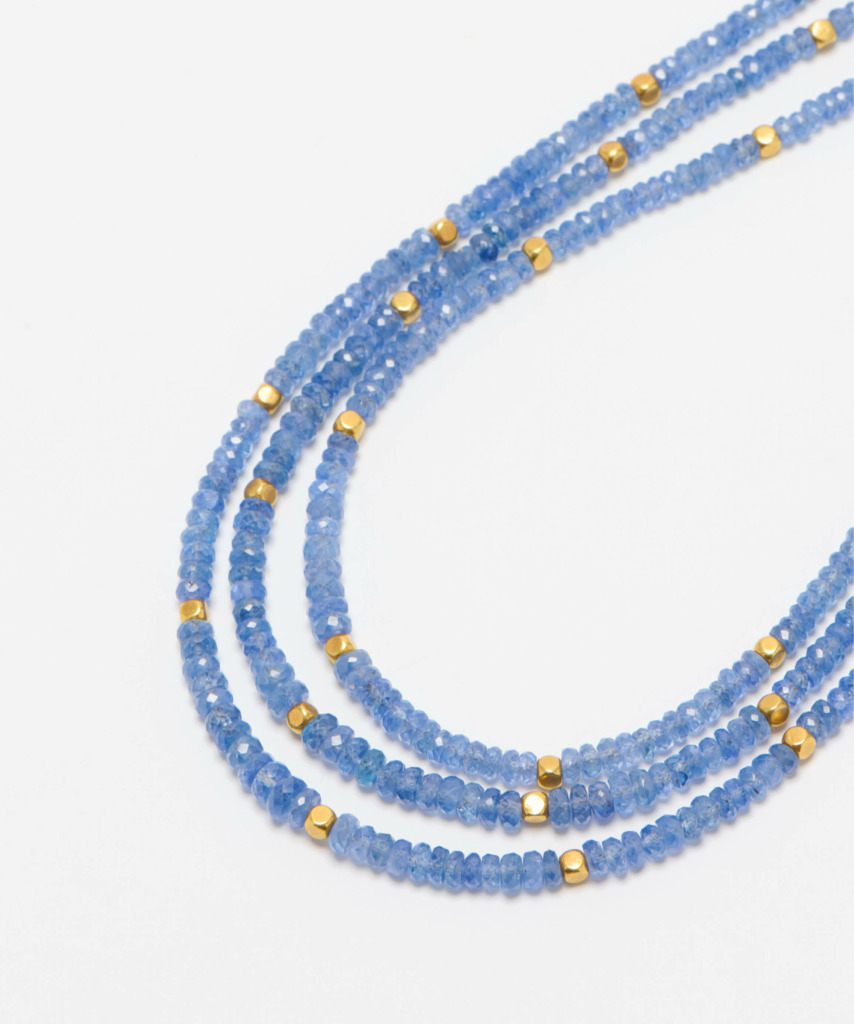
As 2024 comes to a close, we find ourselves musing on color. This has been a jewel-toned year after all, it’s only fair we celebrate it with equal verve. Come the big midnight, you can find us heralding the new year in rich combinations, such as topaz and ruby or emerald and gold (with the appropriate shimmer to match, of course.) Work from designers such as Biyan, Scrives, and Stephanie Albertson pairs well with Avant Toi silks. We’re wearing Dries Van Noten with Prounis and Marséll, and mixing Sabina Savage with emeralds from Tenthousandthings and Greig Porter. In sapphire and cobalt we love Daniela Gregis’ washed silk coat with Annie Fensterstock’s Sapphire Scallop Earrings.
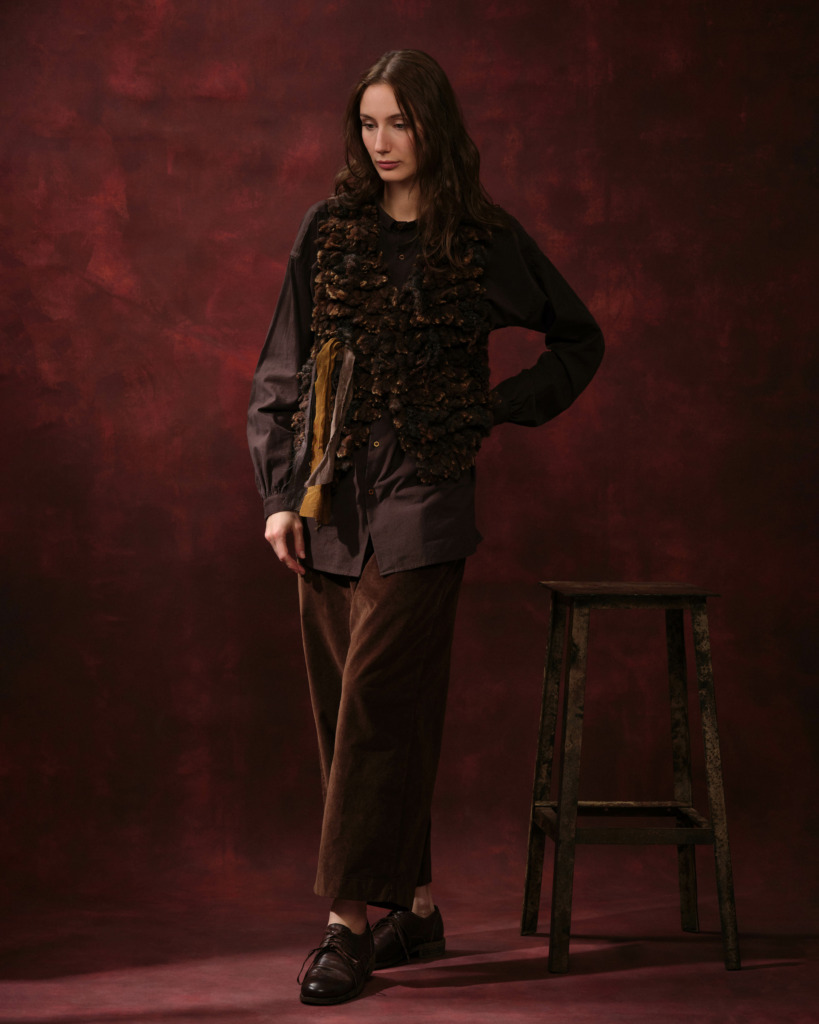
In the headiest, busiest time of the year, anything not decked to the nines and dripping with tinsel can be a breath of fresh air. In the midst of hanging lights and wrapping boxes, we have received a small, textural collection from Kaval. In the delivery are gifts for the senses, such as cashmere shirting, blanket stitched coats and a cheeky tufted vest made from sheep and reindeer fluff—all rendered in deep earth tones.
Kaval is a studio that marches to the beat of its own drum. Rather than being tied to a traditional fashion calendar, this small, Japanese studio sends their collections to us as they are completed (to be obvious, after carefully hand-making each piece with their antique sewing machines.) This particular, slow method is so intrinsic to not just their garments, but who they are as a label— a studio as thoughtful and studied as they are special.
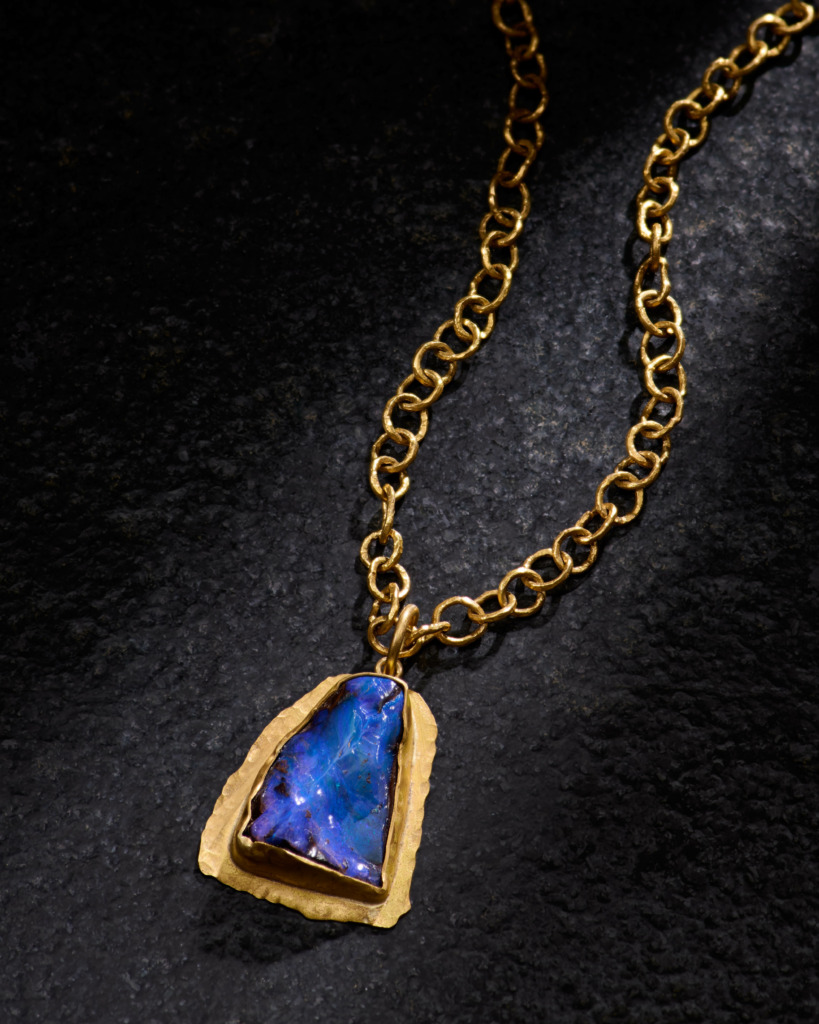
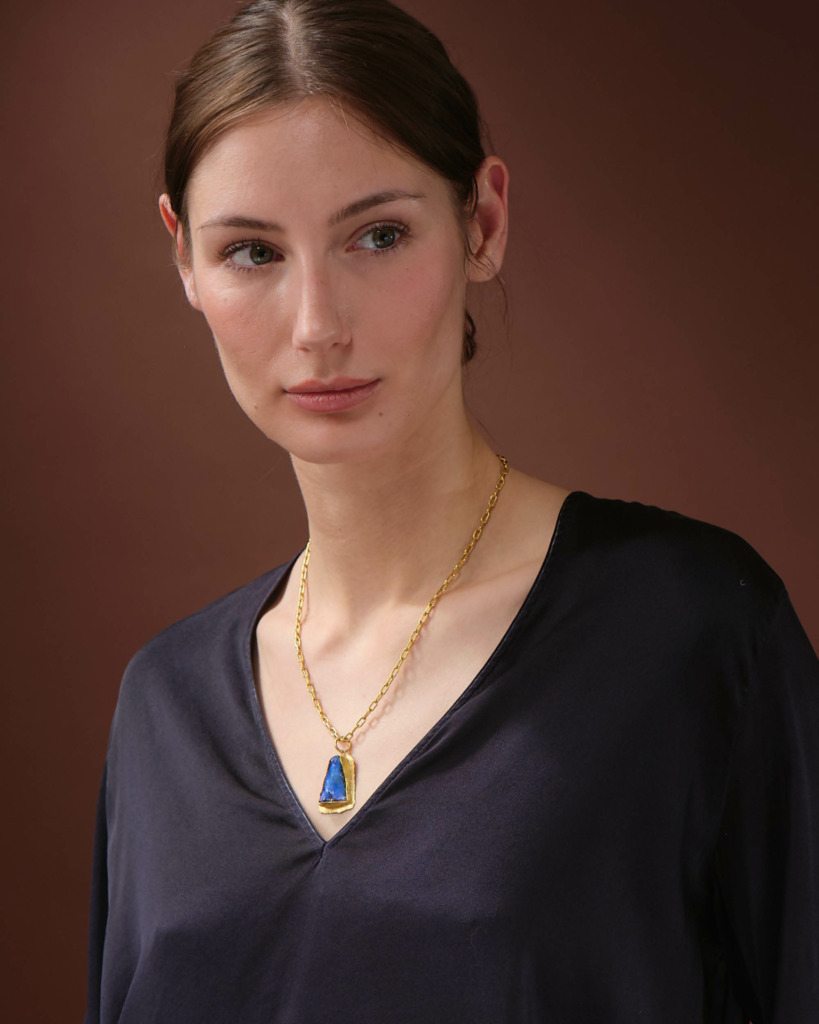
Following the rare black opal, boulder opals are the most coveted varietal of their stone, and among the most difficult to find. As opposed to developing in veins that can be mined with a pick, boulder opals form within massive ironstone boulders—hence the name—that need to be cracked open to reach their prismatic ore. Working from her Colorado studio, Margery Hirschey has used this gem in her latest collection to create a one-of-a-kind pendant.
In 22K gold, the opal itself is a slice of the night sky. Hues of blue, green and lilac wash together in an aurora of color, buffeted by slivers of dark ironstone from the gem’s earthy origins. The surface, though polished, is naturally irregular, making the glossy highlights read as stars in their own miniature constellation.
Of note is the bezel that cradles the stone, which has been carved and shaped to fit the stone’s original curvature without the need to alter the stone.The asymmetric, fluted presentation is simultaneously opulent and humble—it could as easily evoke the framed paintings in a museum’s Renaissance wing as it could the markings on a hand-whittled ornament.
In addition to the pendant, we have received a few more pieces from Margery, including a stunning emerald ring and a pair of boulder opal chandelier earrings. Each is as unique as Margery herself, who is an unbridled creative force in the world of fine jewelry.
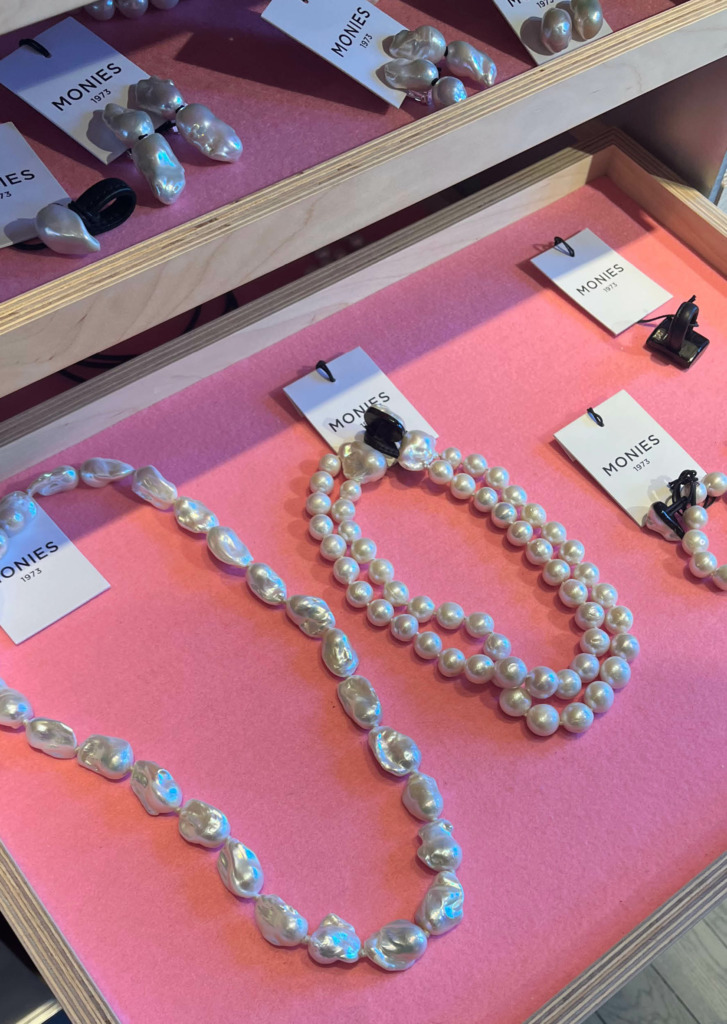
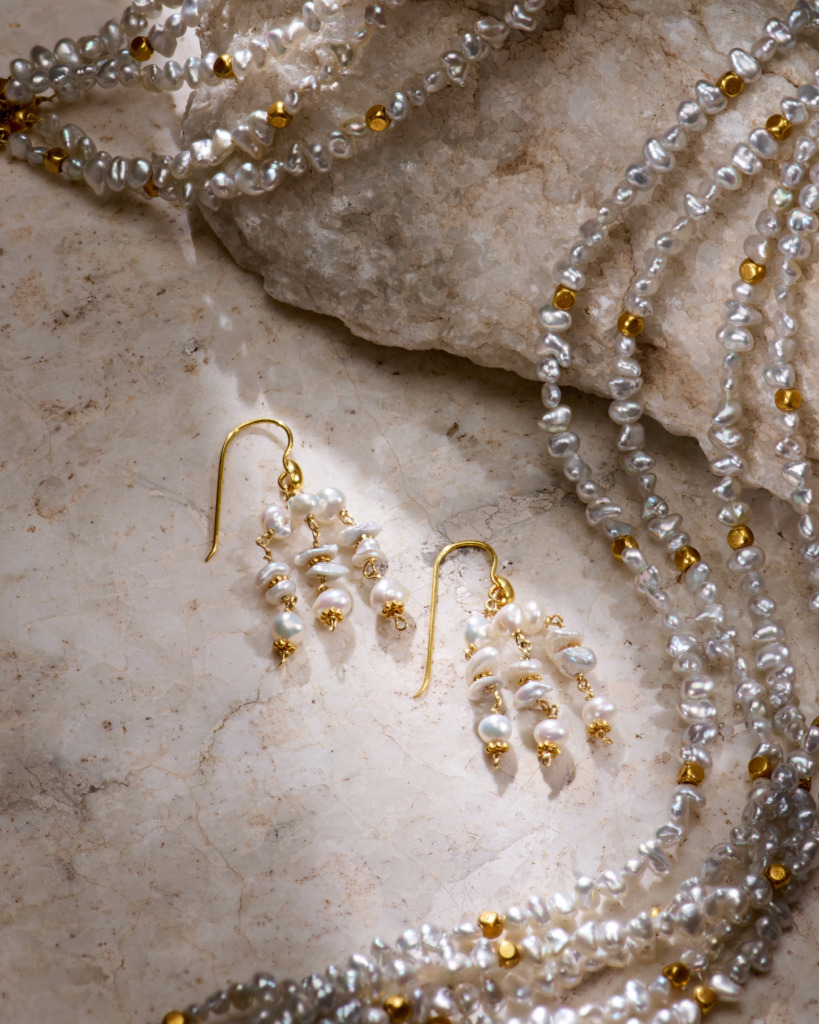
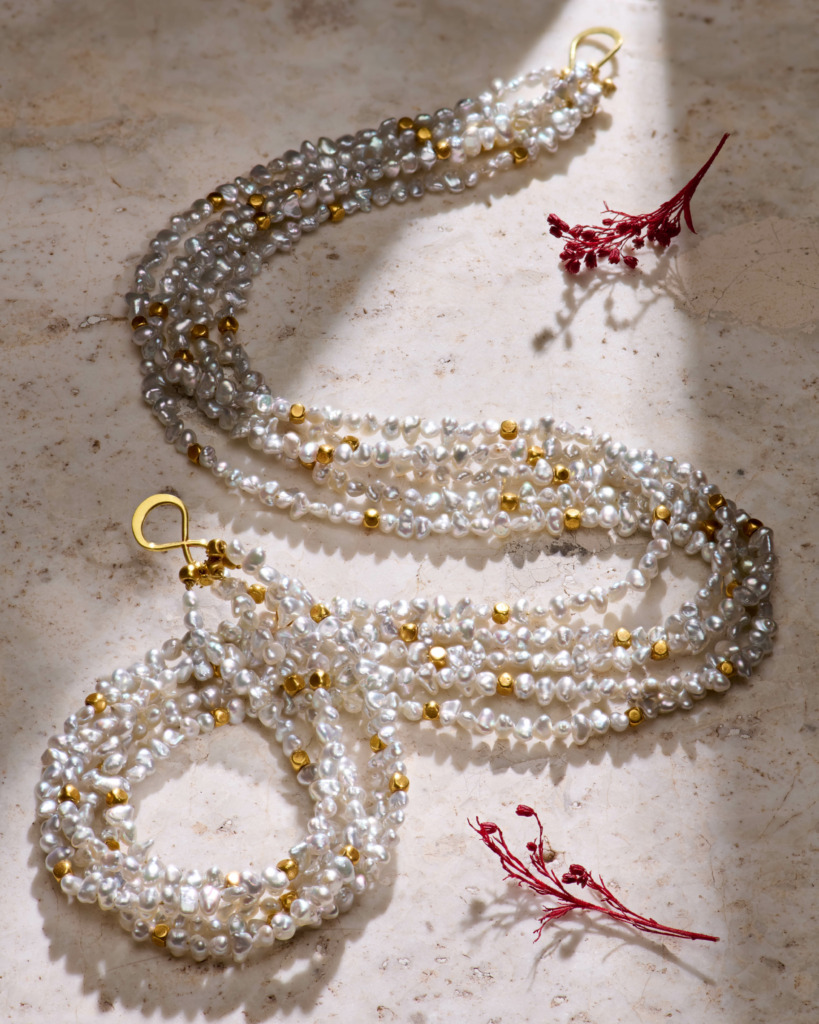
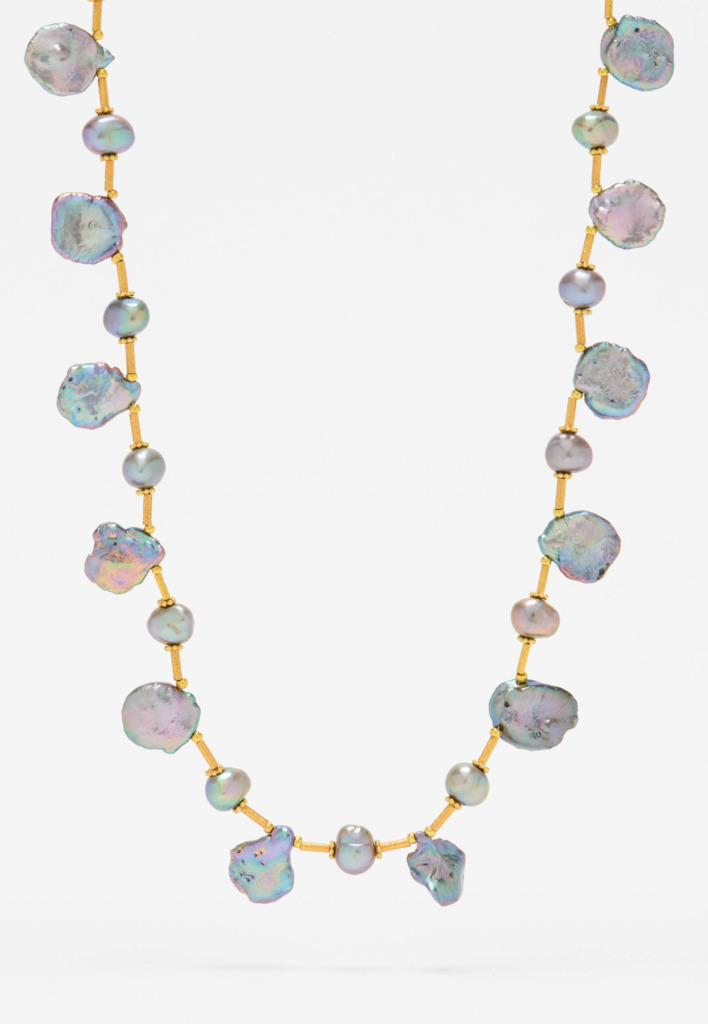
From Greig Porter’s storied collection of jewelry, a spotlight on two pieces in particular: his 5-Strand Keshi Pearl Necklace and his matching Seed Pearl Mini Chandelier Earrings. Seed pearls are very small, off-round varietals of this natural gemstone, favored for their delicacy and soft color.
Keshi pearls are a particular subset of this species from Japan with a high luster. While historically these stones have been used as embellishments in Baroque artwork, they make a divine bead for contemporary jewelry. By stringing together dozens of this gem, and punctuating their creaminess with 18K gold, Greig Porter creates unique, elegant jewelry with impact.
“Great things are done by a series of small things brought together.”
There is a rare meteorological phenomenon known as diamond dust, where microscopic ice crystals will fall from the sky on an otherwise clear day. While it occurs most often at high elevations or the poles, it can happen anywhere the temperature ducks below freezing. Perhaps you have experienced it firsthand… found yourself suddenly surrounded by a glimmering flurry suspended in air. It was surely a moment to savor, as if the entire world were frozen in time. We find gemstones much the same, a tiny miracle to carry with us (maybe just a bit more literally).
Key Piece
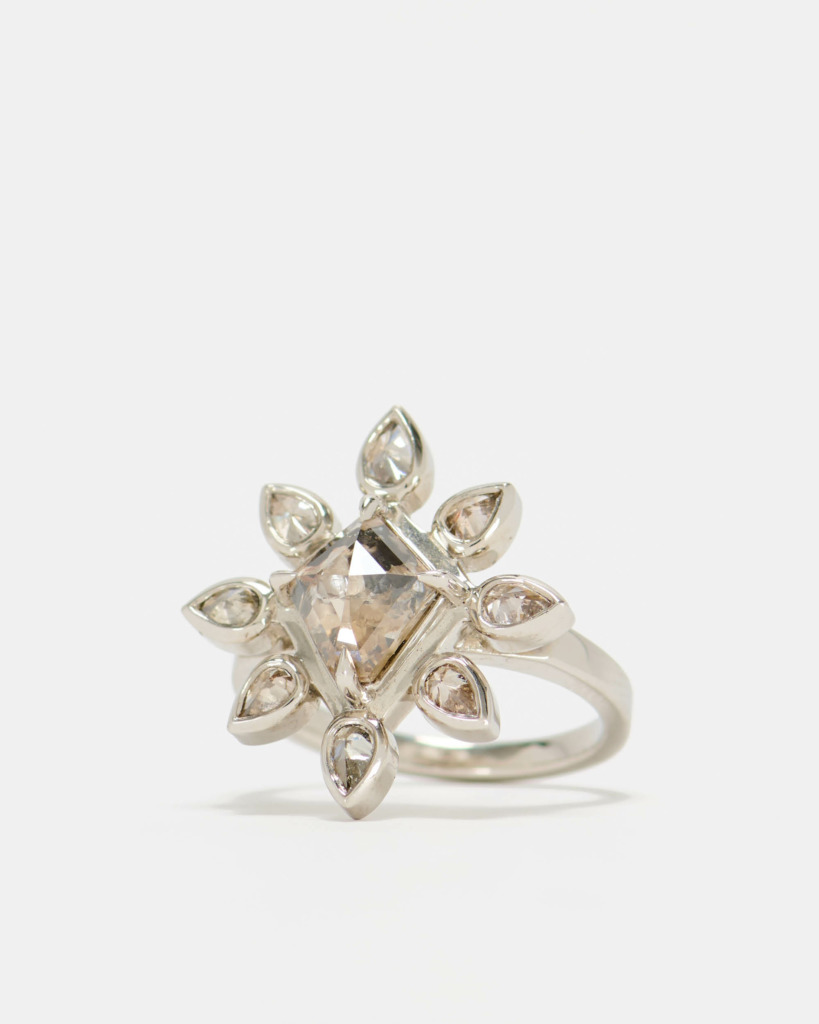
DIAMOND DUST: A stand-out for both shape and character, Lauren Wolf’s Salt & Pepper Snowflake ring shines among a collection of already exceptional diamonds. Part of our first capsule delivery from the Bay Area designer, this piece features a brilliant, kite-cut varietal set in platinum, flanked by a halo of champagne teardrops.
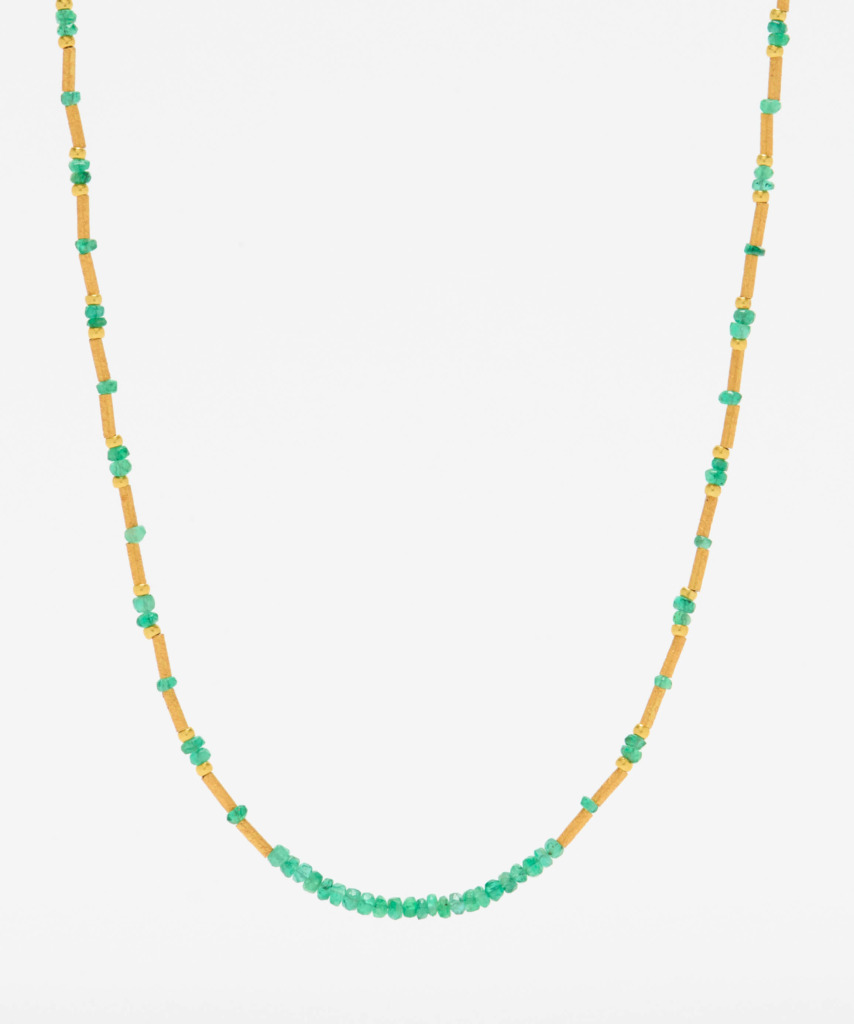
MORNING GLORIES: A favorite in-store, Greig Porter’s collection is most coveted for its devotion to color. In this single-strand necklace, dozens of emerald beads slowly graduate forward, punctuated by an array of 18K gold beads. An echo of royal collars of antiquity, this style emphasizes elegance.
POLAR PEARLS: Last, but far from least, a spotlight for Jean Prounis’ Tahitian pearl collar. Classically set, this piece features a 22K, Mycenae-inspired fibula closure so detailed you may be tempted to wear it clasp-forward. A particularly dark and iridescent varietal, these pearls glow like the sky in moonlight.
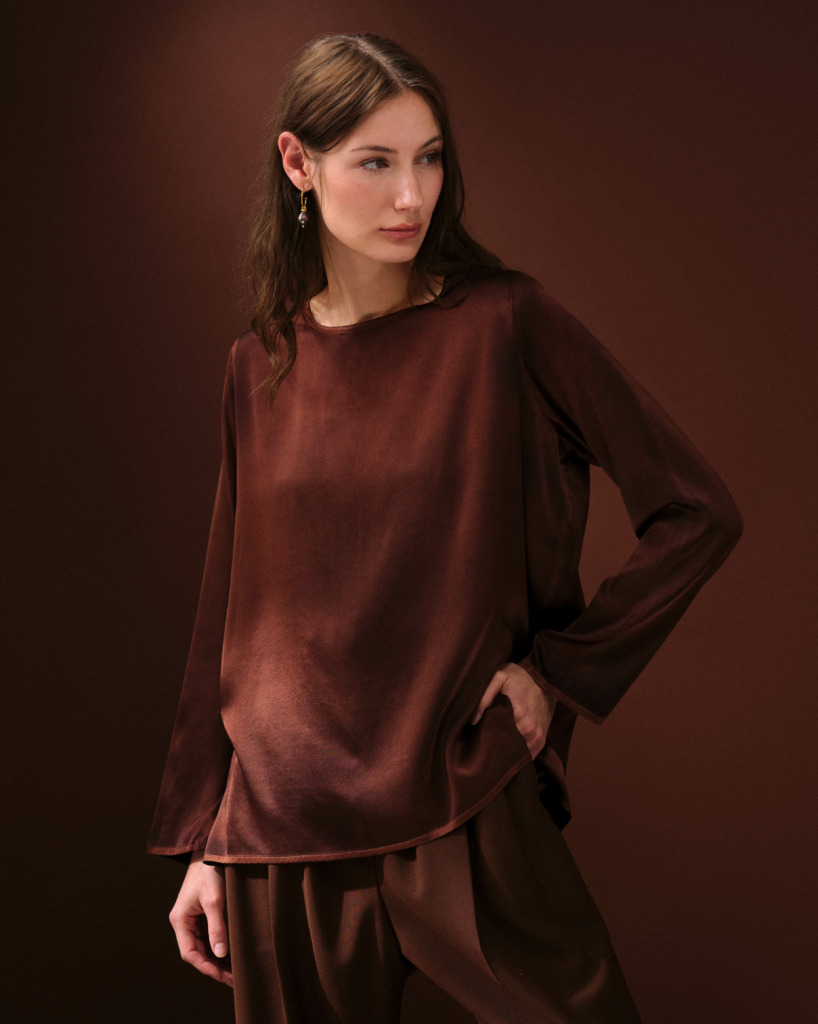
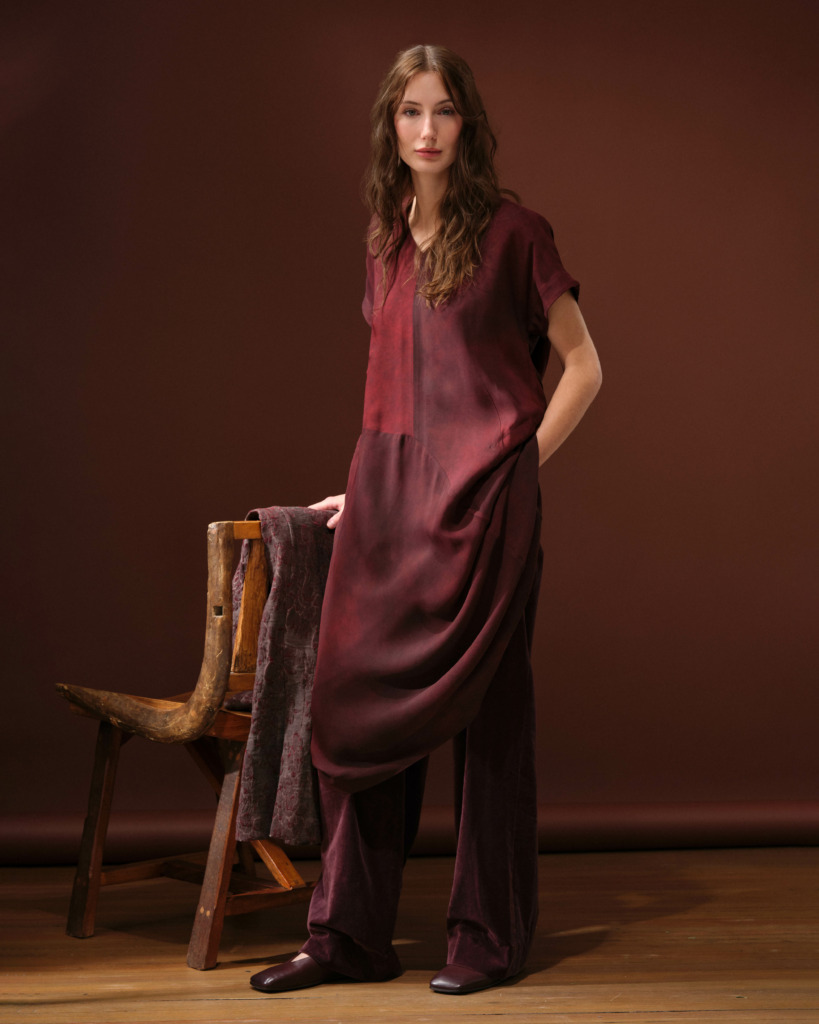
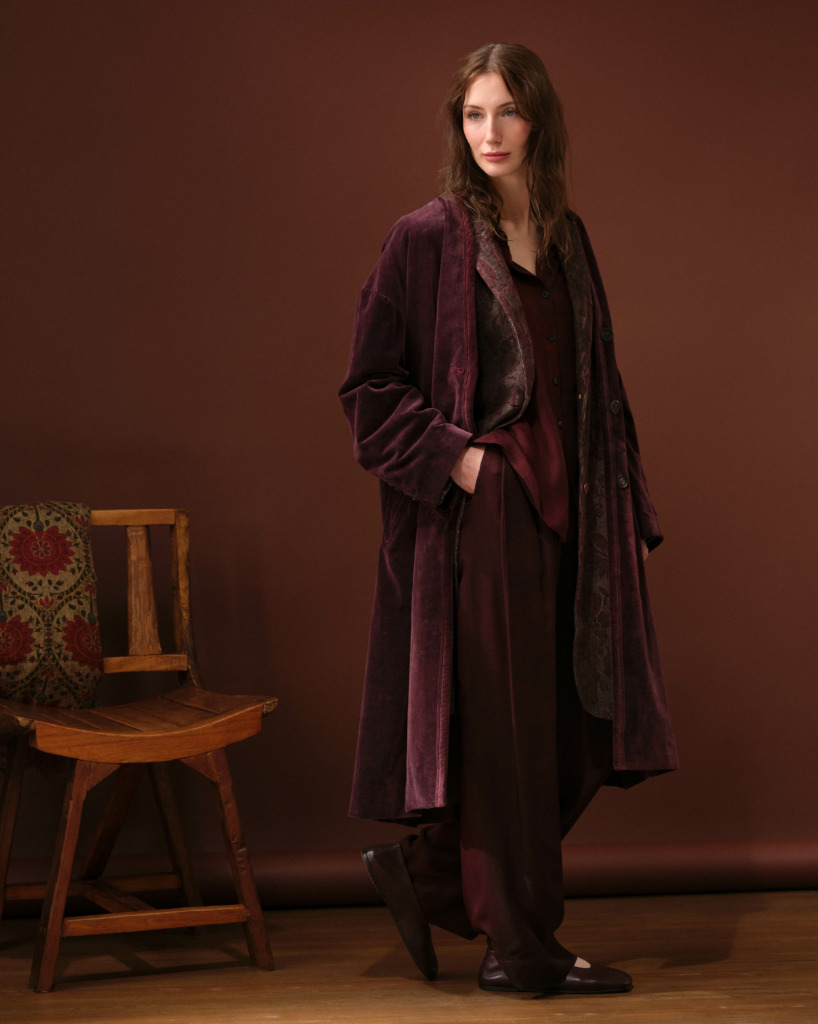
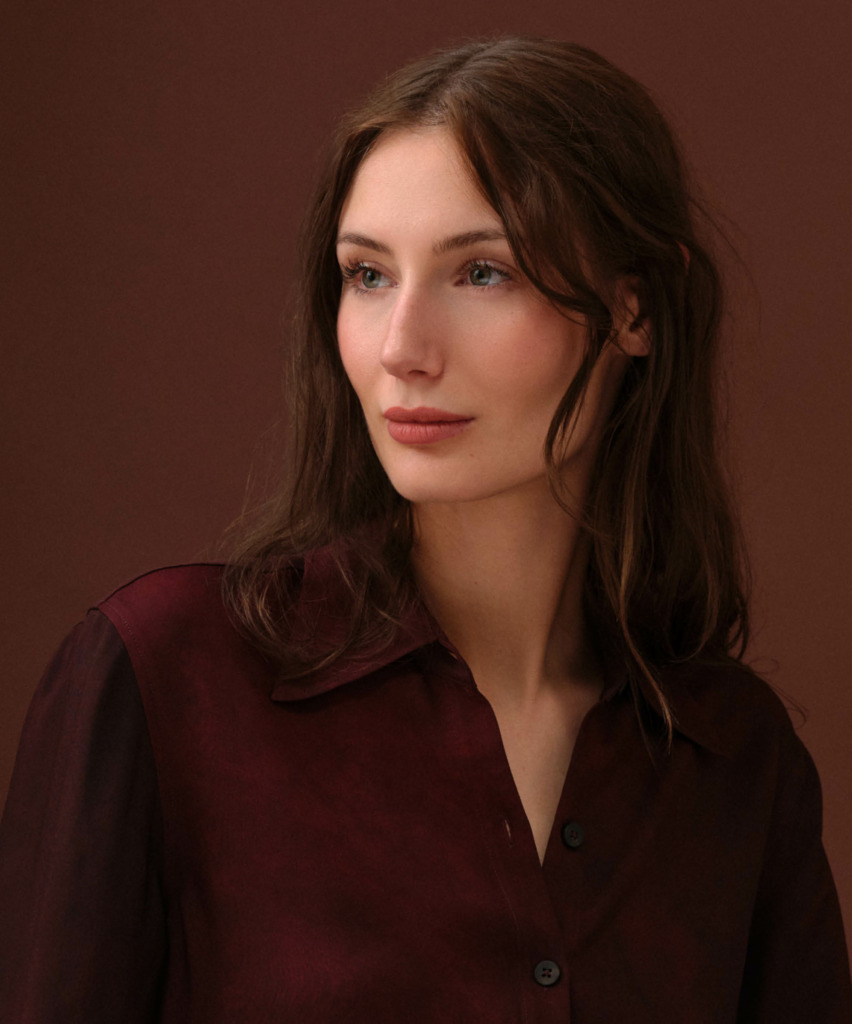
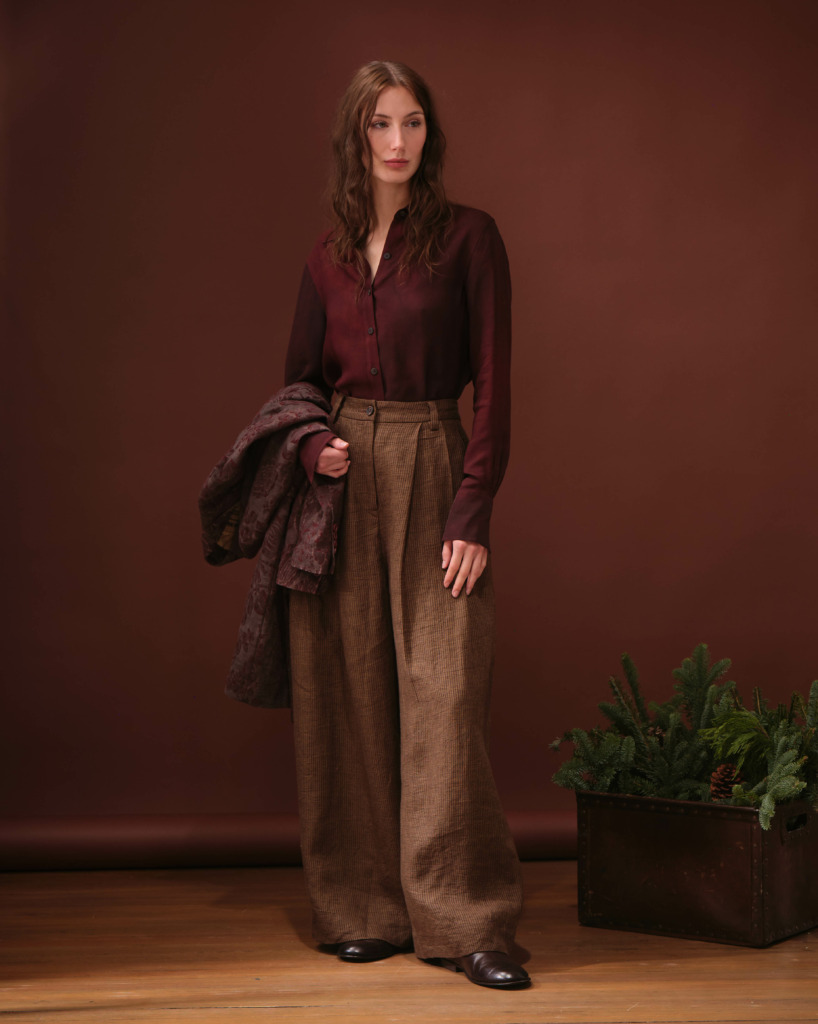
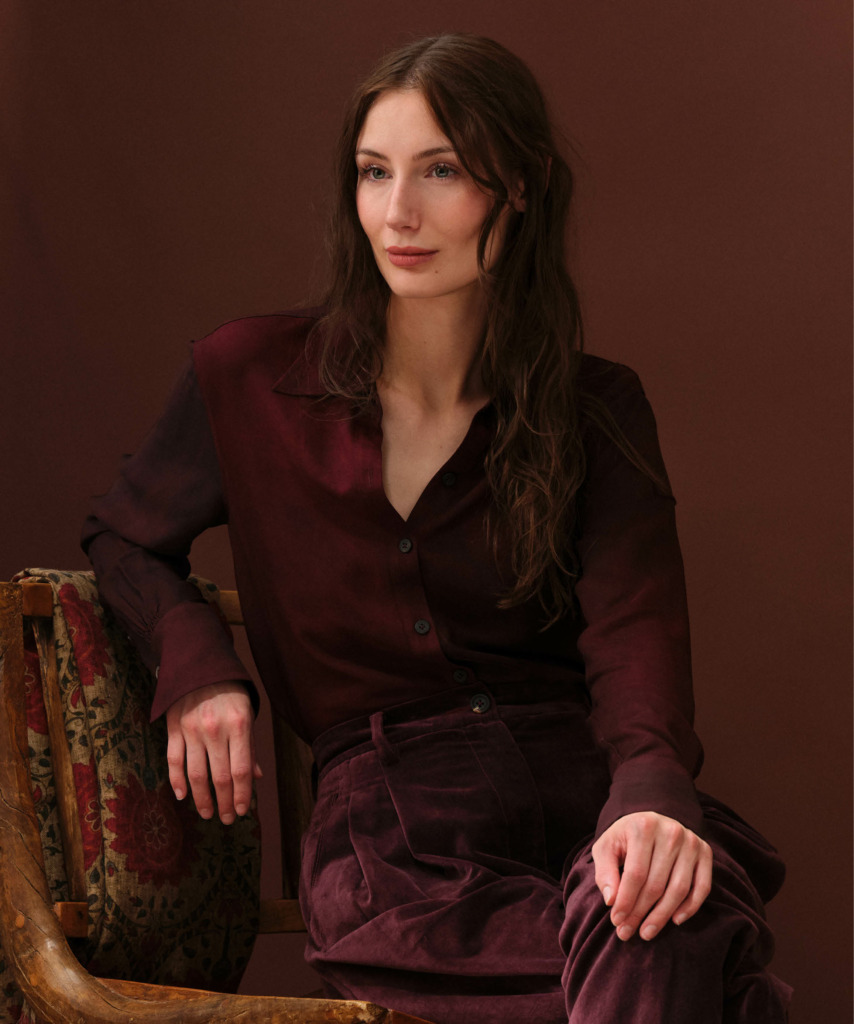
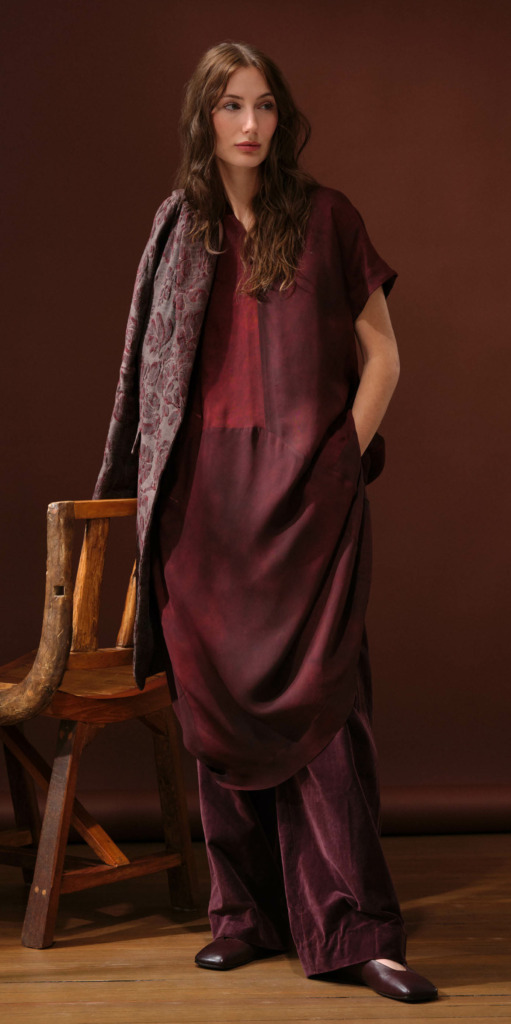
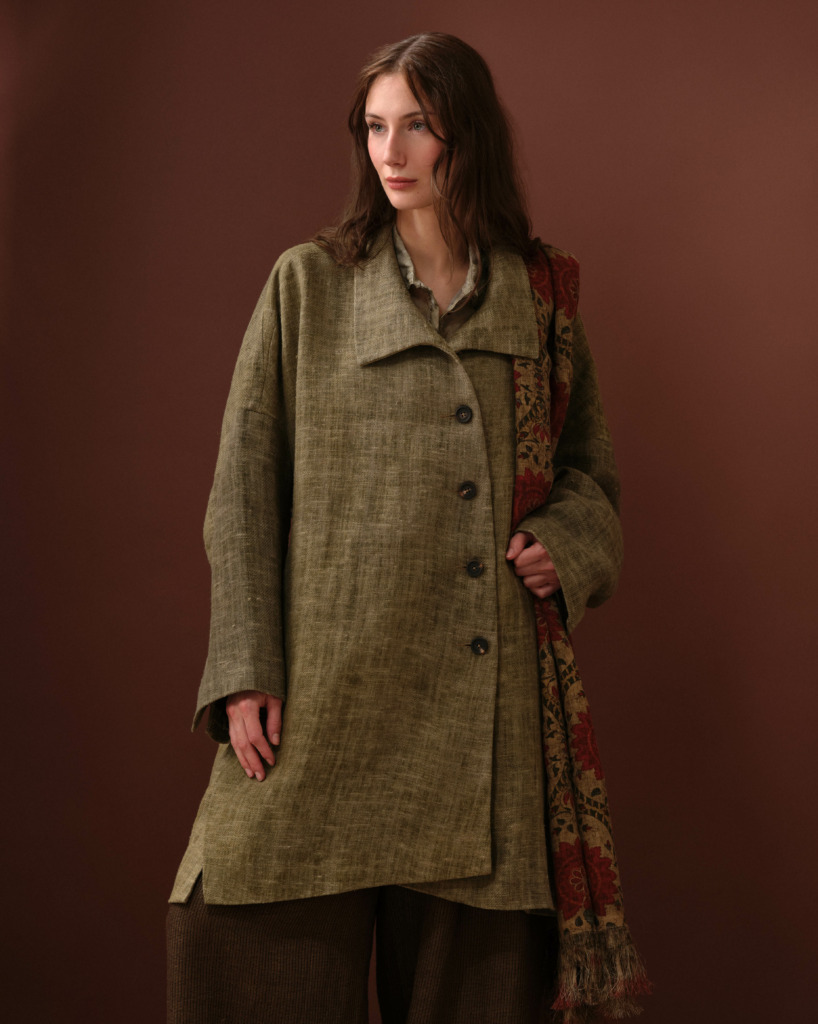
A treat for the weekend: new arrivals from Shanghai-based Ziggy Chen. This small capsule collection centers around a sophisticated palette of merlot– a warm, earthy tone perfect for the colder months. With just six new pieces, texture rises above the rest… and Ziggy Chen certainly doesn’t disappoint in rich cotton velvets and lustrous vegetable silk. The soft, tactile nature of the velvets in particular contrasts well against the collection’s minimalist lines and subtle tailoring.
Planning a getaway? Finishing the year always tempts us to take a break. Whether around the globe or around the corner, a getaway provides the rare opportunity to be carefree… and perhaps find renewal in intimate spaces, unique places and new faces. Gilda Midani’s light, layerable pieces are perfect for a midwinter skip to your own sun-soaked somewhere. Easy to pack and even easier to wear, they might be all you need to make a great escape.
When thinking of Denise Betesh’s jewelry, the first thing that comes to mind is her choice of stones: a devoted jeweler, her gems are not only conflict-free but of impeccable quality and character. The second is her metal—a distinct 22K gold handcrafted in her Santa Fe studio. These elements work together in easy harmony: the stones catch the eye, while the gold holds its attention. Paired with her seamless designs and keen sense for color, Denise Betesh harnesses the rare qualities of a prized heirloom: trendless, timeless, and like no other.
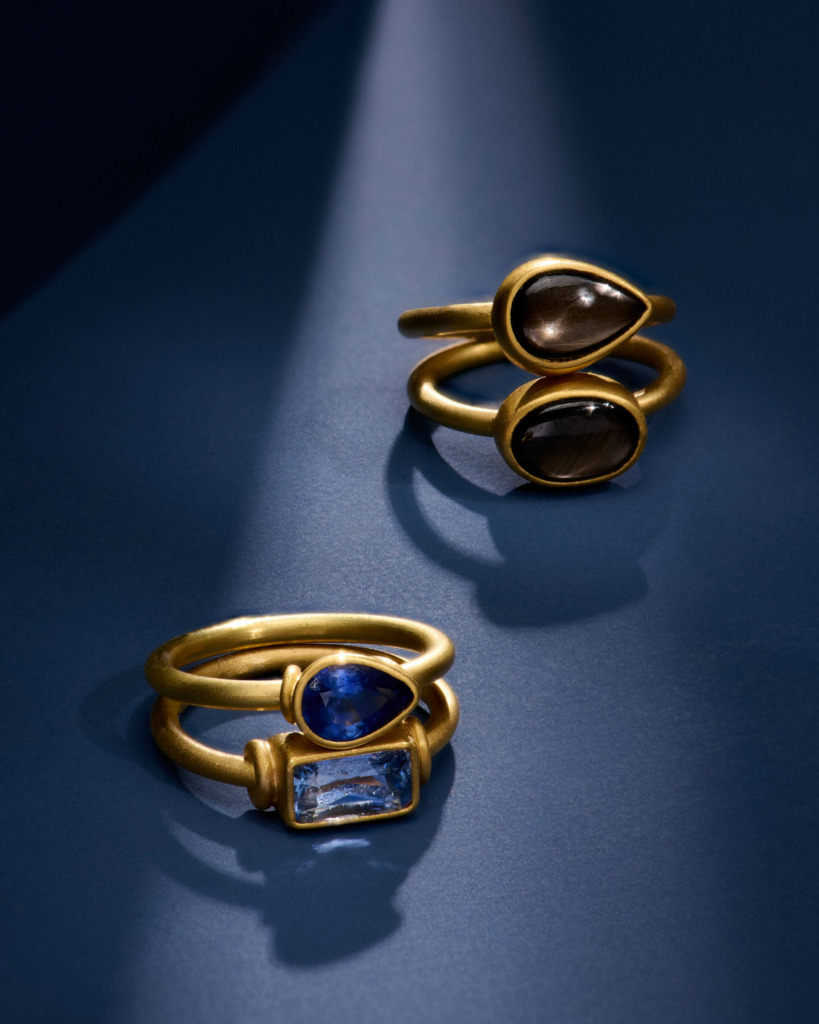
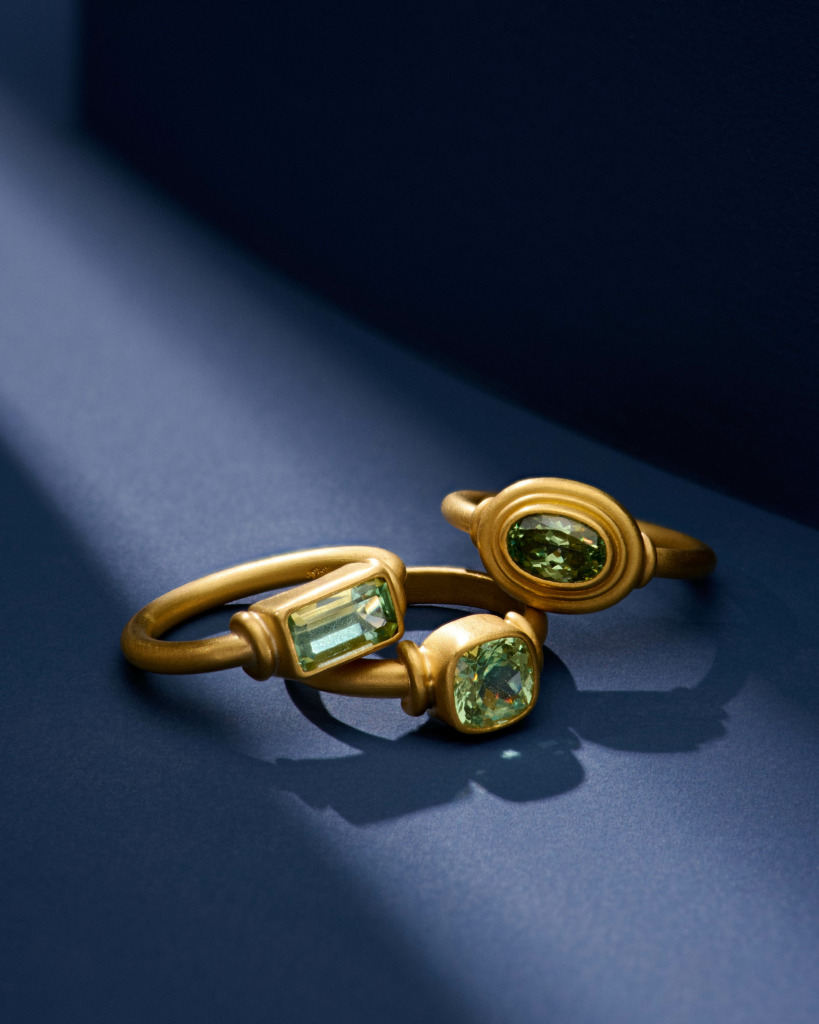
Core to jewelry collection is a selection of stackable rings set with richly colored stones such as tangy tsavorite and chocolate star sapphire. The latter is of particular note—not only is this a rare varietal within Denise Betesh’s collection, but the cabochons hide a secret star that is revealed with direct light.
With softly rounded edges and a rubbed matte finish, the stone settings ultimately lend an air of antiquity to Denise Betesh’s rings and earrings. Her forms are classic and layerable, all intended to subtly fit together like a predestined puzzle.
“What’s important is making jewelry that’s not a fashion statement, but something to be cherished and honored.”
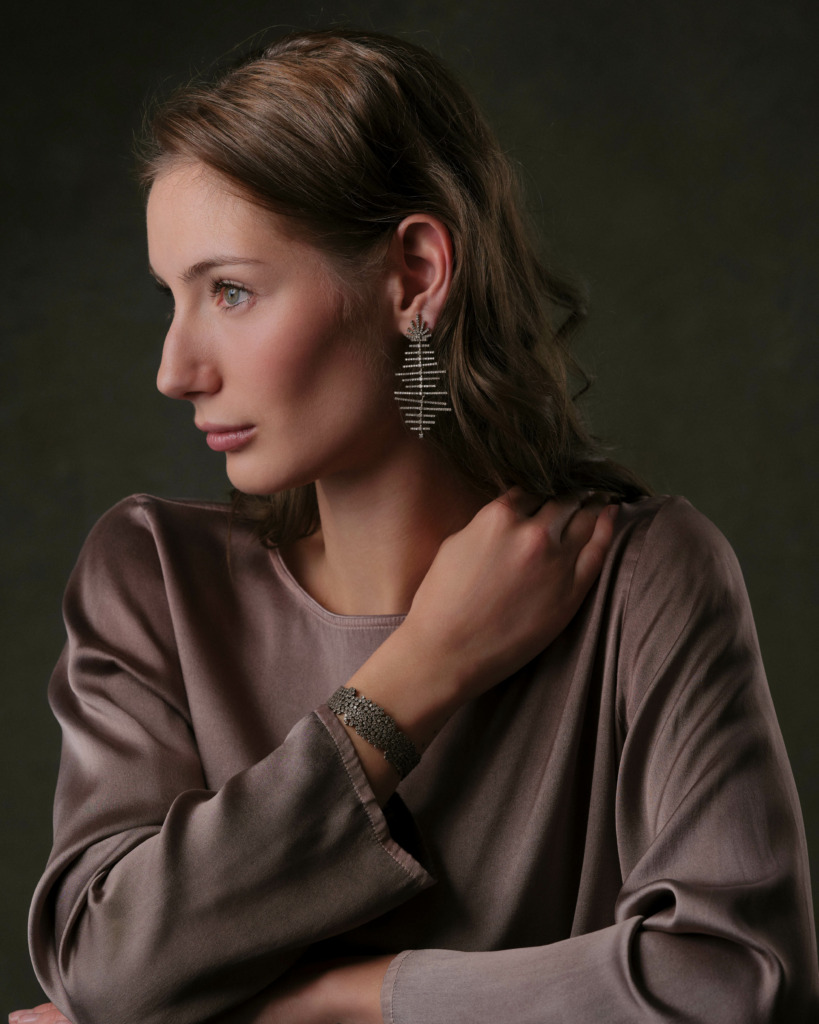
For over 20 years, Irit Ehrlich of Irit Design has been designing focal, patina-forward jewelry from her Malibu studio. A self-taught designer, she balances edge and elegance by drawing inspiration from historical iconography. Ancient Viking bracers, Maltese crosses and Victorian starbursts all have their place in her stylistic vocabulary. In this first capsule delivery from Irit Design, find a small selection of stand-outs: from fishbone-esque dangles and tahitian pearl pendants to a studded diamond cuff reminiscent of the night sky.
The lion’s share of Irit Design’s jewelry collection is either one-offs or limited editions. Her designs are more like works of art than standard wearables, each infused with distinct and unshakeable personality.
Among the cultural luminaries who adore Irit Design’s jewelry, those with a penchant for rock and roll rise above the rest— Irit has coyly shared that Ringo Starr is often photographed wearing her diamond peace sign.
While Irit Design’s jewelry is highly sculptural—one needs look no further than her layered chain necklace to feel immersed in scale—they possess an innate sensuality. Perhaps it’s the play of mixed metals and diamond, perhaps it’s the organic, interlocking shapes. Something about her work feels spontaneous and tantalizing—a glimmer that remains in the mind long beyond first impression.
“My pieces suit a spectrum of humans, ages and lifestyles…complement[ing] the stylistic freedom of our lives and times.”
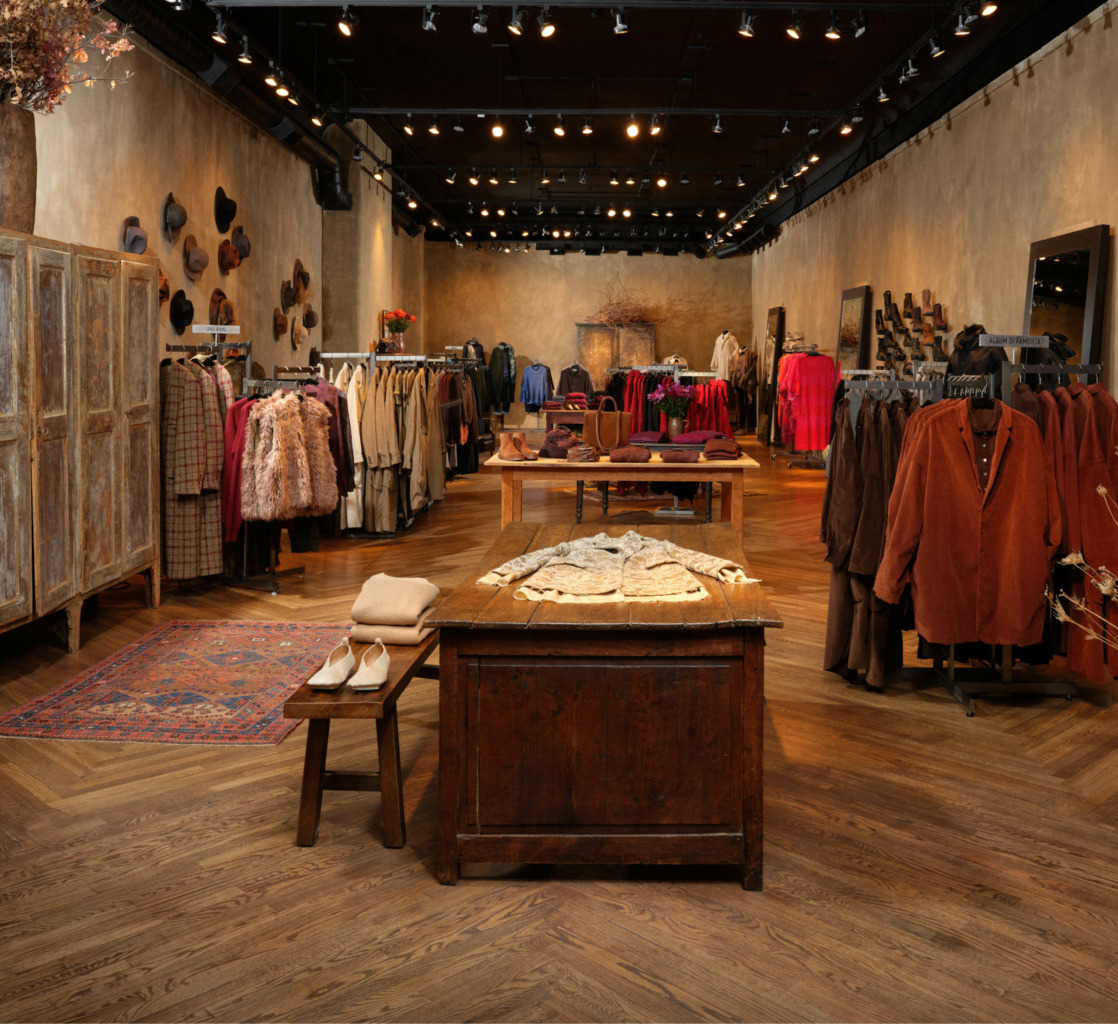
Finally, the time is here for us to break out our finest, because this weekend is for decorating. In the next few days, we will head to the woods to forage for pine branches. Natural elements and vintage glass ornaments alike will scatter Workshop’s tables, and strings of small, twinkling lights will wink through our windows. Come next week and find our stores fragrant with apple, cinnamon and clove. Should you find yourself walking the Santa Fe Plaza in the coming days, we invite you to Workshop for a bit of cider and cheer.
Mood-Setting Scents
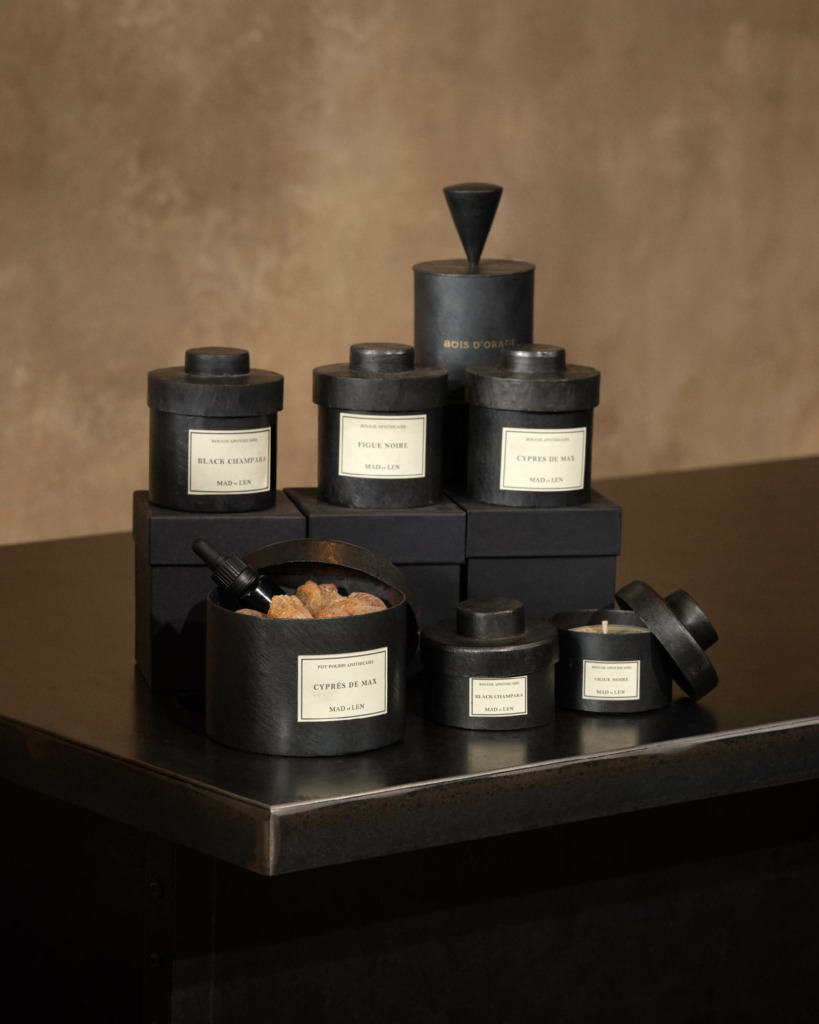
Housed in their signature cast iron vessels, Mad et Len delivers candles of the moment. Mad et Len scents are delicate and exceptional, crafted from unusual aromatics such as champaka and mandarin tree. For something off the beaten path, try the amber potpourri in best-selling Spirituelle.
Tonal Textures
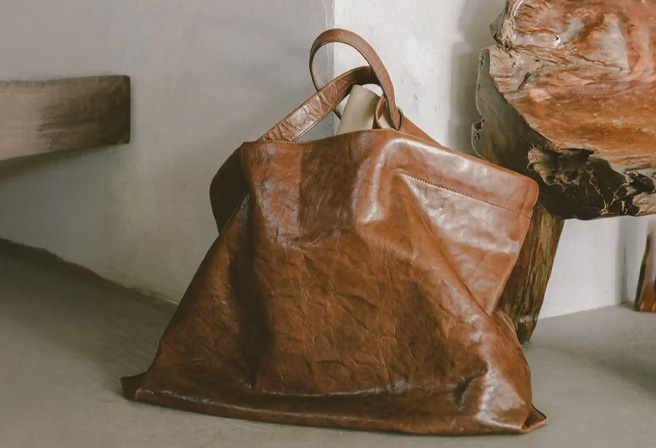
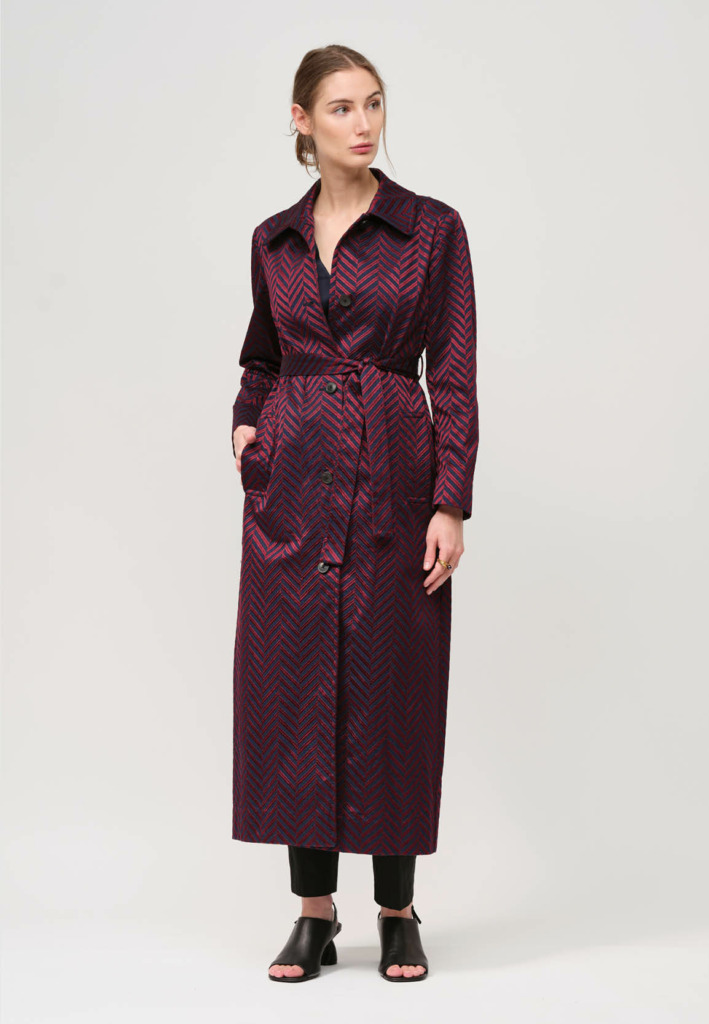
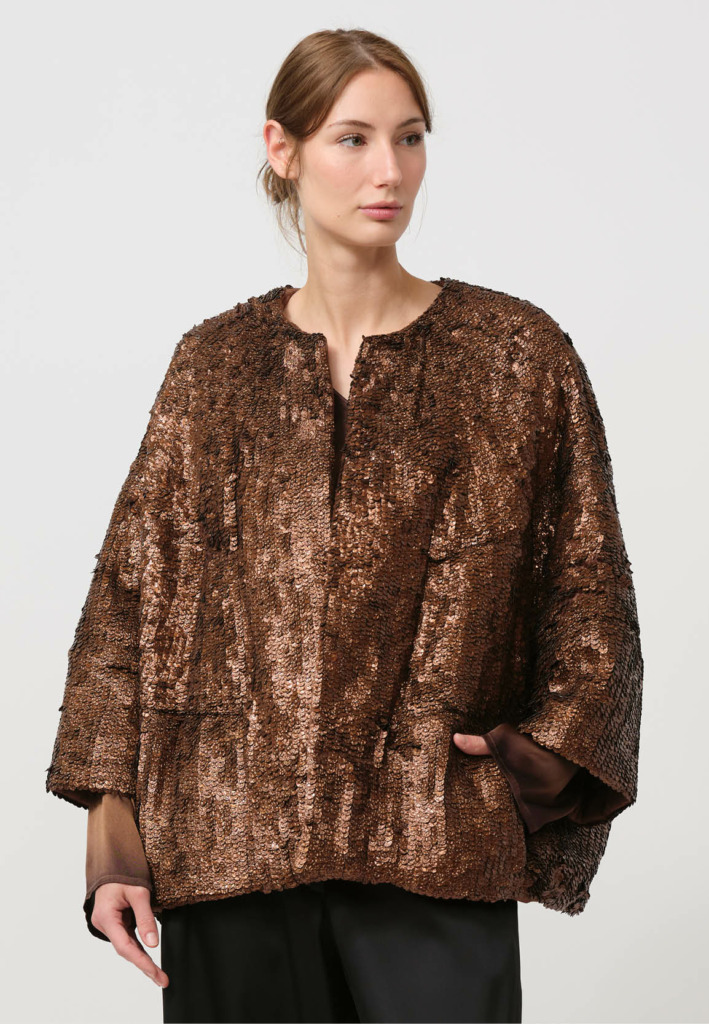
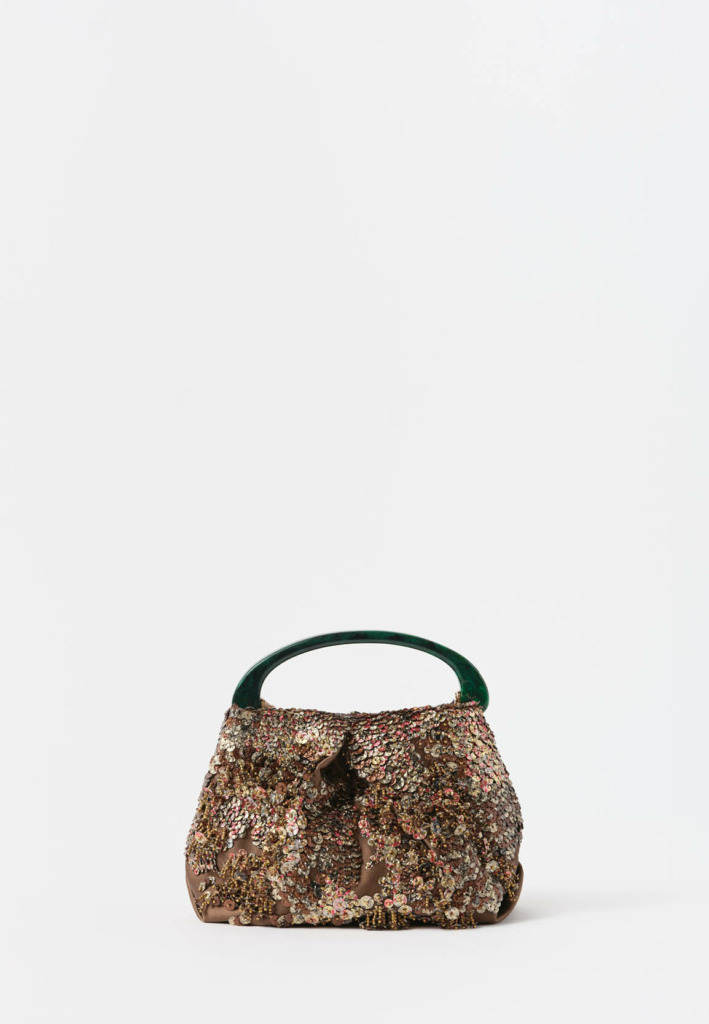
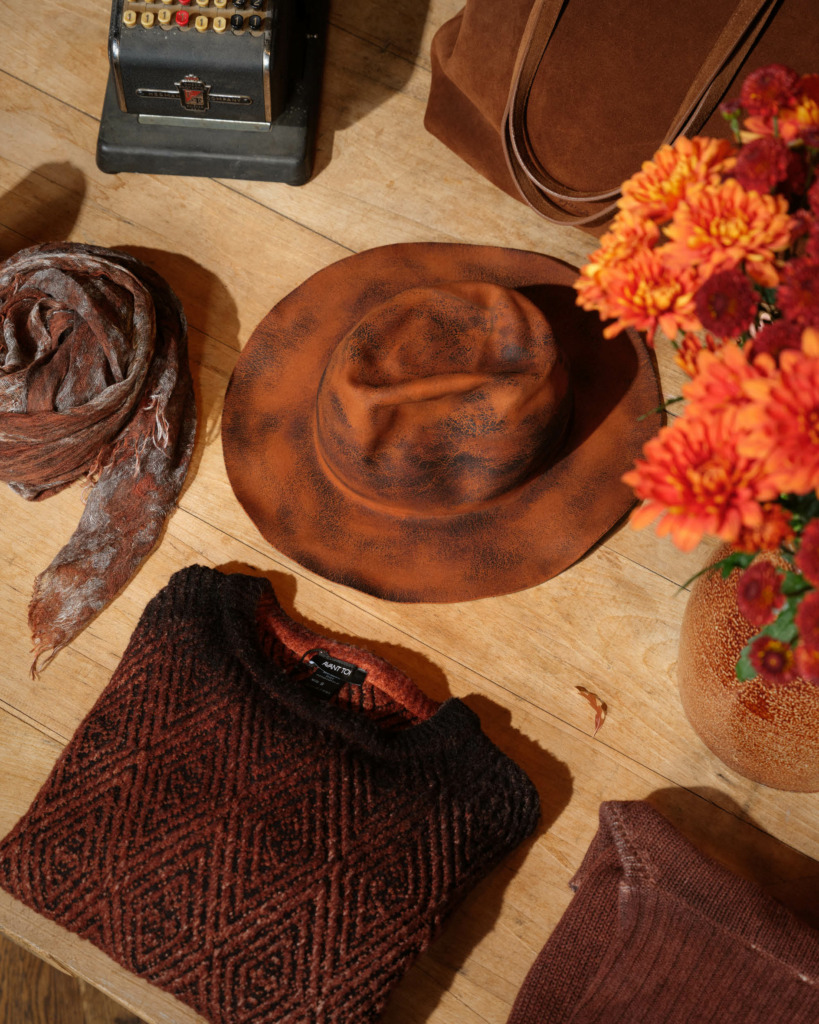
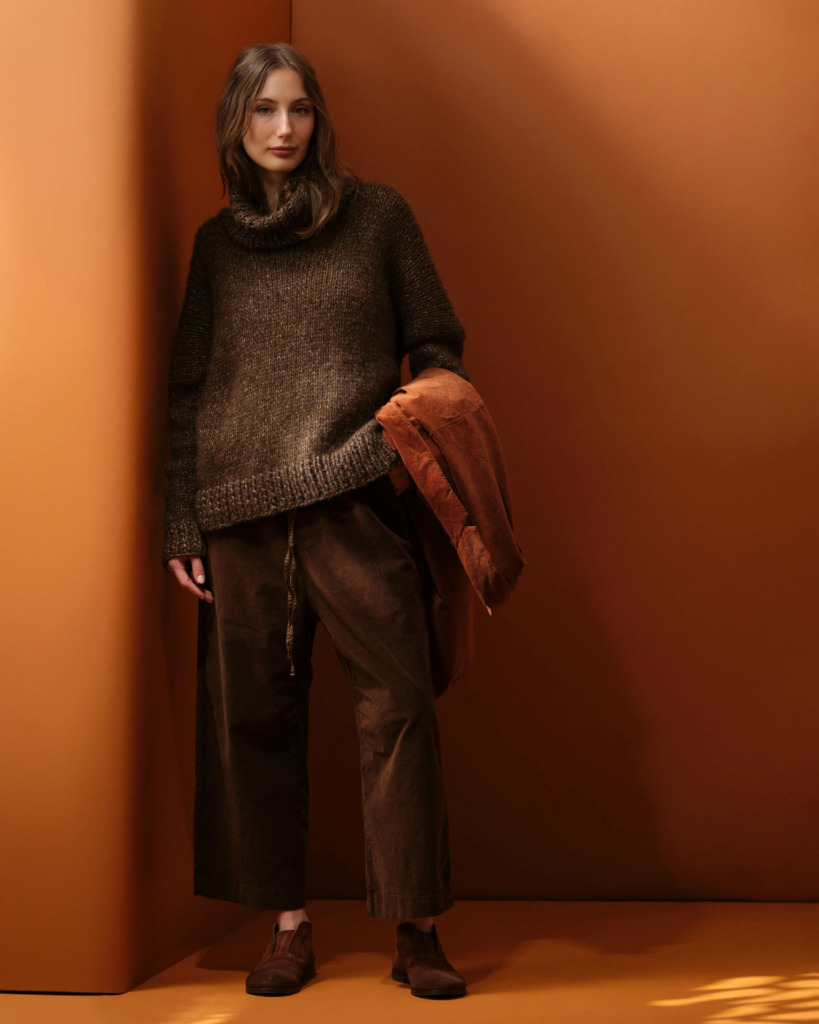
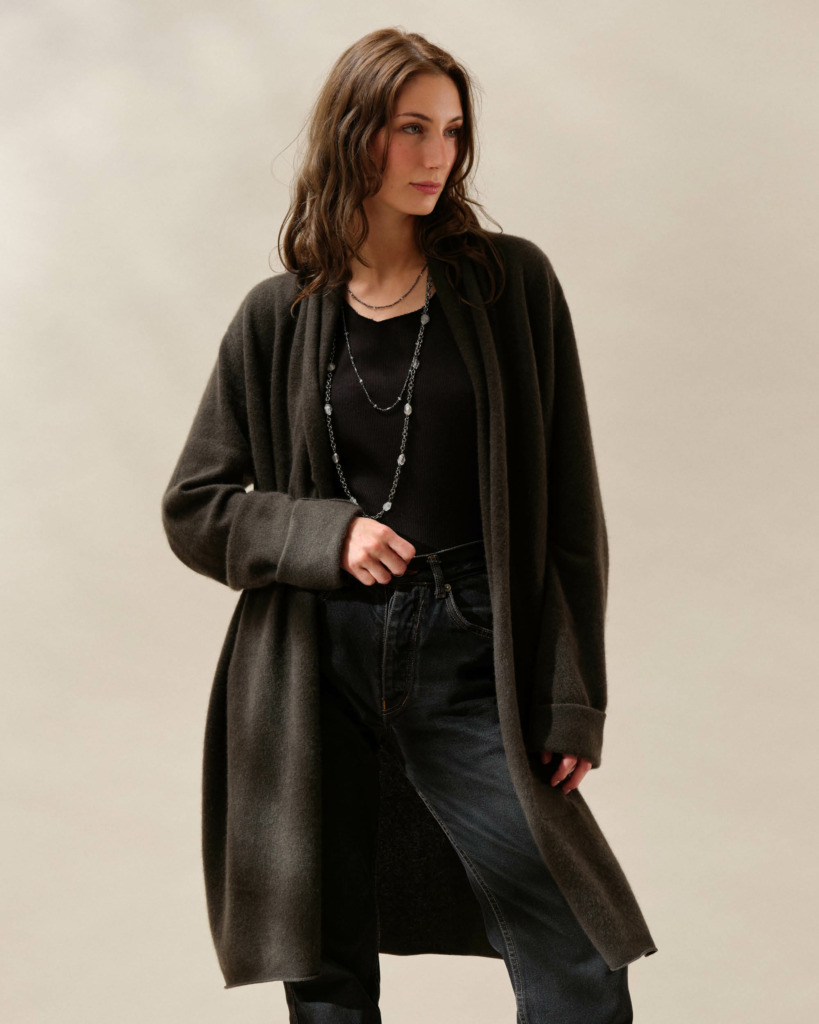
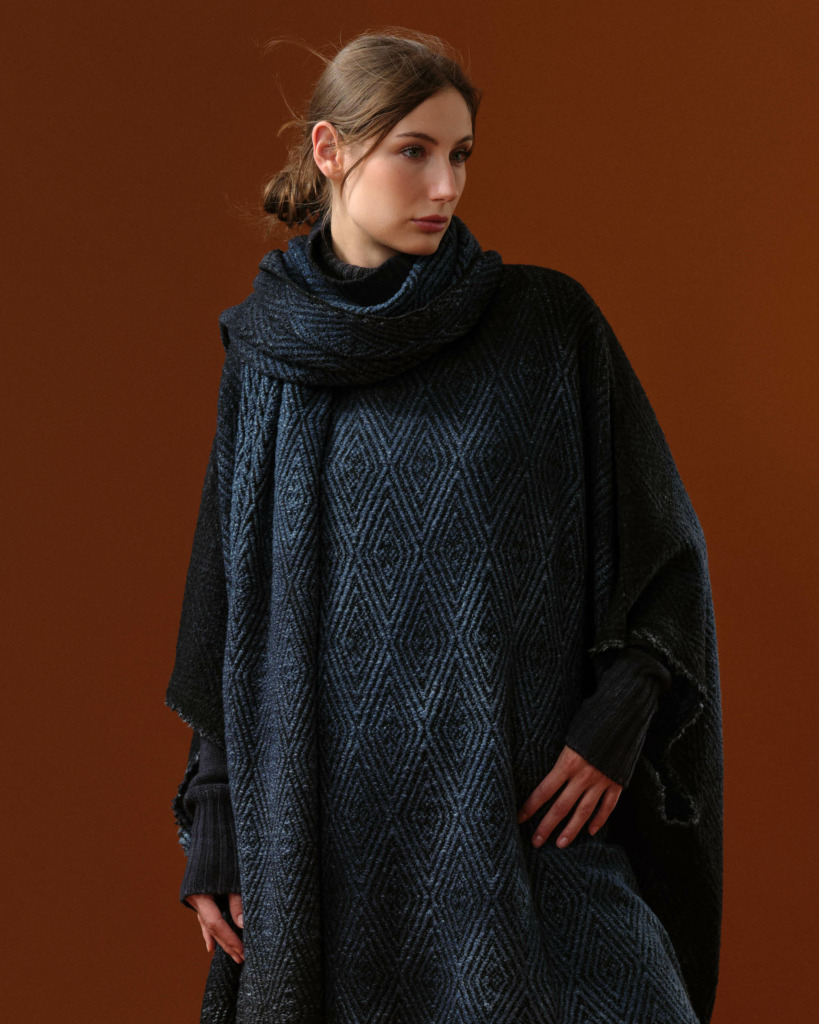
The season’s richest pieces are here to delight the senses—plush cashmere sweaters from Avant Toi, brushed suede handbags from Marsèll and handmade leather hats from Horisaki.
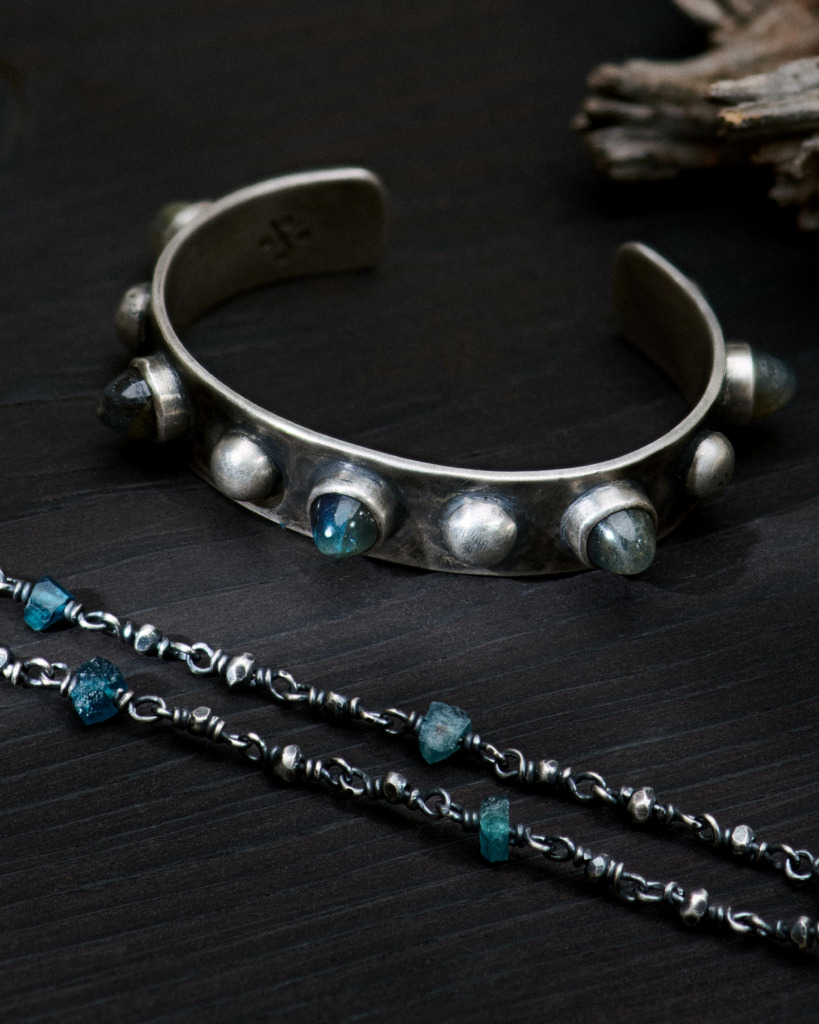
Miranda Hicks’ handwrought sterling jewelry is great for a bit of textured sparkle. Her works are refined while still being substantial enough to stand out among the heavier layers of the season.
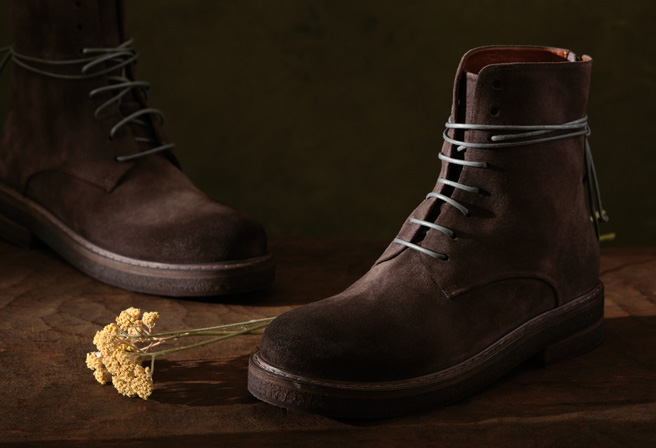
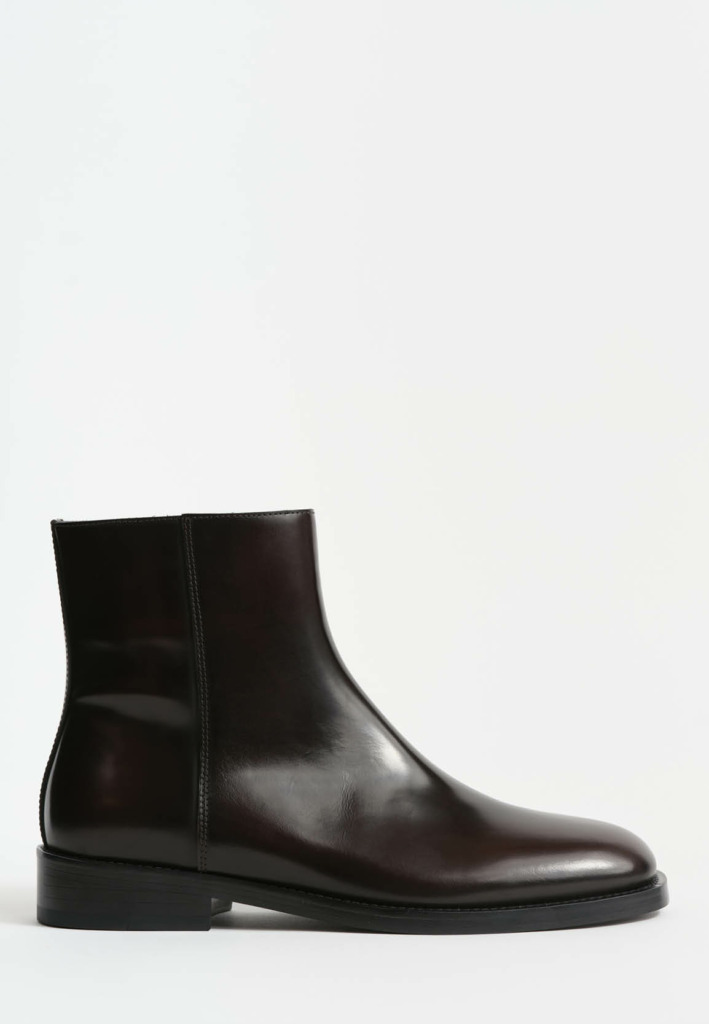
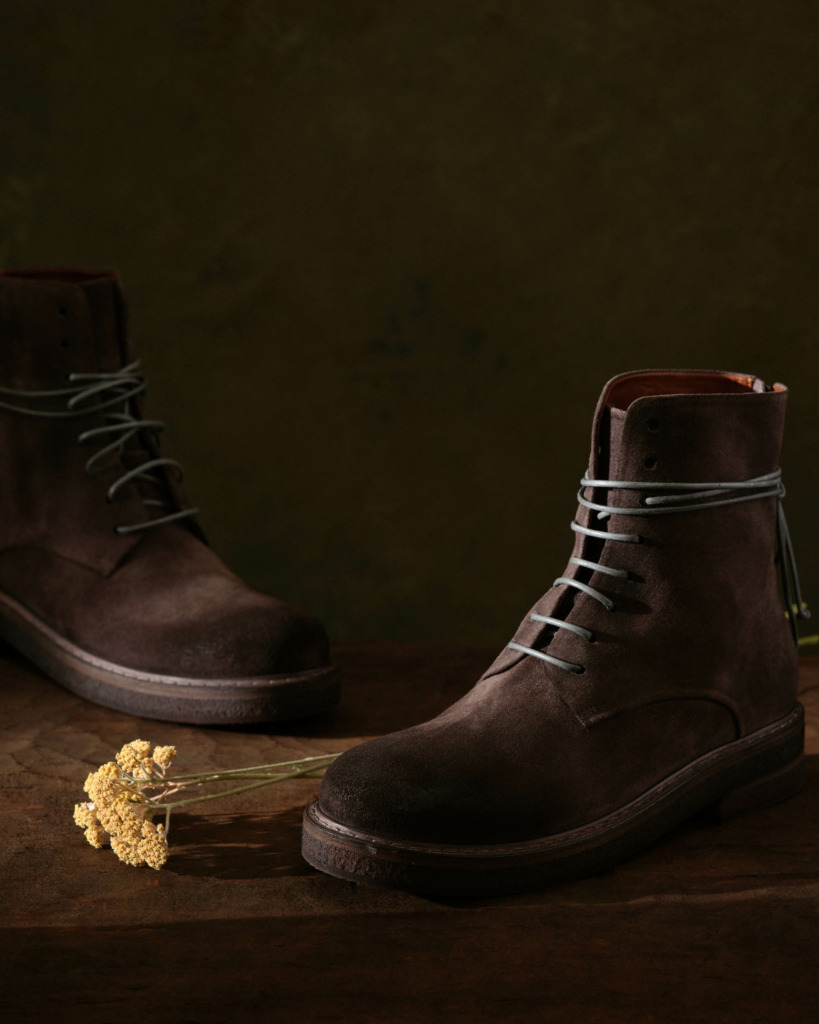
From snow-crunching boots to cocktail party flats, Marsèll bridges the gap between rustic and sleek. With a range of handbags to match, these pieces can be worn with anything for years to come.
Where would we be without cashmere in winter? Nathalie and Terry-Ann of Frenckenberger deliver some of the the softest sweaters in a palette of calm neutrals.
Miranda Hicks’ jewelry embodies the untamed spirit of the American Southwest, blending rugged, natural elements with a bold, contemporary edge. Made primarily in sterling silver, Miranda Hicks honors the traditional silversmithing techniques that have long defined our region, while still bringing a fresh sensibility to the medium. Working from her studio in Santa Fe, Miranda Hicks’ jewelry collection captures the strength and beauty of our high desert home.
At the heart of Miranda Hicks’ designs lie an earthy humility. Triangular, circular, and trapezoidal studs are cast and carved by hand, and then hammered and oxidized to create Miranda Hicks’ signature patina. The neutral-toned sterling silver offsets rare stones, such as black garnet, spirit quartz and apophyllite–all chosen for their raw, natural beauty.
Though grounded in traditional craftsmanship, Miranda Hicks’ earrings channel an aesthetic that is strikingly modern. Delicate yet powerful, her designs challenge the conventions of classical jewelry, embracing asymmetry and rough-hewn stones for an organic and spontaneous feel.
What makes Miranda Hicks’ work so distinctive is her approach to wearability. Her jewelry is as comfortable as it is captivating. With her earrings and cuff bracelets, Miranda Hicks quietly transforms appearances and spirits both– a testament to the power of art and nature in true harmony. Her pieces aren’t just accessories, but talismans… each crafted with its own story.