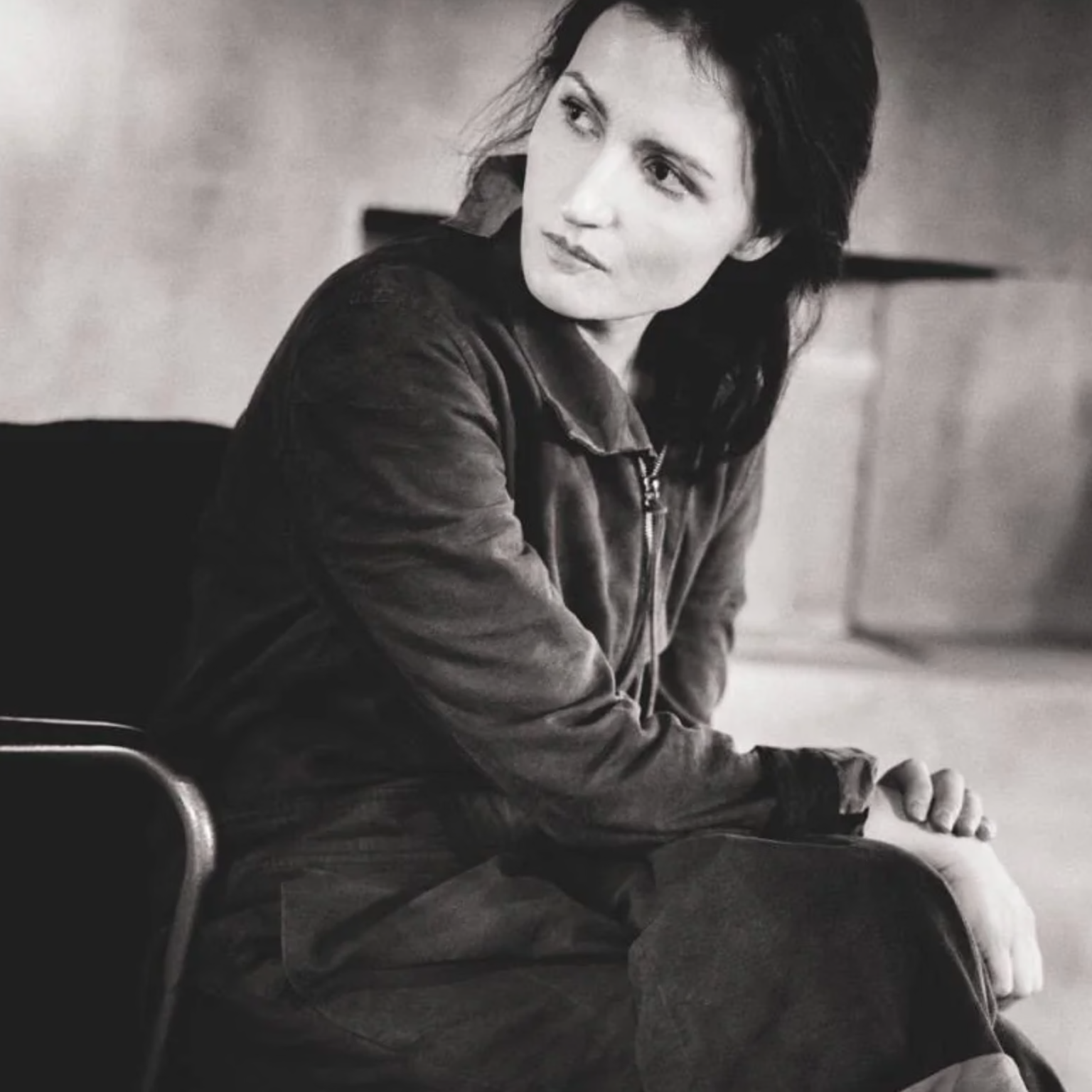


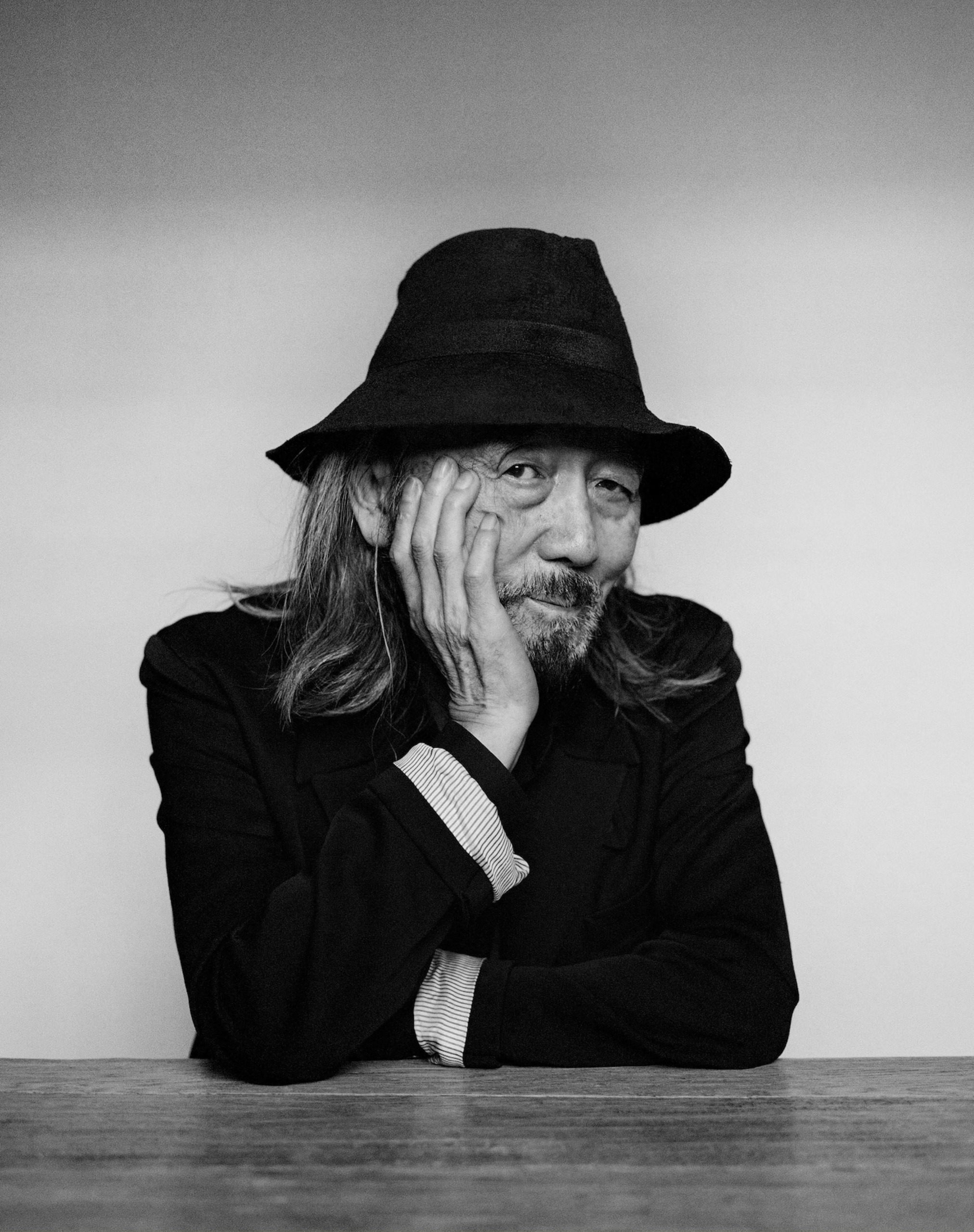
When it comes to names in fashion, Yohji Yamamoto is among the most famous. His influence is on par with the likes of Dries Van Noten, Ralph Lauren and Coco Chanel, shaping the way we think about modern dress. Though his garments are memorable and provocative, Yohji is far from just a clothing designer… he is an alchemist who has transmuted the language of fashion altogether.
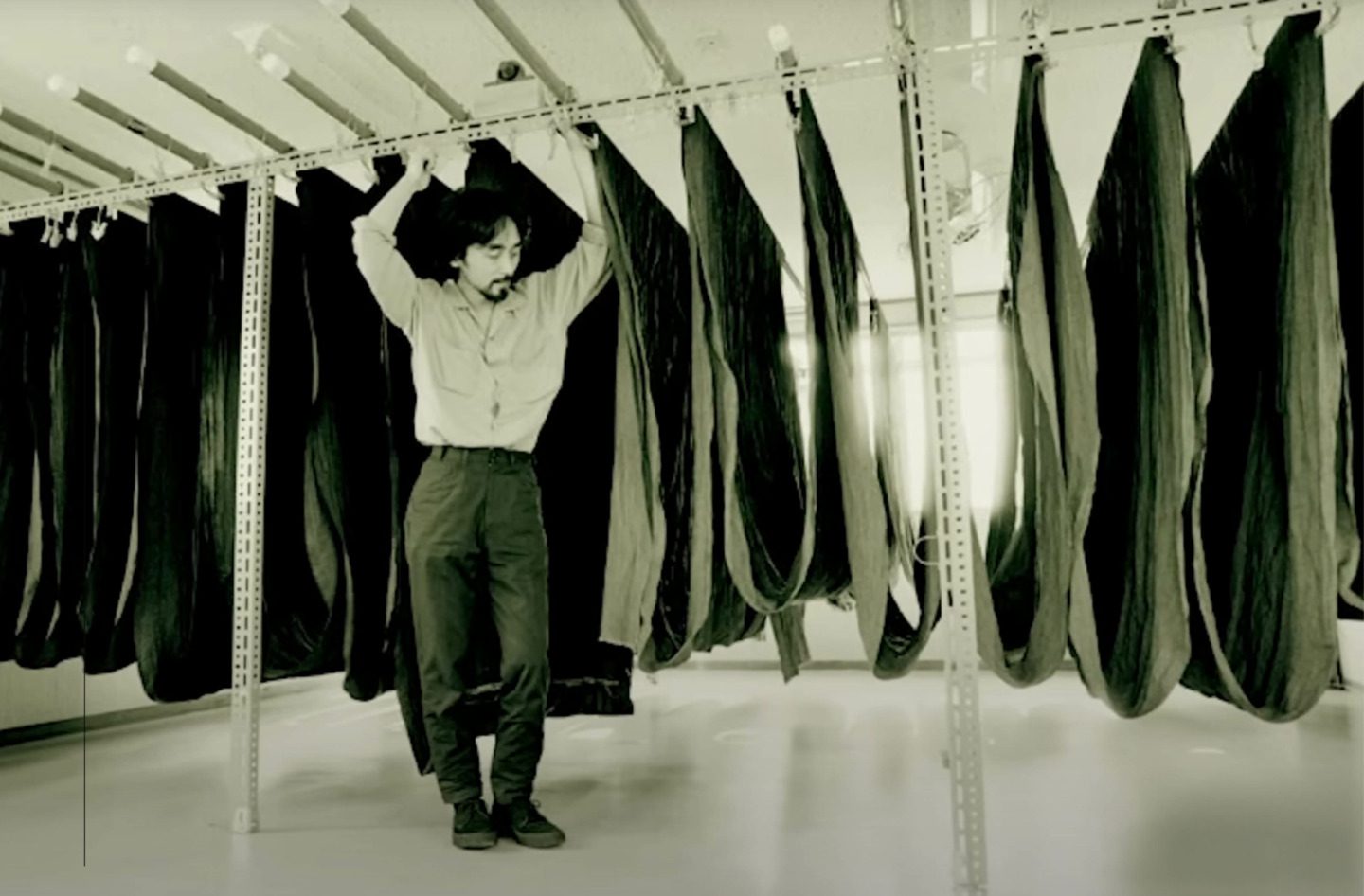
Born in Tokyo during the waning years of World War II, Yohji’s modest childhood formed in equal parts around the ravage experienced by Japan in the war’s aftermath and his mother’s delicate work as a seamstress. He learned to sew from a young age, working alongside her in their home dressmaking studio. While Fumi Yamamoto had hoped her son would pursue a career as a lawyer, and Yohji even graduated with a degree in law, he ultimately rejected what he considered “ordinary society.” Instead, Yohji felt drawn to the wild possibility of fashion, which was blooming in Europe at the time as designers such as Oscar de la Renta and Yves St Laurent dominated the runways.
Subverting traditional notions of women’s fashion.
A widow after the war, Fumi’s strength and independence defined the way Yohji viewed women. When he began to design, he sought to create clothing that honored the spirit and fortitude of women, rather than revealing or objectifying them. Following this design philosophy, he launched his first brand, Y’s, in Tokyo in the early 70s. This label focused on practical women’s essentials with a masculine edge, the first foray into what would eventually become his defining aesthetic.
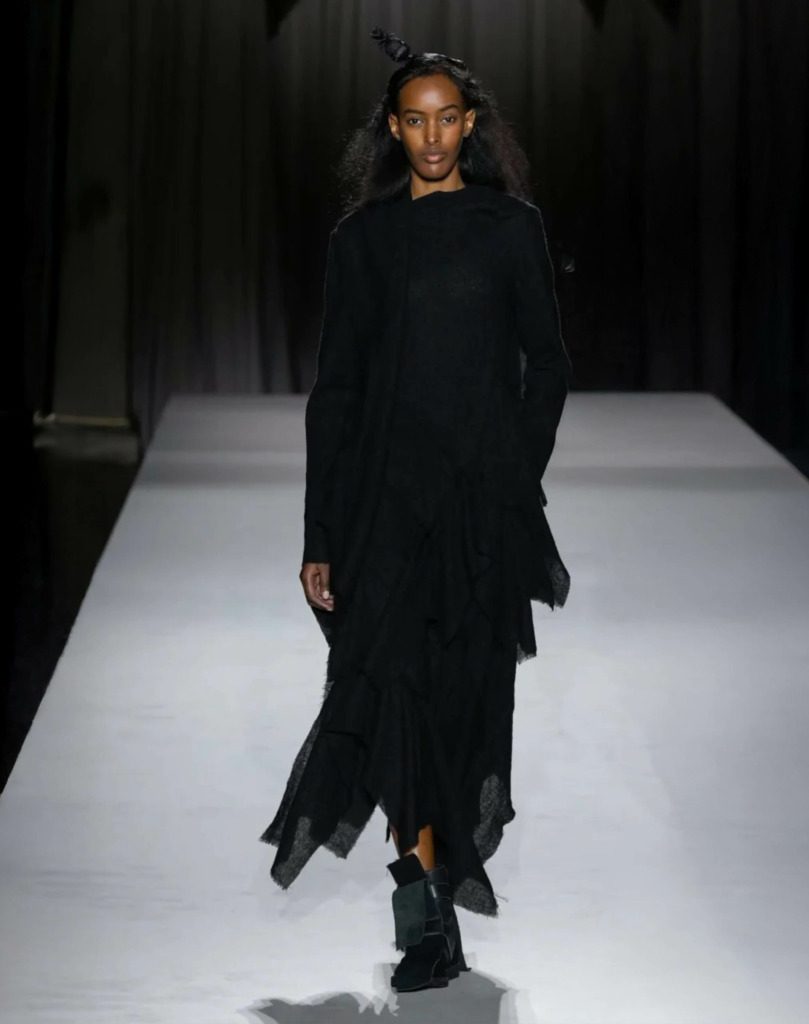
Embracing the Japanese concept of wabi-sabi, in which an object’s soul is revealed through impermanence and imperfection, Yohji set about creating garments that could really live with their wearer. Raw edges, irregular cuts and unfinished draping heightened the freedom, movement and, ultimately, the humanity of his designs. These elements imbued his work with soul.

To Paris with a Dream
When Yohji first appeared on the runway in Paris in the 1980s, alongside Rei Kawakubo of Comme des Garçonnes, he challenged almost every dominant aesthetic at the time. The austerity and melancholy of post-war Japan had heavily informed his minimalist, avant-garde style. Instead of feminine colors and tailored glamour, he worked with loose, deconstructed and often asymmetrical designs that emphasized the shape of the garment over the body of its wearer. In an era defined by emphasizing femininity, this departure from gendered wear was a completely radical approach.
Decades before gender-neutral design went mainstream, Yohji was experimenting with designs that would defy the binary. Oversized coats, drop-crotch trousers and flowing layers blurred traditional masculine and feminine codes into one wearable aesthetic. While so often this tenet tends to be the defining technique of designers working in the avant-garde, at the time, Yohji’s designs sparked as much praise as they did controversy. His approach liberated fashion from strict Western ideals of symmetry, polish and luxury defined by opulence, instead proposing a subtle, intellectual elegance that we continue to see in modern collections. He ultimately turned anti-fashion into a statement–a quiet rebellion that still resonates with those who see fashion as a cultural critique beyond simple commerce.
While Yohji’s expressions of femininity are far from traditional, we still find moments of softness throughout his designs. In elements such as an open collar that unfurls along the neckline or a clever slit along the backside of a garment, he heightens the wearer’s presence and movement without emphasizing their literal form. Additionally, one of the most notable features of Yohji’s collections is his use of monochromes, which he considers not just a stylistic choice, but a philosophy for living. For Yohji, black is universal–a unifying canvas that works across genders, ages, body types. He often says that it is “modest and arrogant at the same time”–a tone that refuses decoration, but commands attention. By harnessing the absence of color, Yohji strips away distraction, allowing the cut, movement and idea of the garment to come forward.
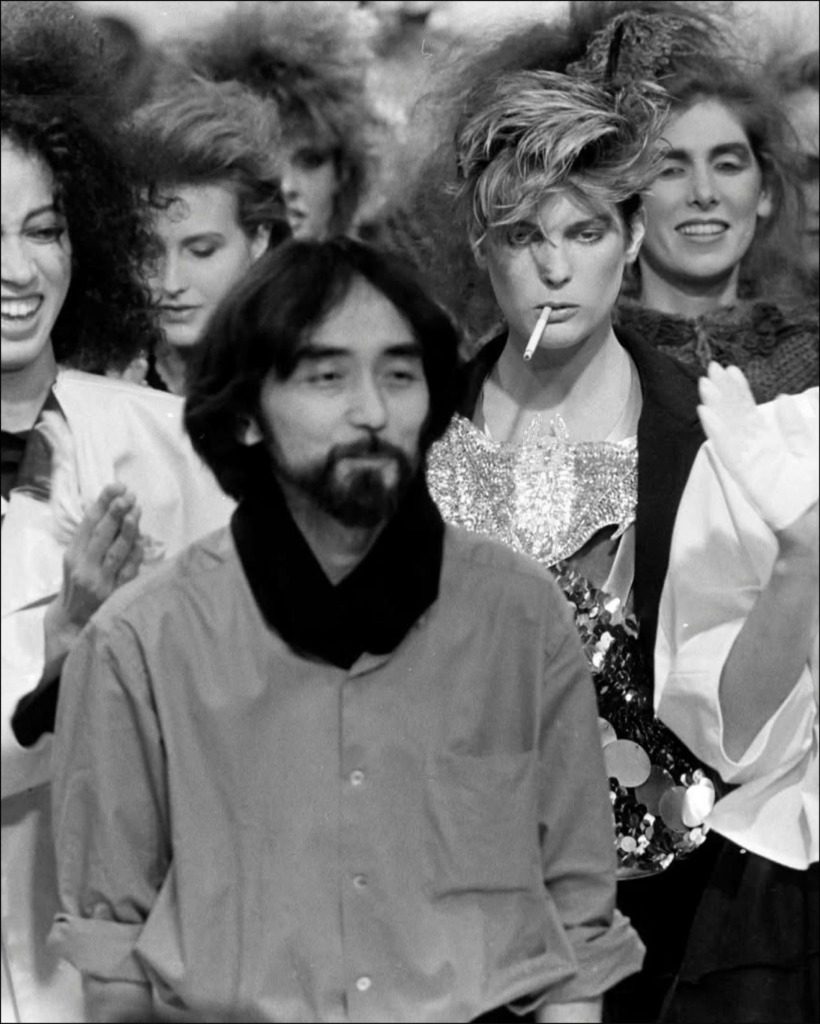
An International Phenomenon
Over the next thirty years, Yohji became an international phenomenon. In addition to his Yohji Yamamoto Main Line and Y’s, he established several diffusion lines, such as the streetwear focused Y-3 in collaboration with Adidas, to continue to innovate and explore the future possibilities of wear. Many modern designers, from Rick Owens to Ann Demeulemeester to Carsten Rundholz, owe part of their creative DNA to Yohji. In 2011, he celebrated 30 years on the runway–a fête culminating in a major retrospective exhibition at the Victoria and Albert Museum in London. A living legend, he continues to design to this day, sharing his time between Paris and Tokyo.

Pursuing Mystery in Design
For Yohji, black is universal–a unifying canvas that works across genders, ages, body types. He often says that it is “modest and arrogant at the same time”–a tone that refuses decoration, but commands attention. By harnessing the absence of color, Yohji strips away distraction, allowing the cut, movement and idea of the garment to come forward.

FW25 and Into the Future
Fall/Winter 2025 marks our second foray into the world of Yohji, after carrying the line for a few seasons over a decade ago when Workshop first opened. Having the line back in-store feels like something of a homecoming as we reunited not only with the brand, but also with their Director of Sales, Emmanuel Harent, an old friend of the stores.
We will be receiving more of Yohji’s work over the next few weeks, but even this small delivery is striking. Sweeping, graphic shapes in black and white comprise the collection, defined by interpretations of workwear. We are mainly focused on bringing in pieces from his Y’s line, which are intensely wearable and cool, however we will also be bringing in a handful of runway pieces from his Main Line to help drive forward this aesthetic in Workshop.
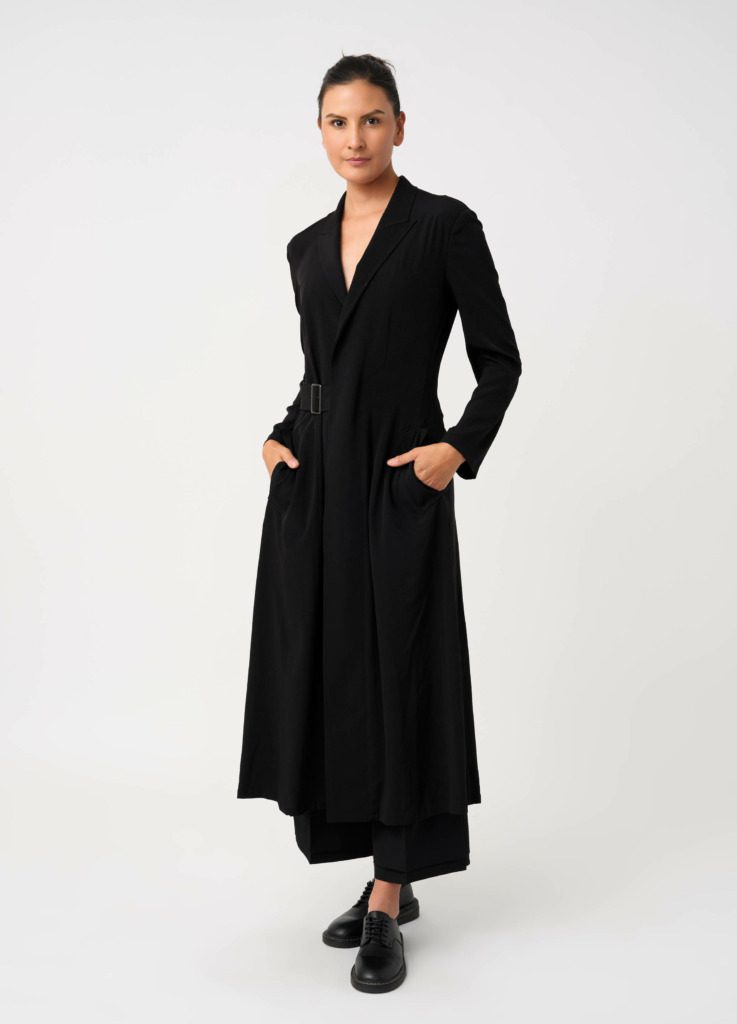
Look 1: Strong Shapes
Mona wears the Crêpe de Chine Duster Trench Coat in Black.
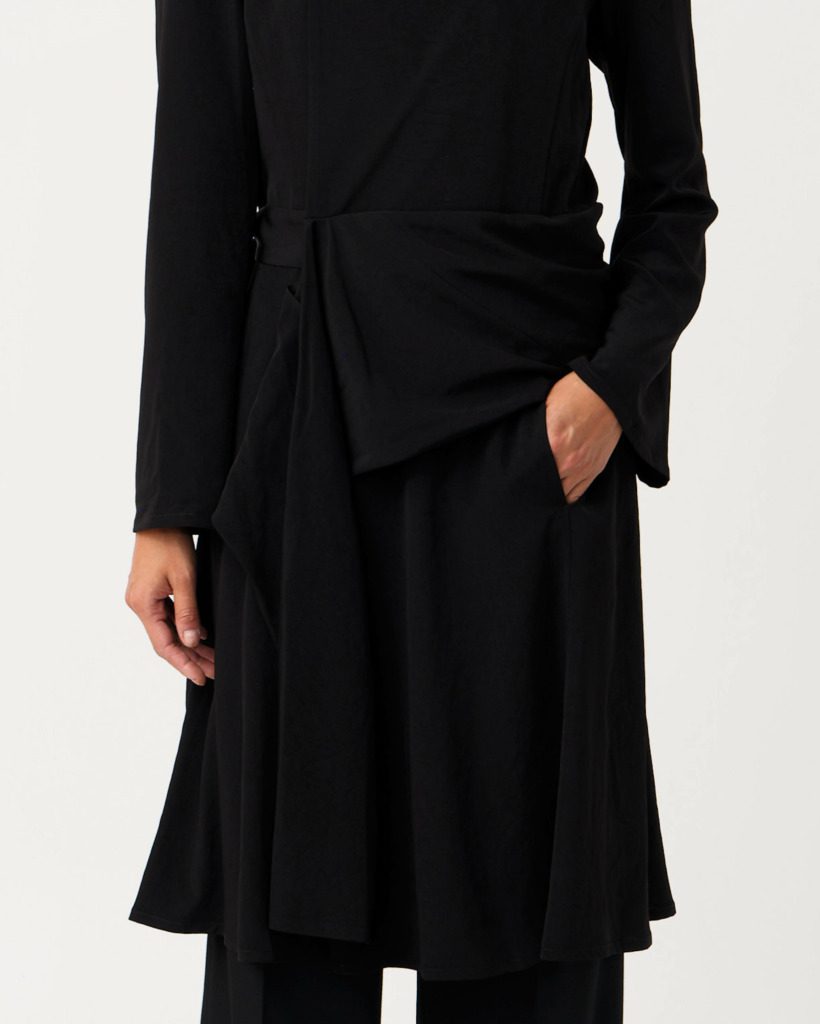
Look 2: Definition Through Draping
Mona wears Crêpe de Chine Wrap Coat in Black.

Look 3: Texture on Texture
Mona wears the Paneled Distressed Knit E-Boyfriend Crew Neck Sweater in Black.
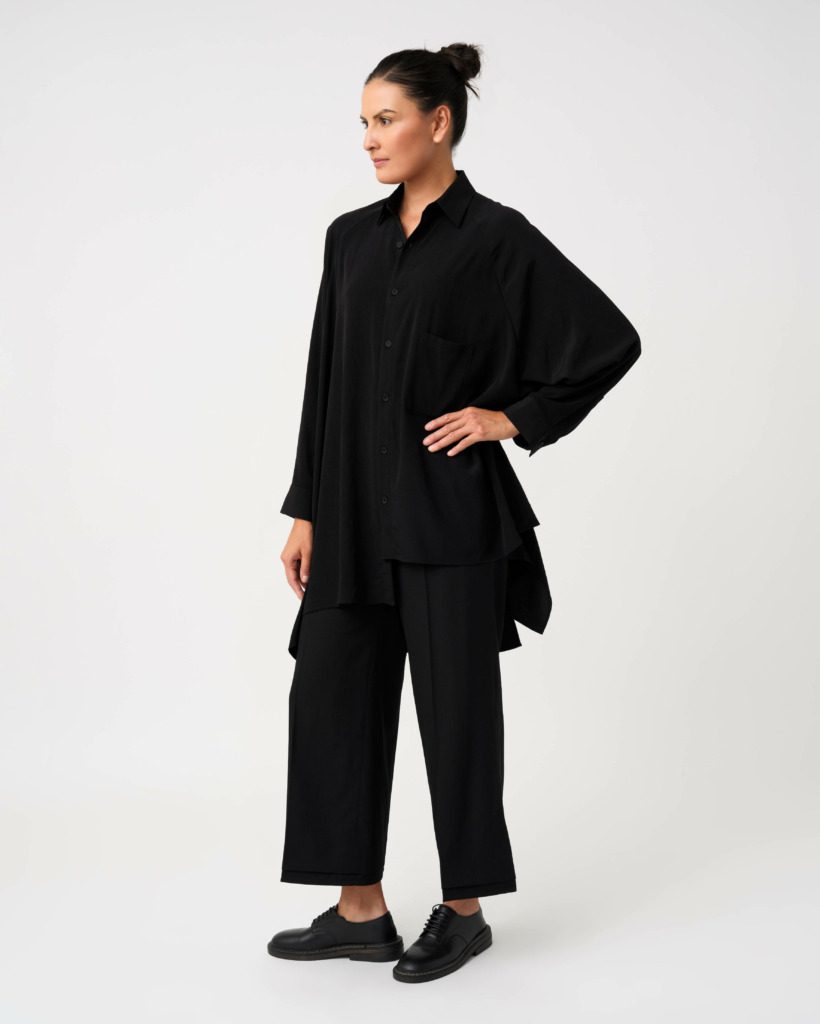
Look 4: Classically Unconventional
Mona wears the Crêpe de Chine Tiered Hemlnie Button-Down Top in Black.
“With my eyes turned to the past, I walk backwards into the future.”
—Yohji Yamamoto