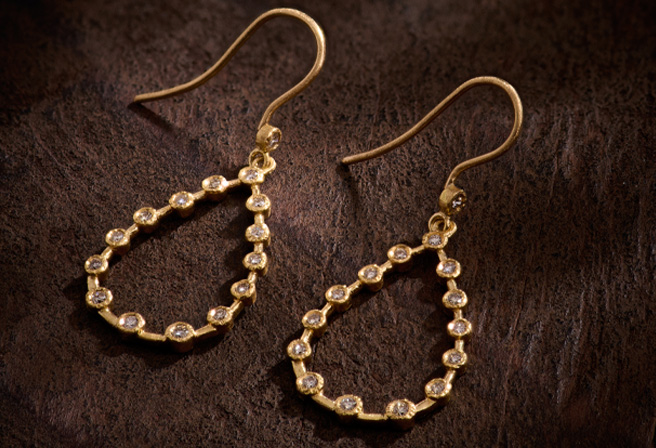
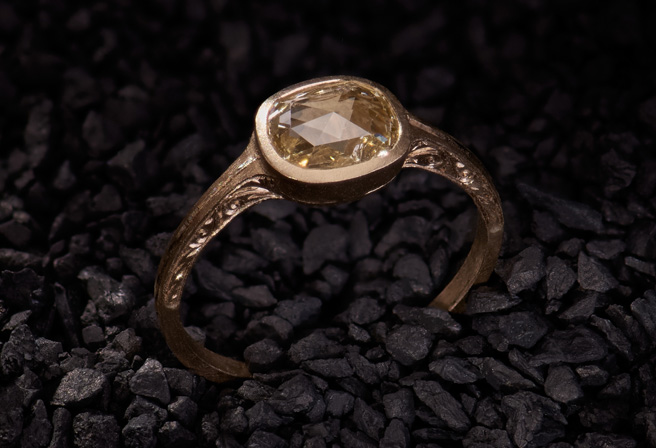
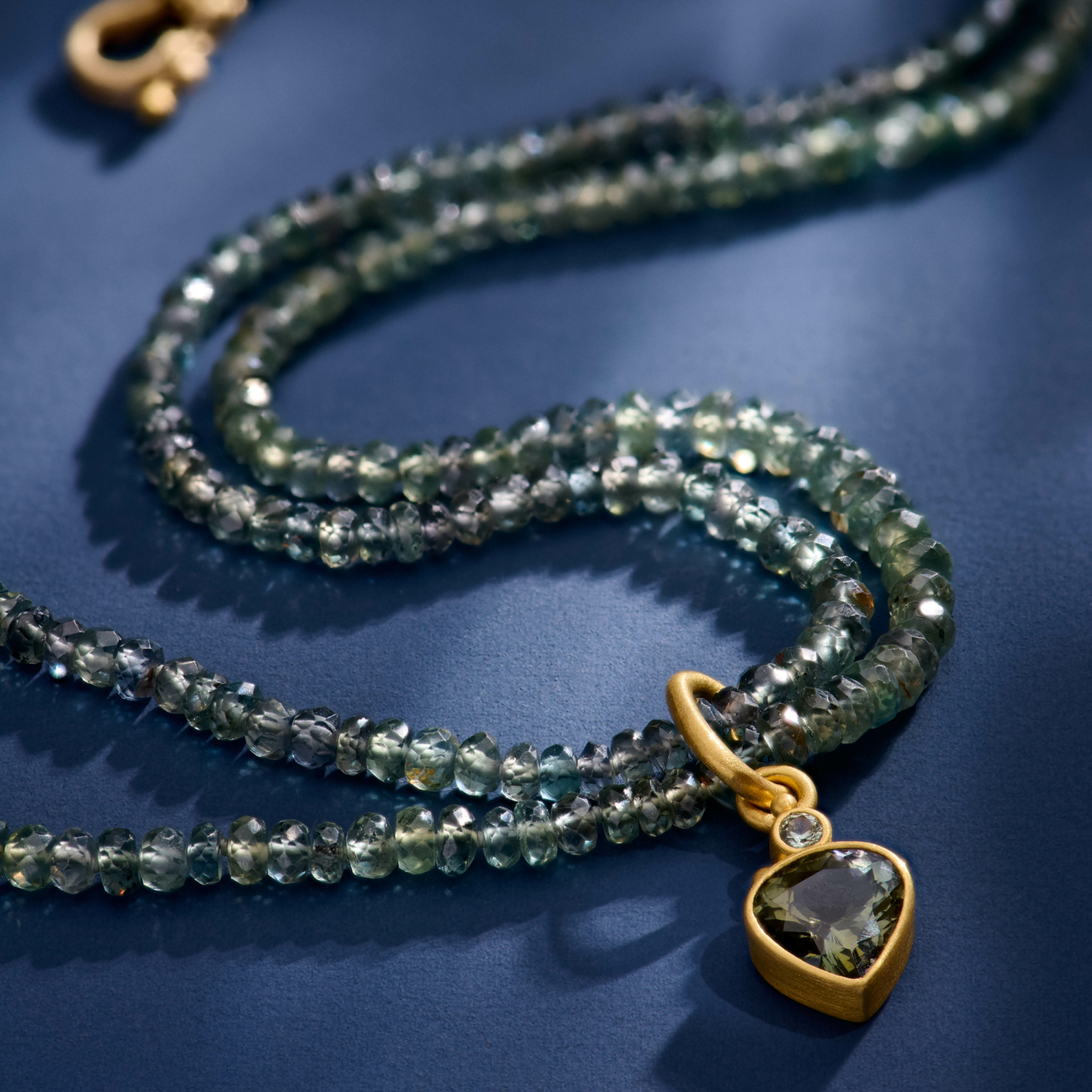
London-based jeweler Pippa Small believes that every stone has a story to tell. With her ethical fine jewelry, she lets these stories take center stage – each a unique imprint of the stone’s place of origin, such as fiery Brazilian kyanite or dulcet Pakistani aquamarine. Her artisan-made jewelry feels distinctive and personal, as if they were specially crafted for the wearer and the wearer alone. A classically-trained anthropologist, Pippa’s designs are inspired by her lifelong passion for travel and the cultures she has learned from along the way.
Pippa holds the firm conviction that the importance of safe and creative jobs, reinforcing a sense of cultural identity and tradition through jewelry is hugely important. Pippa works with Fairtrade and Fair Mined materials and supports a project hand panning gold in Columbia. Pippa was named ambassador of the human rights organization Survival International and awarded an MBE by the Queen in 2013 for ethical jewelry and charity work. She continues to venture further in exploring ways of making jewelry, reviving traditional skills and techniques in communities in Central and South America, Southern Africa, Asia and the Middle East.
Pippa Small on her design process:
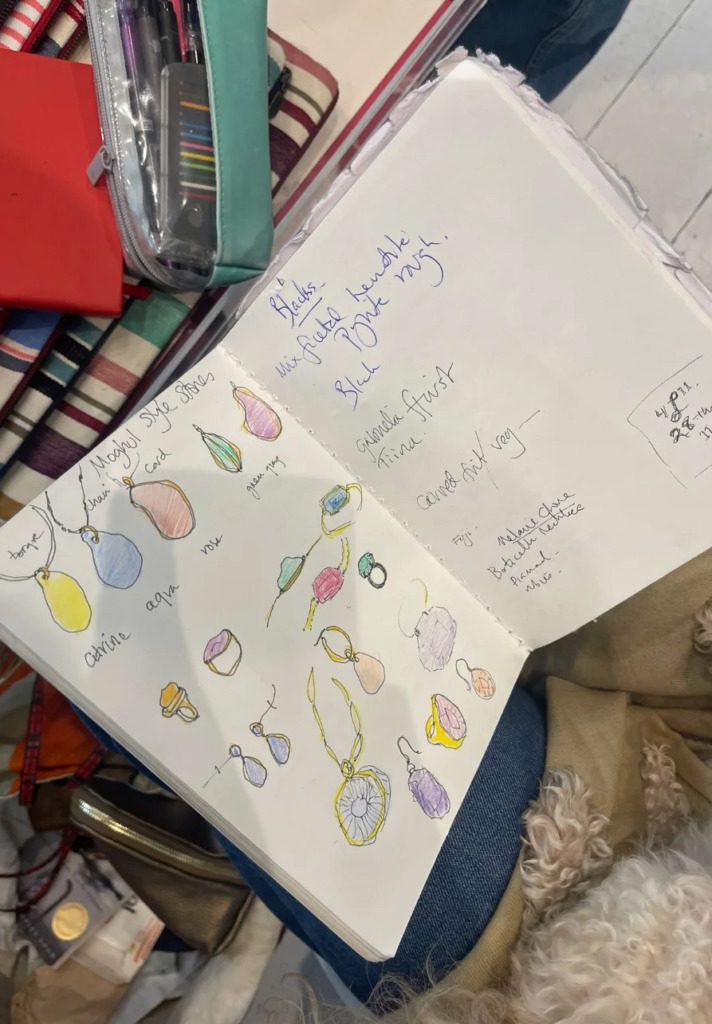
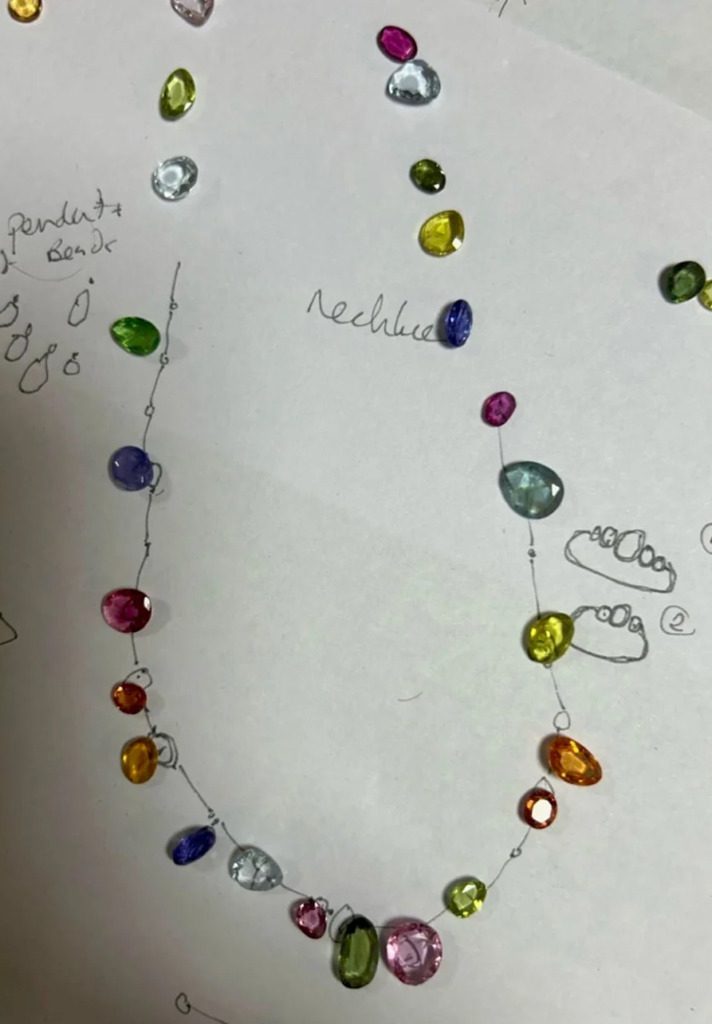
“In thinking about the ways I design, I realise that in some ways I do it quite unconsciously. It can be a word, a feeling, a story; something I have seen: a photograph, a painting. I gather colours, shapes, forms, and textures, and compress them into a notebook over six months – photographs fill the storage of my phone.”
“Designing is about observation, looking at the wider world around us and finding the patterns, the shapes that please, fascinate, and charm; of finding what we long for, what we want to hold on to. Designing is a practice, one that I love.”
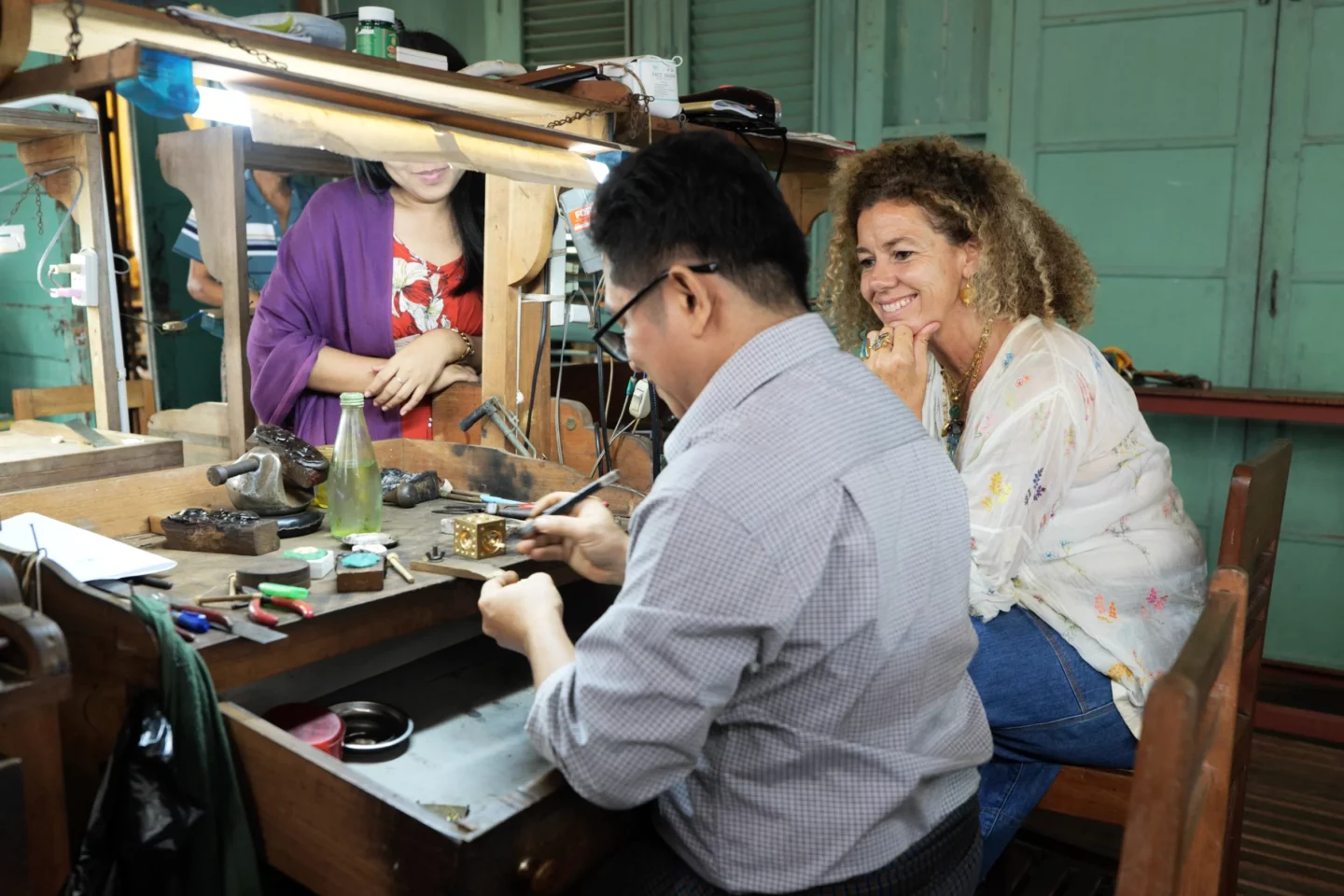
“I think about the people in the workshops of the different places where I work: their particular skills, the traditional techniques we can bring to life in new ways, the local gems we can use. In each country, I spend a great deal of time researching through museums, books, archives, and old collections; I delve into the past, and I also observe the present. I note what men and women are wearing, how they are wearing things, what feels essential, and seems to be a design that has a clear voice about the culture in which it is made.”
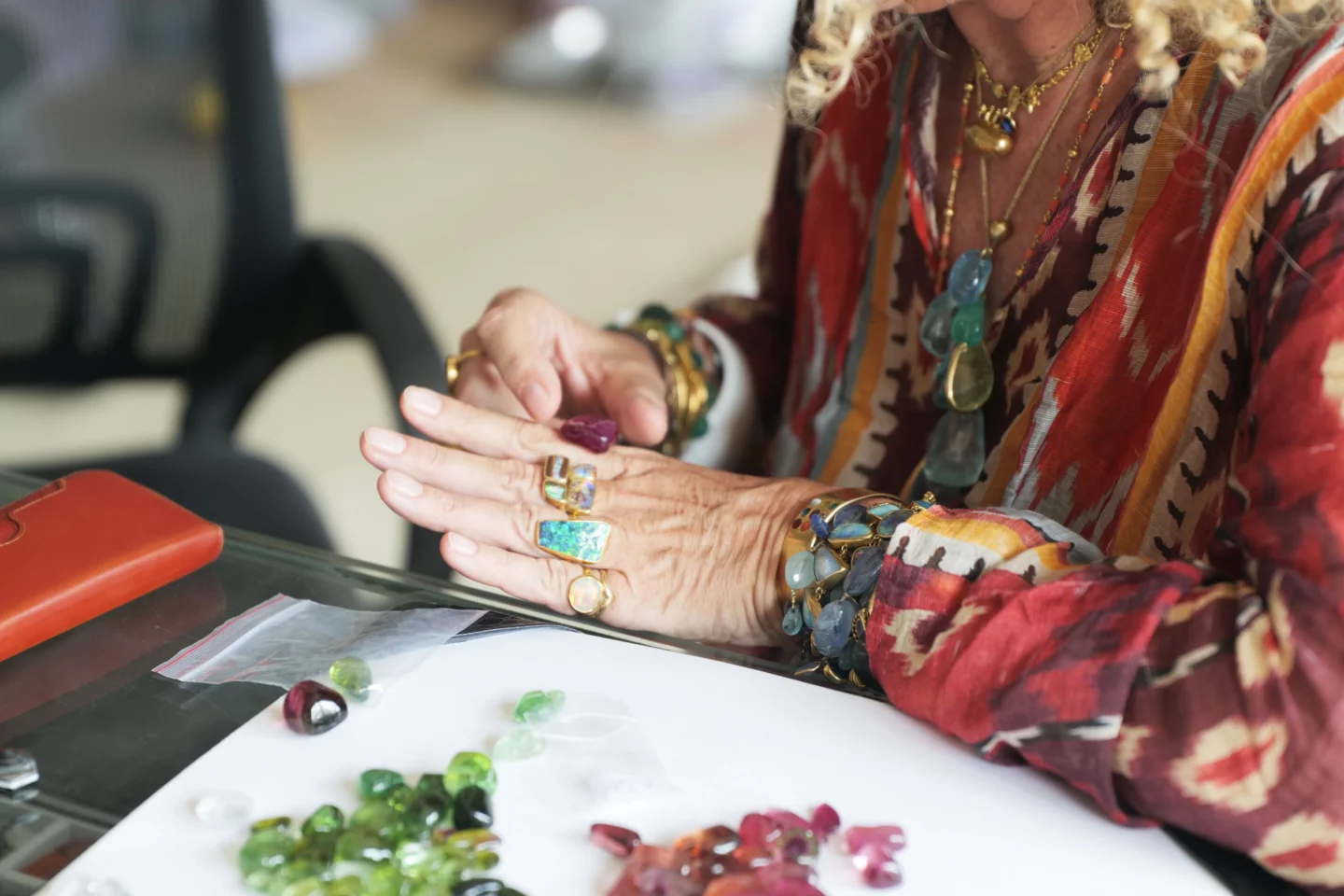
“I travel to the places where I work and I sit in workshops. I have conversations with the makers, I search for stones in markets, with dealers and gem cutters. I arrive with an idea, but often it morphs into something new, or I stumble upon a new stone or cut, and the new collection unfolds through the materials.”
“I draw so much inspiration from the past – I am at heart, a nostalgist, I gravitate to the feeling of ancient art, of things made by human hands: worn, loved, and passed down through generations. Each wearer adds something to the energy of the piece. My hope is simply to recreate this feeling.”
Pippa Small on working with gold:
“I have spent my career travelling the world, working with master craftsmen and diverse communities to help redefine what ethical jewellery can look like. My journey has taken me from Bolivia and Colombia to Afghanistan, India, Myanmar, and Palestine—places rich in cultural heritage and artisanal skill and often impacted by conflict and economic fragility.”
“Each collaboration tells its own story—rooted in the traditions of its land, shaped by the hands of the artisans, and echoing the feel of the earth from which the materials are drawn. Yet no matter the setting, one principle remains constant: a commitment to creating jewellery that respects both people and the planet.”
“Our jewellery is so much more than just something to be worn. We create pieces that become part of you—an extension of your values that adorn you like a second skin, for those who appreciate the value of handmade, and who find the beauty and uniqueness in imperfection.”